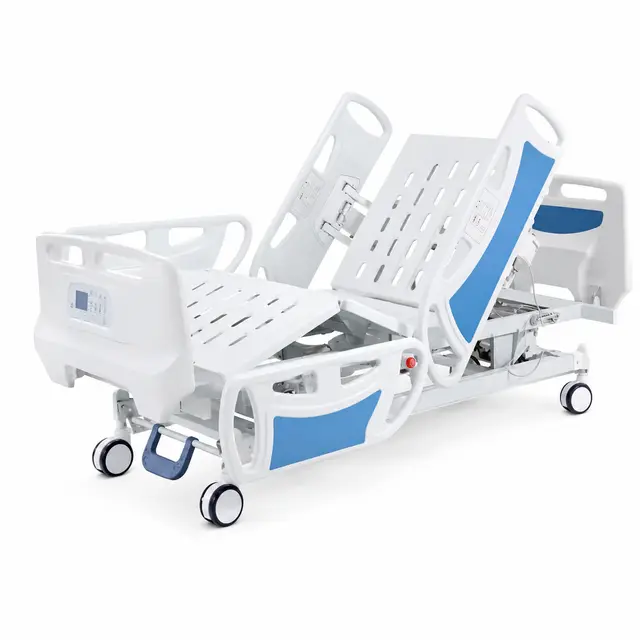
Hospital beds for sale: new vs used vs factory-direct, and how to buy the right one
New, refurbished, second-hand or direct from the factory: where to buy hospital beds, what each option really costs, and the checks a used bed must pass before you pay.
Short answer
Hospital beds for sale come through four routes: new from a DME supplier or dealer, refurbished or used from a reseller, or new and factory-direct from a manufacturer. Individuals usually buy or rent through a DME supplier. Hospitals and distributors buying in volume save most by going direct. On any used bed, check the model label, service history, electrical safety, brakes, rails and entrapment gaps before paying.
Search for hospital beds for sale and you will find three very different markets on one results page: new beds from dealers and online stores, second-hand hospital beds from refurbishers and liquidators, and factory-direct beds from manufacturers selling in volume. Each can be the right answer. Each also has a way of going wrong that the listing will not tell you about.
This guide compares new, used and factory-direct purchase, lists what to check on a second-hand bed, explains the total cost of a hospital bed beyond its price tag, and sets out when buying direct from a manufacturer makes sense for hospitals and distributors.
Where can you buy a hospital bed?
You can buy a hospital bed from a durable medical equipment (DME) supplier, a medical equipment store or online retailer, a refurbisher of used beds, a national distributor, or directly from a manufacturer. The right channel depends on how many beds you need and who will service them.
| Channel | Typical buyer | Strengths | Watch for |
|---|---|---|---|
| DME supplier (buy or rent) | Individuals, home care | Delivery, set-up, insurance billing | Limited model choice |
| Medical store or online retailer | Individuals, small clinics | Quick, single units | Home-care beds sold as hospital beds; assembly and service unclear |
| Refurbisher / used dealer | Budget clinics, care homes | Lower price, fast availability | Unknown history, parts support, outdated standards |
| National distributor | Hospitals, tenders | Registration, local stock, service team | Distributor margin |
| Factory-direct | Distributors, hospital groups, NGOs, projects | Lowest unit cost, configuration, OEM | MOQ, lead time, import formalities |
Keling sells to hospitals, distributors and project buyers rather than to individual households. If you need one bed for a family member, a local DME supplier is usually the better route.
How much does a hospital bed cost to buy?
The cost of a hospital bed depends mainly on its drive system and function count, then on accessories, mattress, quantity and where it is delivered. A manual one-function bed and a five-function electric ICU bed can differ in price several times over, so comparing listings without matching the specification is meaningless.
The main price drivers are:
- Drive system: manual cranks cost less than electric actuators and control boxes.
- Functions: each added axis (height, tilt) adds mechanism and testing.
- Safe working load and frame: higher-rated frames need more steel.
- Accessories: rails, headboards, IV pole, weighing system, battery backup.
- Mattress: foam is cheaper than an alternating-pressure air system.
- Quantity and delivery: unit price falls with volume, but freight, duties and installation are added on top.
Our article on what drives a hospital bed quote breaks these down for bulk orders. For a priced offer on specific models, use our quotation request form.
New vs refurbished vs used vs factory-direct
New beds give you a known history and a warranty; refurbished beds trade some of that for price; used beds sold as seen carry the most risk; factory-direct new beds give the lowest cost per unit to buyers who can handle volume and import.
| Option | Price | Warranty | Standards status | Best for |
|---|---|---|---|---|
| New from a dealer | Highest per unit | Manufacturer warranty via dealer | Current | Single units, urgent needs with local service |
| Refurbished | Lower | Refurbisher's own, often short | Built to the standard in force when made | Care homes and clinics on tight budgets |
| Used / second hand, sold as seen | Lowest | Usually none | Unknown | Non-clinical use, or buyers with in-house technicians |
| New, factory-direct | Low per unit in volume | Manufacturer's, written into contract | Current, with test reports | Distributors, hospitals, NGOs, tenders |
One regulatory point: in the US, the FDA's 2024 final guidance on remanufacturing distinguishes servicing (restoring a device to its original specification) from remanufacturing (significantly changing its performance, safety or intended use). A refurbisher who goes beyond servicing may take on manufacturer obligations, which is worth asking about.
What to check on a used or second-hand hospital bed
A second-hand hospital bed can be a sound purchase if it is a known model with parts available and a documented service history. Check the following before you pay.
- Identity. Manufacturer label with model and serial number, and the instructions for use. Without these you cannot order parts or check recalls.
- Recalls and safety notices. Search the regulator's database for the model.
- Service history. Dates of last service and any parts replaced.
- Electrical safety. For electric beds, ask for a recurrent electrical safety test to IEC 62353, and inspect handset cables, power cord and control box for damage.
- Actuators or cranks. Run every function through its full range under load; listen for grinding and watch for uneven movement.
- CPR release. If fitted, confirm it drops the backrest promptly.
- Castors and brakes. Every brake must hold the bed on a smooth floor.
- Side rails and gaps. Rails must latch firmly. Check the gaps between rail, mattress and headboard; the FDA recorded 901 entrapment reports in hospital beds between 1985 and 2013, mostly involving frail, elderly or confused patients.
- Frame. Look for cracked welds, bent sections and rust, especially at pivot points.
- Battery age. Backup batteries degrade; budget to replace them.
- Mattress. Replace a used mattress unless its cover and foam are intact and it is the correct size for the platform.
Age matters for children and small adults. The UK MHRA's 2023 patient safety alert warns that older beds may not comply with BS EN 50637:2017 and advises planning to replace non-compliant beds used by children or adults with atypical anatomy. See our guide to side rail materials and safety zones.
Total cost of a hospital bed, not just its price
The cheapest hospital bed for sale is not always the cheapest bed to own. Over a service life measured in years, running costs can outweigh the difference in purchase price.
- Delivery and installation, including freight, duty and import clearance for direct imports.
- Mattress and accessories bought separately, such as rails, IV poles and headboards.
- Preventive maintenance and recurrent electrical testing.
- Spare parts: castors, handsets, actuators, latches. Unknown models make these expensive or impossible.
- Downtime: a bed out of service is a bed the ward cannot use.
- Staff time and injury: a fixed-height bed saves money at purchase but makes nurses work at the wrong height.
Our article on hospital bed repair, maintenance and spare parts covers service planning in more detail.
Buying hospital beds direct from a manufacturer
Buying factory-direct suits buyers who need beds in volume and can manage import, registration and local service: distributors, hospital groups, government and NGO projects, and tender suppliers. It gives the lowest unit price and lets you configure the bed, but it is a different transaction from buying in a store.
- Volume and mix. Orders are usually planned by the container, often combining several models with mattresses and accessories.
- Lead time. Allow for production and sea freight, longer for OEM branding.
- Documents. Request the ISO 13485 certificate, CE declaration, IEC 80601-2-52 test reports and instructions for use before ordering. See what CE and ISO 13485 prove.
- Registration. Confirm who will register the device in your country.
- Service. Order a starter kit of spare parts with the first shipment.
For the commercial mechanics, read importing hospital beds in bulk and how to vet a hospital bed manufacturer. Distributors setting up a new supplier relationship should also see our guide to working with medical equipment manufacturers.
Keling models by budget level
- Basic manual: KL-BC106 (1 function, 500 mm fixed height) and KL-BC107 (2 functions).
- Adjustable manual: KL-BC108 (3 functions) and KL-BC109 (5 functions, height 450–760 mm).
- Electric ward: KL-BC105 (2 functions) to KL-BC104 (3 functions, 200 kg).
- Electric ICU: KL-BC101 to KL-BC103 (5 functions, 240 kg).
How can I get a hospital bed for home use?
For one bed at home, start with the patient's doctor and a local DME supplier rather than a manufacturer. In the US, Medicare Part B may cover a hospital bed when it is medically necessary and prescribed for home use, provided it comes from a Medicare-enrolled supplier; after the Part B deductible the patient generally pays 20% of the Medicare-approved amount if the supplier accepts assignment. Some items are rented rather than bought.
Other countries route home beds through community equipment services or insurers. Clinical need and bed type should be assessed by the patient's care team. Our guide to choosing a hospital bed for home use covers sizes, rails and mattresses.
IV poles and exam tables for sale
Buyers furnishing a whole room often look for an IV pole and an examination table at the same time. Keling makes IV stands but not exam tables.
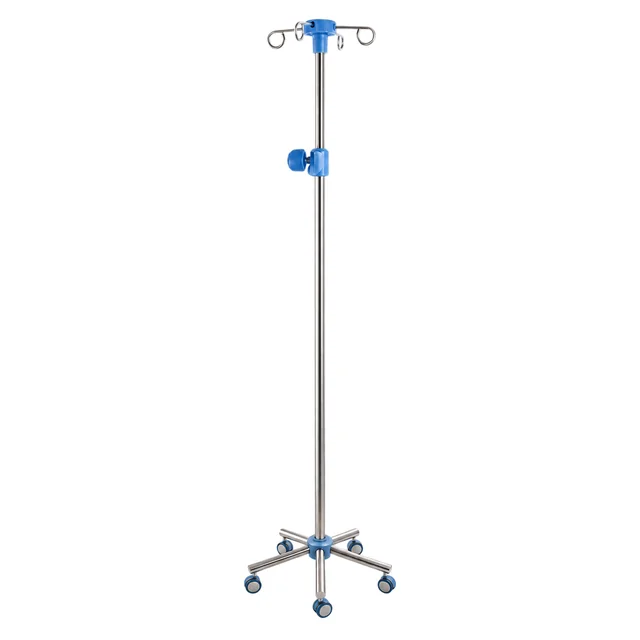
- IV pole for sale: the KL-LJ045-1 stainless steel IV stand is designed for hospital beds and transfusion chairs. Check hook count, height range and stability under the heaviest pump you use.
- Medical exam table for sale: an examination couch is a separate device class from a hospital bed. Specify height, width, backrest range and upholstery cleanability, and buy from a supplier that services them locally.
Hospital bed buying checklist
- Define patients and setting: ward, ICU, home, paediatric.
- Choose drive system and function count.
- Set the numbers: safe working load, height range, platform size, tilt.
- Choose new, refurbished or factory-direct based on volume and service capability.
- For used beds, complete the inspection list above.
- Match mattress, rails and IV pole to the bed.
- Compare quotes on total landed and lifetime cost, on the same Incoterm.
- Agree warranty and spare parts in writing.
Specification line: new 3-function electric hospital bed, backrest 0–70°, knee-rest 0–30°, height 450–760 mm, safe working load 200 kg, platform 1,930 × 900 mm, aluminium side rails, 125 mm castors with brakes, segmented foam mattress 1,900 × 900 × 100 mm, tested to IEC 80601-2-52, ISO 13485 manufacturer, written warranty and spare-parts list.
If you buy for a hospital, project or distribution business, request a quotation with your quantities and destination, and our export team will reply with model-specific pricing. Browse the full hospital bed range first if you are still shortlisting.
Sources and further reading
- Medicare.gov: Hospital beds — coverage, enrolled suppliers and cost share.
- FDA: Hospital Beds — entrapment reports and bed safety guidance.
- FDA: Remanufacturing of Medical Devices (final guidance, 2024) — servicing vs remanufacturing.
- MHRA National Patient Safety Alert NatPSA/2023/010 — older beds, maintenance and risk assessment.
- IEC 80601-2-52:2026 Medical beds for adults — current safety standard for new beds.
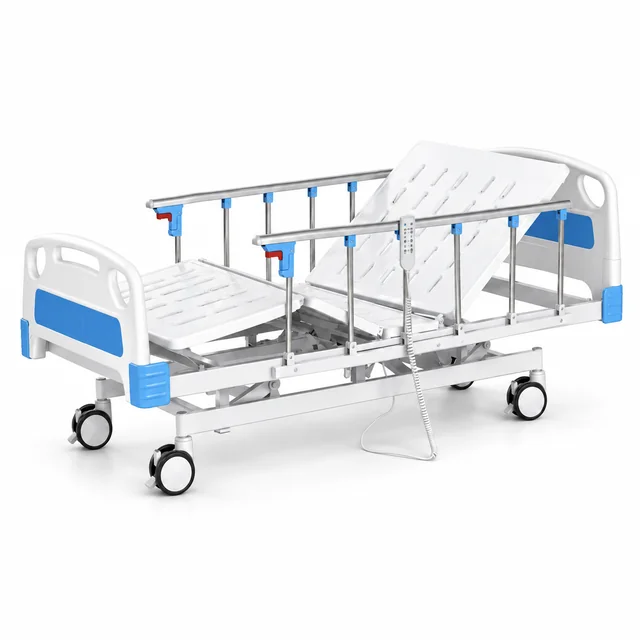
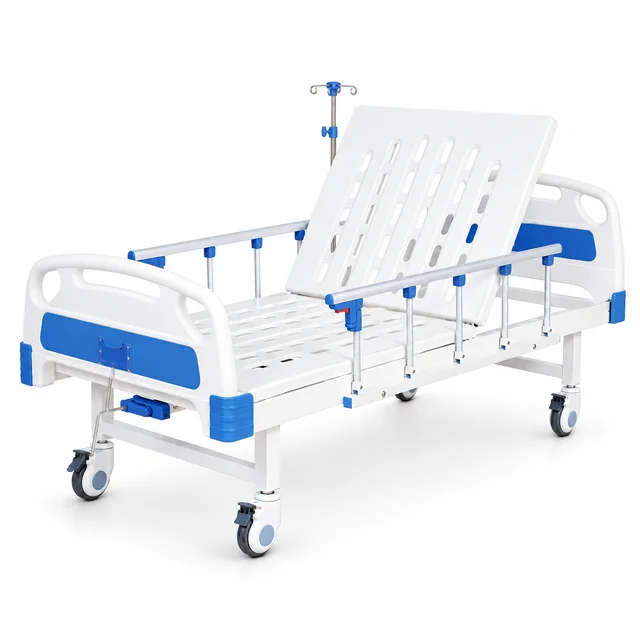
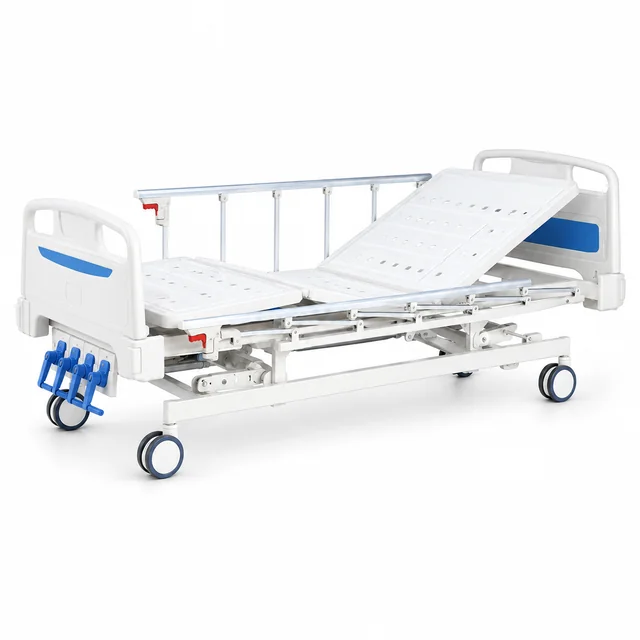
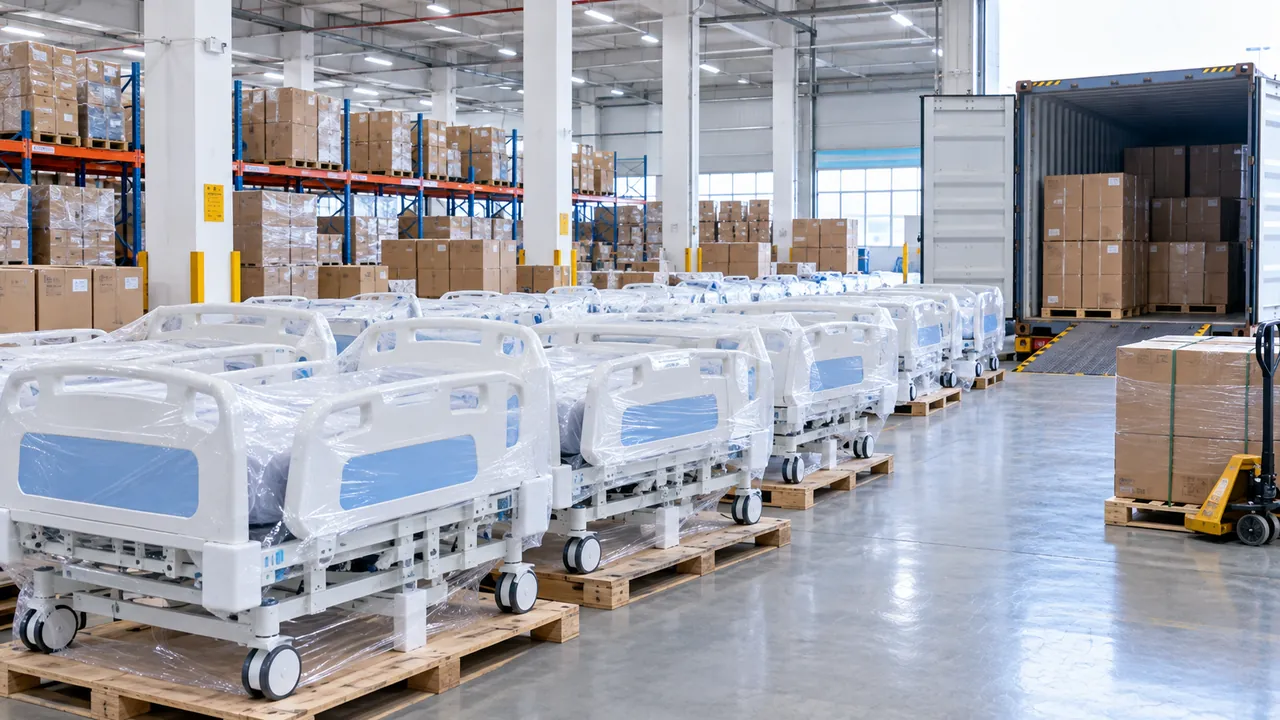
Illustration: AI-generated image for explanation only; it does not show a specific Keling model. See the linked product pages for actual product photos and specifications.
Frequently asked questions
Where can I buy a hospital bed?
Individuals usually buy or rent a hospital bed from a local DME supplier or medical equipment store, which can deliver, set it up and sometimes bill insurance. Clinics may buy refurbished beds from a reseller. Hospitals, distributors and projects buying in volume can buy new beds direct from a manufacturer, with configuration options and the lowest unit cost.
Are second hand hospital beds safe to buy?
A second-hand hospital bed can be safe if it is an identifiable model with parts available, a documented service history and a current electrical safety test. Check every function, the brakes, rail latches and the gaps between rails, mattress and headboard. Older beds may not meet current standards for children and small adults, so check their suitability.
How much does a hospital bed cost to buy?
Hospital bed cost depends mainly on drive system and function count: a manual one-function bed costs far less than a five-function electric ICU bed. Mattress, rails, scales, battery backup, quantity, freight, duties and installation all add to the price. Compare quotes on matching specifications and the same delivery terms, and include maintenance and spare parts.
How can I get a hospital bed for home use?
Start with the patient's doctor. In the US, Medicare Part B may cover a hospital bed that is medically necessary and prescribed for home use, if it comes from a Medicare-enrolled supplier; after the deductible the patient generally pays 20% of the approved amount. Other countries use community equipment services or insurers.
Can I buy hospital beds wholesale direct from a manufacturer?
Yes, if you are buying in volume as a distributor, hospital group, NGO or project contractor. Factory-direct orders are usually planned by the container, may combine several models, and need import formalities and local registration. Ask for the ISO 13485 certificate, CE declaration, test reports, spare-parts list and written warranty before ordering.
What is the difference between refurbished and used hospital beds?
A refurbished bed has been inspected, repaired and tested by a reseller, and usually comes with a short warranty from that reseller. A used bed sold as seen has no such work or warranty. In the US, FDA guidance distinguishes servicing from remanufacturing, and a refurbisher that significantly changes a device may take on manufacturer obligations.
About the author
This article was written by the Keling Medical export team, drawing on the engineering data for the 33 bed, cot, mattress and accessory models Keling manufactures at its Yangzhou plant, and checked against the published standards and guidance listed in the sources. Keling Medical has been making medical appliances since 1996 and holds CE, ISO 9001 and ISO 13485 certification. More about Keling.