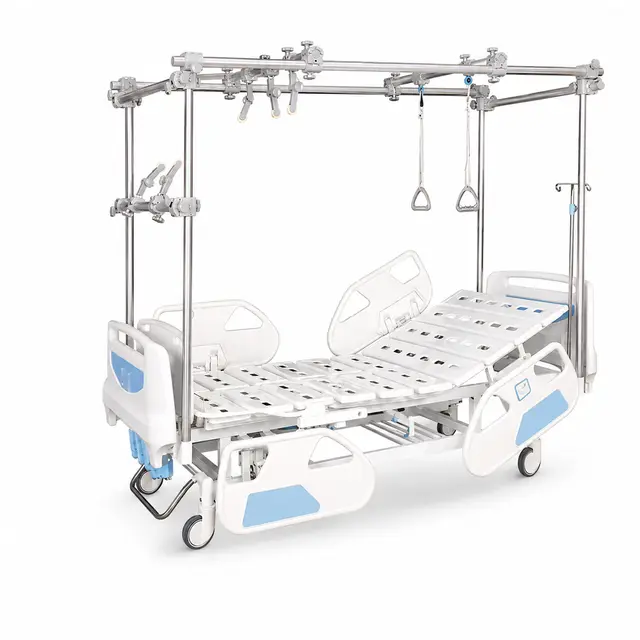
Full-Electric vs Semi-Electric vs Manual Hospital Beds: Which Should You Buy?
Compare full-electric, semi-electric and manual hospital beds by adjustment method, power requirements, staff workload, maintenance and purchasing cost.
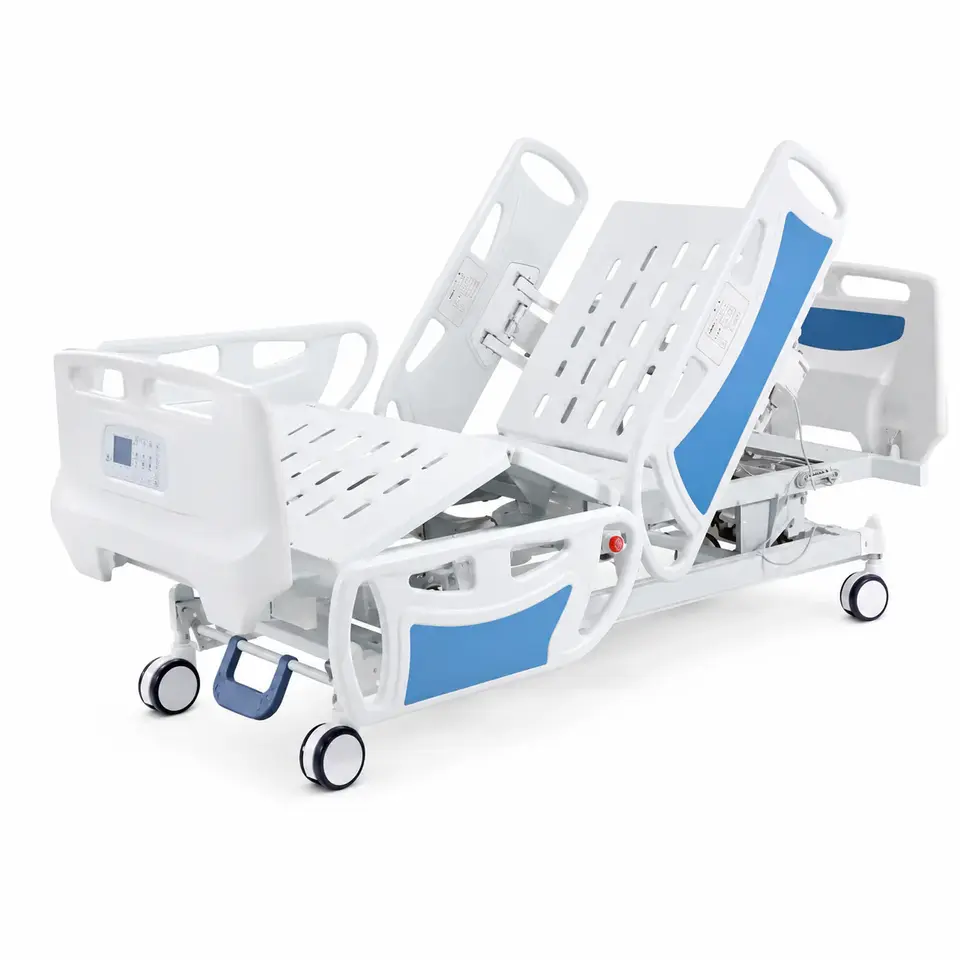
The difference between full-electric, semi-electric and manual hospital beds is how their adjustable functions are operated. That difference affects staff effort, patient access to controls, electrical dependence and maintenance. It does not, by itself, tell you which functions the bed includes or whether its height can change.
For an export project, the right choice depends on the receiving facility. A hospital with frequent adjustments and local engineering support may value powered operation. A clinic with an unstable electricity supply may prioritise manual adjustment. A mixed fleet may be appropriate when departments have different needs, provided spare parts and training remain manageable.
Before comparing prices, write down the movements each room actually requires. Then decide how those movements should be powered. This prevents a low initial price from concealing the absence of a function that staff need every day.
The three drive types in plain terms
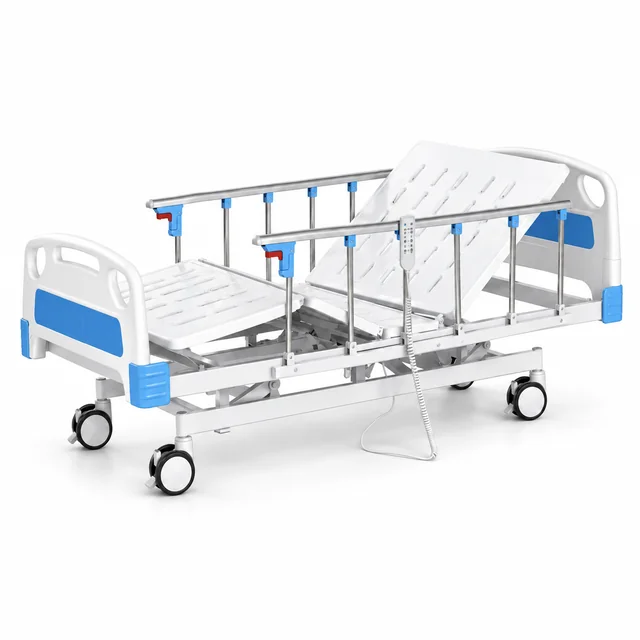
In a typical full-electric configuration, the available adjustable sections and height movement are electrically operated. However, suppliers sometimes use “electric bed” for a fixed-height product with powered backrest and knee-rest. Always ask whether electric height adjustment is included.
A semi-electric hospital bed combines electric and manual adjustment. A common arrangement has powered backrest and leg positioning with manual height adjustment, but the term is not sufficiently precise for a purchase order. The supplier should identify the drive method for every function.
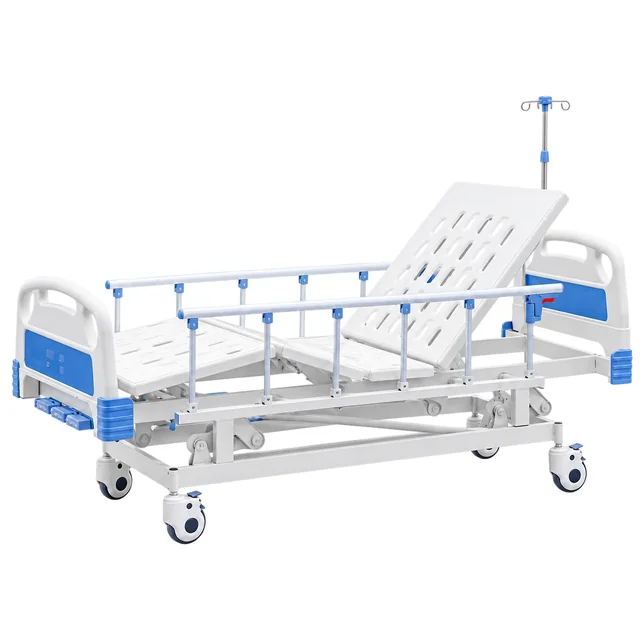
A manual hospital bed uses cranks or other mechanical mechanisms for its available adjustments. Manual does not necessarily mean fixed-height or limited to a backrest. Some manual models provide several movements, including height and longitudinal tilt. Keling's hospital bed function guide helps separate movement count from drive type.
| Buying consideration | Full-electric configuration | Semi-electric configuration | Manual configuration |
|---|---|---|---|
| Adjustment method | Powered available movements; verify height | Mixture of powered and manual movements | Mechanical adjustment of available movements |
| Power dependence | Electrical functions need an approved supply or backup | Electrical functions still depend on power | Bed adjustments do not need mains power |
| Staff effort | Less crank operation | Effort remains for manual functions | Staff operate cranks or mechanisms |
| Maintenance focus | Drives, controls, cables and mechanical parts | Both electrical and manual components | Linkages, cranks, brakes and mechanical parts |
| Cost comparison | Quote the complete specification | Compare the exact hybrid arrangement | Include staff workflow and maintenance costs |
When full-electric operation earns its place
Powered adjustment can make frequent position changes more practical, especially when the bed height needs to change repeatedly during care. It may also let an appropriate patient use permitted movements through a handset, while caregiver controls manage functions that require supervision.
The purchasing question is how often these capabilities will be used. Ask nurses to demonstrate a typical shift's work: transfers, bed making, examination, repositioning and cleaning. Identify where reaching for a crank would add repeated effort or where a powered control would be difficult to access.
Electrical operation brings responsibilities. The facility needs an appropriate supply, safe cable routing, compatible plugs and a maintenance plan. If a battery is offered, confirm which functions it powers, how it is maintained and what staff should do when it is depleted. A battery option is not an unlimited continuity guarantee.
Patient controls also require thought. Specify the functions patients can operate, the caregiver lockout arrangement and the clarity of control labels. A more elaborate control panel is useful only when users can understand it and the facility can support it.
Semi-electric beds: a compromise that must be specified
A semi-electric hospital bed can be attractive when powered upper-body positioning is useful but powered height adjustment is not part of the budget. Its value depends on the actual work left to the manual mechanism. If height changes are frequent, the saving may come with considerable additional staff effort.
Ask the supplier for a function-by-function matrix instead of accepting a broad product name. The quotation should say, for example, which movements are electrical, which are manual and which are unavailable. A fixed-height electric bed is not automatically a semi-electric bed simply because it has fewer motors.
Evaluate maintenance as a combined system. A hybrid still contains electrical controls and powered components, while also requiring inspection of its cranks and mechanical linkages. It should not be presented as inherently maintenance-free or as automatically offering the lowest lifetime cost.
If replacing existing beds, check whether the proposed hybrid creates a new operating pattern for staff. Consistent labels and a short practical training session may be especially important when some beds have powered height adjustment and others use a crank.
Manual beds where power reliability matters
A manual bed can provide positioning without dependence on the facility's electricity supply. That is a useful characteristic for remote services, temporary installations or buildings where reliable power for every bed cannot be assured. It is a purchasing consideration that should be assessed locally, rather than assumed from a country's name.
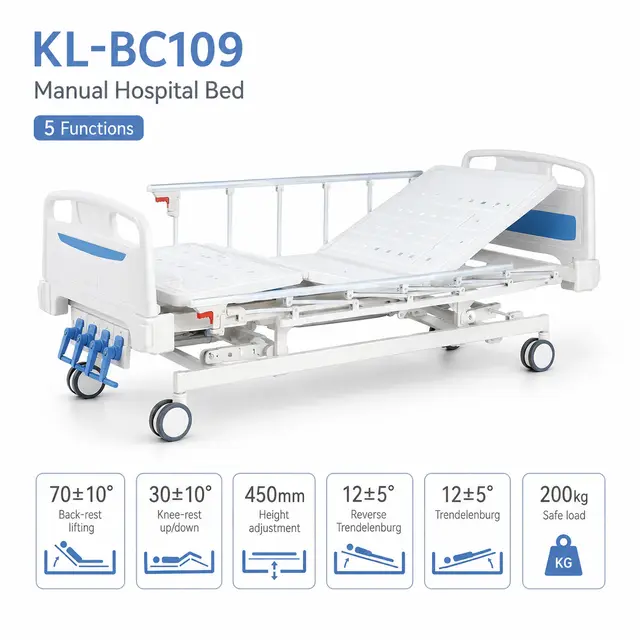
Manual equipment still needs suitable design and maintenance. Inspect crank access, operating effort, folding handles, pinch-point protection and the condition of the mechanisms. A handle that projects into a busy aisle can create a different operational problem from the power issue it solves.
The ability to adjust a manual bed does not mean adjustment is equally convenient in every situation. Have staff assess representative movements at the supplier's approved test conditions. Establish whether the bed can be positioned quickly enough for the intended care setting and what emergency release arrangements are provided.
For projects with basic infrastructure, pair the bed decision with the rest of the room plan. A manually adjustable bed does not make a powered mattress independent of electricity. The support surface, examination lighting and other clinical equipment still need their own continuity arrangements.
Compare total cost without invented savings
Initial purchase cost is only one line in the comparison. Add freight, installation, training, spare components, planned maintenance and the consequences of downtime. Ask suppliers to price a defined spare-parts list and explain warranty coverage, exclusions and the process for obtaining replacement components.
Avoid using a generic percentage to claim that one drive type is cheaper over its lifetime. Work out the likely maintenance and operating costs from the facility's own conditions. If service history is unavailable, label assumptions clearly and compare more than one reasonable scenario.
Fleet consistency can also matter. Ordering several different actuator systems or crank mechanisms may increase spare-parts stock and training needs. On the other hand, forcing one expensive configuration into every department can waste budget. Standardise where requirements match and document why a department needs an exception.
The HSE's equipment guidance emphasises suitable equipment, trained use and maintenance. These principles apply to mechanical as well as electrically operated beds; removing a motor does not remove the obligation to keep the equipment safe. HSE: Equipment Safety in Health and Social Care.
Comparing the Keling range accurately
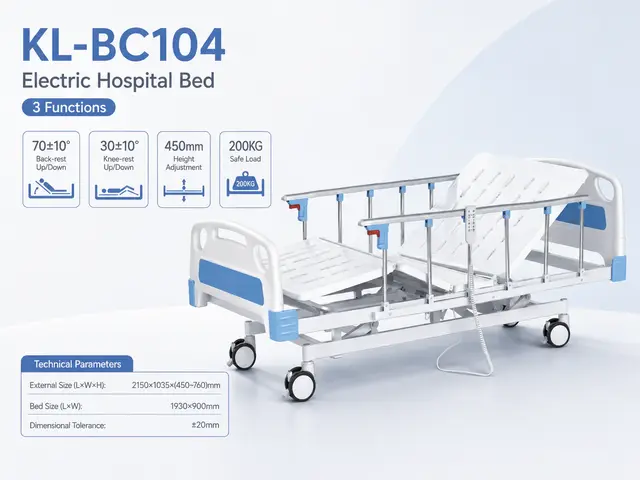
Keling's published KL-BC104 specification lists electric backrest, knee-rest and height adjustment. The KL-BC108 offers those three movements manually. Both pages list height adjustment from 450 to 760 mm, making them useful starting points for comparing drive method while keeping the movement requirement similar.
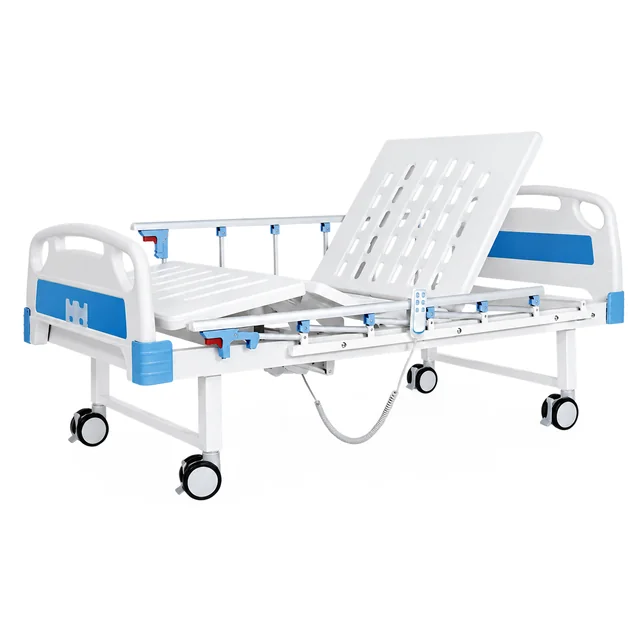
The KL-BC105 lists powered backrest and knee-rest with a fixed 450 mm height. That should be treated as a fixed-height electric configuration, not relabelled as a confirmed semi-electric product. A semi-electric requirement needs a separate written availability and specification confirmation from Keling.
For a clinic project, use the rural manual-bed ward page to structure the discussion around room requirements and support needs. Request the final technical schedule, approved mattress and accessories for the exact model before ordering.
Frequently asked questions
Does “electric” mean the bed height is electrically adjustable?
No. Some electric beds have powered backrest and knee-rest adjustment but a fixed height. Confirm height adjustment as a separate line in the specification.
Will a semi-electric bed still work during a power failure?
Its manual functions may remain available, but powered functions depend on the model's approved backup or override arrangements. Ask what happens to each movement when mains power is lost.
Are manual beds maintenance-free?
No. Cranks, mechanisms, castors, brakes, rails and fixings require inspection and maintenance according to the manufacturer's instructions. Manual adjustment removes the electrical drive, not all service requirements.
Should every ward use the same drive type?
Only where the care and operating requirements match. A mixed fleet can be reasonable if the facility can manage training, identification and spare parts without creating confusion.
Request a comparison based on the functions you need
Send Keling the required movements, bed quantity, power conditions and service arrangements through the quotation form. Ask for comparable electric and manual offers, and a separately confirmed semi-electric option if required, with each adjustment method clearly stated.
About the author
This article was written by the Keling Medical export team, drawing on the engineering data for the 33 bed, cot, mattress and accessory models Keling manufactures at its Yangzhou plant. Keling Medical has been making medical appliances since 1996 and holds CE, ISO 9001 and ISO 13485 certification. More about Keling.