Importing hospital beds in bulk: MOQ, container loading, lead times and OEM
The commercial mechanics of a hospital bed import: why units-per-container matters more than unit price, how to read a quotation properly, what MOQ really depends on, and how to structure a first order so a bad supplier choice does not cost you a container.

Short answer
On hospital beds, the number of units per container usually affects landed cost more than the unit price does, because beds are bulky relative to their value. Always ask for carton dimensions, gross weight and units per 20ft and 40HQ container alongside the unit price. Structure a first order as a mixed container to test the market and the supplier, confirm payment terms and inspection rights before production starts, and treat lead time as manufacturing plus shipping plus registration — registration is usually the longest of the three.
The engineering side of buying hospital beds is well covered — function count, load rating, certification. The commercial side is covered much less, and it is where most of the money is actually lost.
This article is about the commercial mechanics: what determines landed cost, how to read a quotation, what MOQ really depends on, and how to structure a first order.
The single most important number: units per container
Hospital beds are bulky and, relative to their volume, not very valuable. That combination means freight is a large fraction of landed cost, and the number of units you can fit in a container often matters more than the unit price.
Consider the structure of the calculation. A 40ft high-cube container has roughly 76 m³ of internal volume and can carry around 28 tonnes of payload. For hospital beds, volume runs out long before weight does — so the question is entirely about how densely the beds pack.
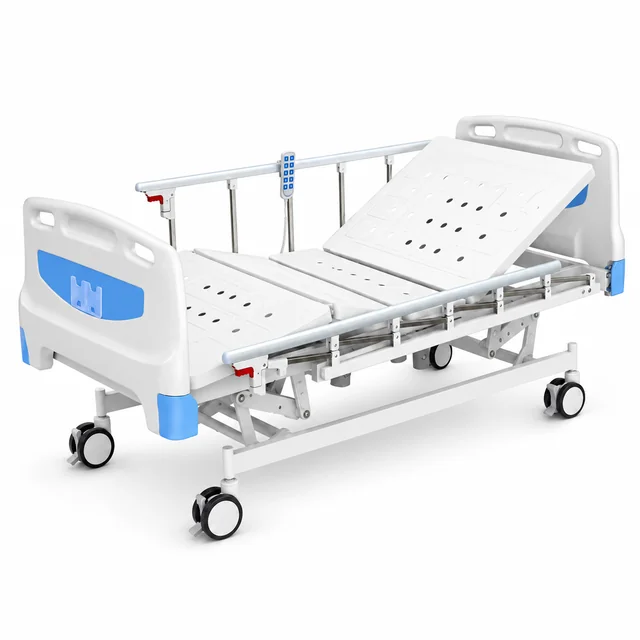
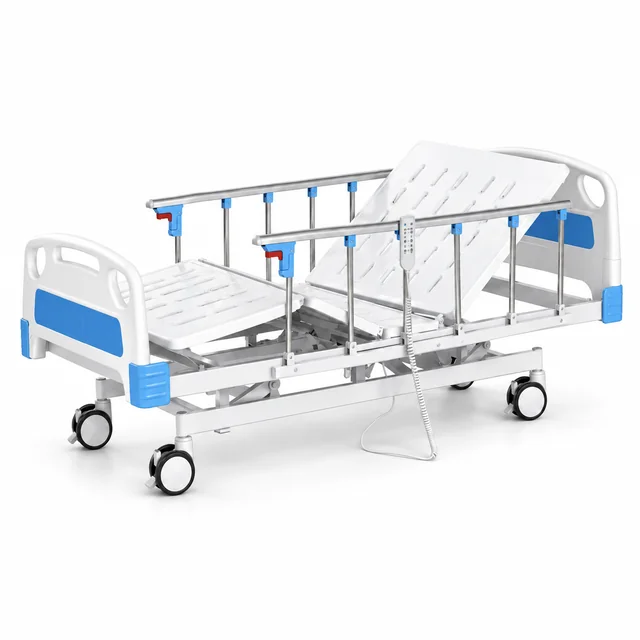
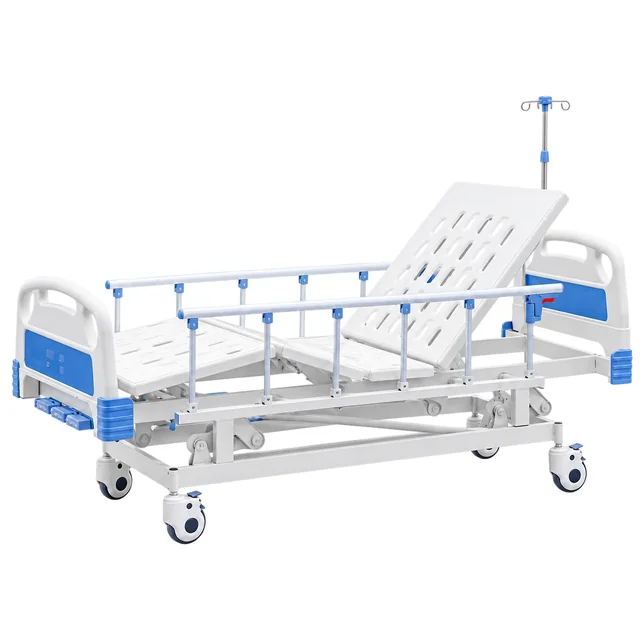
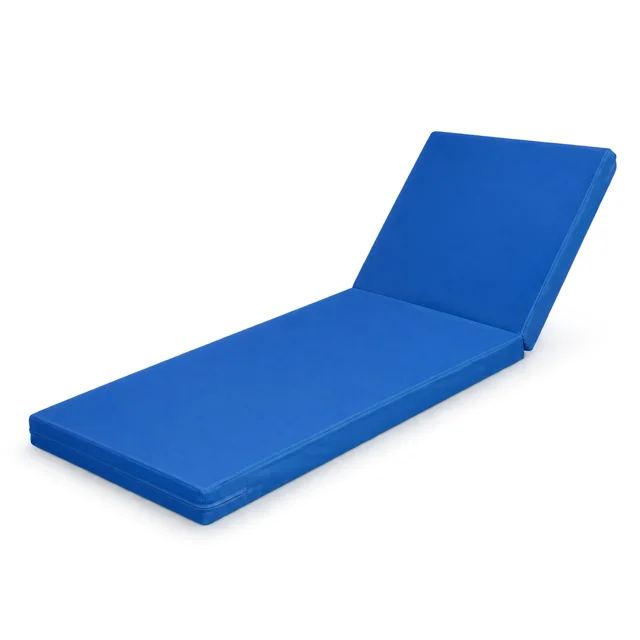
The variable that dominates is knocked-down versus assembled packing. A bed shipped as a flat-packed frame, separate head and foot boards and a boxed mattress packs dramatically more densely than the same bed shipped assembled. Between two suppliers quoting the same product, a difference of 40% or more in units per container is common — and that difference swamps a few percent on the unit price.
So: never accept a unit price without the loading figures. Ask every supplier for:
- carton dimensions (L × W × H) per bed and per mattress;
- gross and net weight per carton;
- units per 20ft container and per 40ft high-cube;
- whether the bed ships assembled or knocked down, and what assembly is required on arrival.
Then compute landed cost per bed properly:
Landed cost per bed = unit price + (total freight ÷ units per container) + insurance + duty + port charges + inland transport ÷ units
Run that for each quotation. The ranking frequently reverses.
One caveat that should be weighed against density: a knocked-down bed needs assembly at destination. If your customer is a hospital with no technical staff, that assembly labour is a real cost and a real risk. Ask what tools are needed, how long one bed takes, and whether assembly instructions exist in your language.
Reading a quotation properly
A quotation that does not contain the following is incomplete, and you should send it back:
| Item | Why it matters |
|---|---|
| Model and full configuration | "Hospital bed" is not a specification; the price is meaningless without it |
| Unit price and the Incoterm (FOB, CIF, DAP…) | An FOB price and a CIF price are not comparable |
| Named port of loading / destination | CIF to the wrong port is a different number |
| Carton dimensions and gross weight | Needed for the landed-cost calculation |
| Units per 20ft and 40HQ | See above |
| Lead time, split by model | Stock items and made-to-order items have different lead times |
| Validity period | Steel and freight prices move |
| Payment terms | Determines your working capital requirement |
| Warranty period and what it covers | "One year warranty" covering only the frame is not the same as covering actuators |
| Spare parts price list | The cost you will carry for the next decade |
| HS code | Determines duty |
The last three are the ones most often omitted and most often expensive later.
What MOQ actually depends on
"What is your MOQ?" is the most common first question and the least useful, because the answer depends on three separate things.
Model. A high-volume standard model may have a low minimum because it is produced continuously. A specialised bed such as an orthopaedic traction bed is built to order, and the minimum reflects that.
Customisation. This is the real driver. Standard finish, standard branding: low minimum. Custom RAL colour: a minimum set by the powder-coating batch. Custom headboard design: a minimum set by tooling. Private-label branding and printed cartons: a minimum set by print runs. Ask for MOQ per level of customisation, because the answer is different for each.
Mixed containers. Most factories, including ours, accept mixed containers for a first order — a few of each model rather than a container of one. This is almost always the right way to start. It lets you test which configuration your market actually buys before committing a full container to a decision you are guessing at.
Structuring a first order
A first order with a new supplier has one job: to learn as much as possible for the least money at risk.
- Sample first, if the timeline allows. One bed, air or courier freight. Expensive per unit, trivial against a container. You learn more from an hour with a physical bed than from six weeks of emails.
- Mixed container second. A few units each of two or three models, plus mattresses and a small quantity of spare parts. You test the product, the packing, the documentation and the supplier's communication in one shipment.
- Tie payment to verifiable events, not to dates. Deposit against order, balance against a bill of lading and a passed inspection report. If a payment milestone is a date rather than an event, you are financing delay.
- Book a third-party pre-shipment inspection against your own checklist. It costs a small fraction of the container's value. Agree in advance: the inspection standard, the sampling plan, the criteria for rejection, and who pays for a re-inspection if the first fails.
- Get the documentation with the goods, not afterwards. Declaration of Conformity, certificates, datasheets, packing list, certificate of origin.
Lead time is three things, and the biggest one is not manufacturing
Buyers routinely plan around manufacturing lead time alone and are then surprised. There are three sequential stages:
Manufacturing — typically a few weeks, longer for custom colours, custom tooling or large quantities. Ask for it per model, because a mixed order ships at the pace of its slowest line.
Ocean freight — typically two to six weeks depending on route, plus port handling at both ends. Add buffer for congestion; it recurs.
Medical device registration in the destination market — months, not weeks, in most jurisdictions, with its own dossier requirements and often a local representative. This is usually the longest of the three and it is the one most often started last. Begin it before you place the manufacturing order, not after the container sails.
Payment, currency and who carries what
A few points that come up in every negotiation:
- Incoterms allocate risk and cost, not just price. Under FOB, risk transfers when the goods are loaded; you arrange and pay freight and insurance. Under CIF, the seller arranges freight and insurance to the named port but the risk still transfers at loading. Know which you are agreeing.
- Currency. Most China exports are quoted in USD. If your revenue is in another currency, that exposure is yours; on a long lead time it is worth hedging or agreeing a rate band.
- Letters of credit give both sides security on larger orders but are unforgiving of documentary errors. If you use one, have the draft LC text reviewed by the exporter before it is issued — a mismatch between the LC and the shipping documents is the most common cause of a delayed payment and a stranded container.
OEM: deciding how much difference you actually need
If you plan to sell under your own brand, be precise about what you need, because the cost difference between levels is large:
- Private label — our bed, your branding and packaging. Fastest, cheapest, minimal lead-time impact.
- Cosmetic customisation — your headboard design, your colour. Moderate tooling, moderate minimum.
- Engineered variants — changed dimensions, ranges or load rating. Real engineering time and higher minimums.
- Full custom development — only sensible at volume.
Many buyers ask for engineered changes when private label plus a headboard redesign would achieve the same commercial result. It is worth having that conversation honestly with the factory before the quotation, not after. Our OEM programme page sets out how a project runs and what we need from you to assess it.
Ten questions to ask any bed supplier
- Are you the manufacturer? What is the factory's registered name, and does it match the ISO 13485 scope?
- Can I see production, in person or by video call?
- What are the carton dimensions, gross weight and units per 20ft and 40HQ?
- Does the bed ship assembled or knocked down, and what assembly is needed?
- What is the lead time per model, and what drives it?
- What is the MOQ for standard, for custom colour, and for private label?
- What does the warranty cover — frame only, or actuators, handsets and control boxes too?
- What is the spare-parts price list, and how long will parts remain available?
- Will you accept a third-party pre-shipment inspection against my checklist?
- Can you issue signed datasheets, a Declaration of Conformity and current certificates for this exact model?
A supplier who answers all ten without hesitation is worth working with. One who answers eight and deflects on the loading figures and the spare parts is telling you where the problems will be.
If you would like these questions answered for our own products, send the models and quantities you are considering — the quote request page attaches your shortlist automatically, and our export team replies with pricing, loading figures and lead times within one business day.
Frequently asked questions
How many hospital beds fit in a container?
It depends entirely on the model and on whether beds ship knocked down or assembled. Knocked-down beds pack far more densely, and the difference between two suppliers' packing can be 40% or more on the same product. Never accept a unit price without the corresponding carton dimensions, gross weight and units per 20ft and 40HQ container — on a bulky, low-value product this figure often matters more than the price itself.
What is the minimum order quantity for hospital beds?
MOQ depends on the model and on customisation. Standard catalogue models can usually be combined in a mixed container, which is how most first orders are placed. A custom colour, a custom headboard or private-label branding raises the minimum, because setup and tooling costs must be recovered. Ask for MOQ per model and per level of customisation rather than as a single number.
What payment terms are normal?
A deposit against order with the balance against shipping documents is the common structure. Letters of credit are used on larger orders and on tender-backed contracts. What matters more than the headline terms is that the payment schedule is tied to verifiable events — production completion, third-party inspection, bill of lading — rather than to dates alone.
Should I inspect before shipment?
Yes, on any order large enough to matter. A third-party pre-shipment inspection costs a small fraction of a container's value and is carried out against your own checklist. A manufacturer that resists inspection is telling you something. Agree the inspection standard, the sampling plan and who pays for a re-inspection before production starts.
How long does it take to get hospital beds delivered?
Budget for three sequential stages: manufacturing, typically a few weeks depending on quantity and customisation; ocean freight, typically two to six weeks depending on route; and medical device registration in the destination market, which can take months and is usually the longest of the three. Start registration first, not last.
About the author
This article was written by the Keling Medical export team, drawing on the engineering data for the 33 bed, cot, mattress and accessory models Keling manufactures at its Yangzhou plant. Keling Medical has been making medical appliances since 1996 and holds CE, ISO 9001 and ISO 13485 certification. More about Keling.