CE marking and ISO 13485: what they actually prove when you import hospital beds
Every Chinese bed supplier claims CE and ISO 13485. Here is what each one legally means, what it does not mean, how to verify a certificate in ten minutes, and which documents your tender or customs clearance will actually need.
Short answer
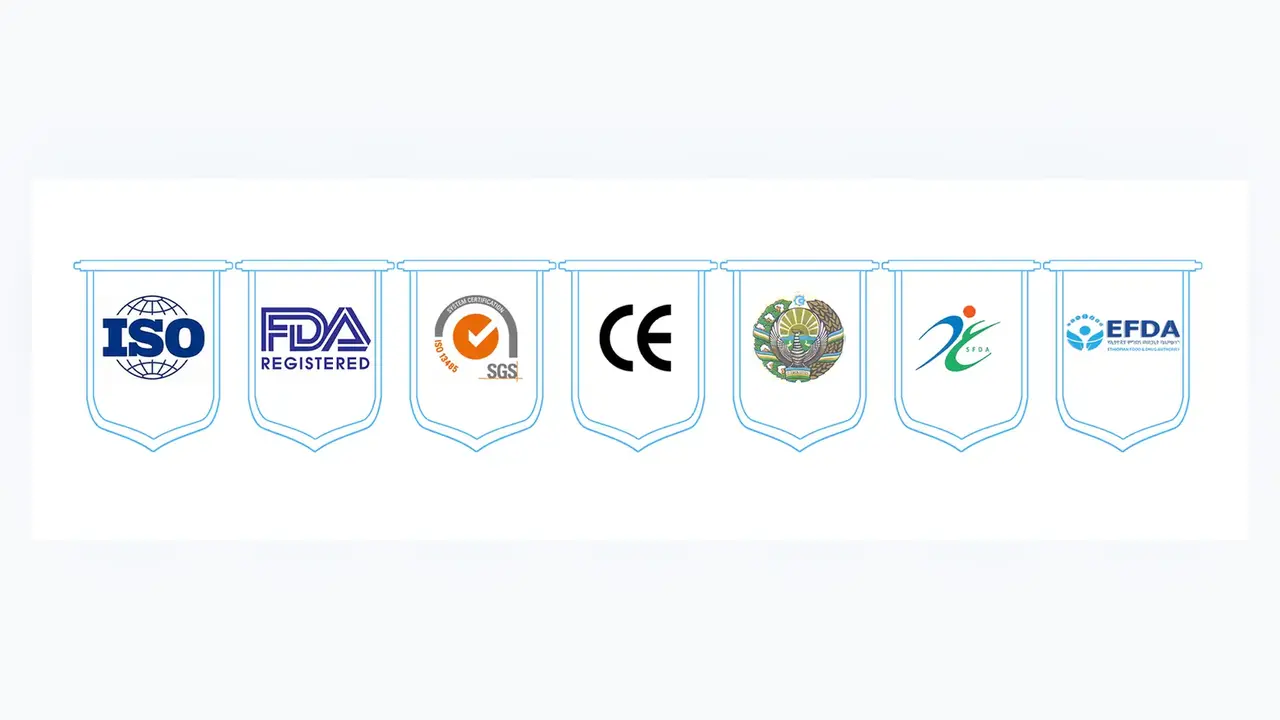
CE marking is a manufacturer's declaration that a device meets applicable EU requirements, allowing it to be placed on the EU market — for a standard hospital bed this is usually self-declared against harmonised standards rather than certified by a notified body. ISO 13485 is a quality management system standard for medical devices, audited by an external certification body. Neither is a product test certificate. To verify a supplier's claims, check the certificate's issuing body, scope, product coverage and expiry date, then verify the certification body itself is accredited.
Ask any hospital bed supplier whether their product is CE marked and ISO 13485 certified, and the answer is yes. That answer is almost meaningless on its own. This article explains what each claim legally covers, what it does not, and how to check it properly before you commit a container of capital.
We are a manufacturer that holds both, so we have an obvious interest here. We have tried to write it as we would explain it to a buyer on our own stand — including the parts that are less flattering to our industry.
CE marking: a declaration, not a prize
CE marking is the manufacturer's declaration that a product meets the applicable European health, safety and environmental requirements, and may therefore be placed on the market in the European Economic Area.
Two things follow that surprise buyers.
First, for most hospital beds it is self-declared. The European system scales scrutiny to risk. A standard hospital bed is a lower-risk device, and the conformity assessment route for it generally allows the manufacturer to declare conformity against the applicable harmonised standards, holding a technical file that substantiates the claim. A notified body — an independent organisation designated to assess conformity — is involved for higher-risk classes and for certain assessment routes. So "CE marked" does not automatically mean "assessed by an independent European body".
Second, "CE certificate" is often not a certificate at all. Buyers are routinely shown an impressive-looking document headed "CE Certificate of Conformity", issued by a private testing laboratory. That document may be perfectly genuine as a test report or assessment report — evidence the manufacturer used to build its technical file. It is not a regulatory approval, and the body issuing it may have no designation at all. Read the issuing organisation and the document's own description of what it attests.
What you should actually ask for is the Declaration of Conformity — a document signed by the manufacturer, naming the specific product and model, citing the applicable legislation and the harmonised standards applied, and accepting responsibility. That is the legally meaningful document, and a manufacturer who cannot produce one per model is telling you something important.
ISO 13485: a system, not a product
ISO 13485 is the international standard for a quality management system for medical devices. It is genuinely audited: an external certification body inspects the organisation, initially and then on a surveillance cycle, and the certificate can be suspended or withdrawn.
What it covers is the system:
- Design and development control — that changes to a product are planned, reviewed, verified and documented rather than made on the shop floor.
- Traceability — that the steel, the actuator and the ABS mouldings in a given bed can be traced to their batches.
- Process validation — that processes whose output cannot be fully verified by later inspection, such as welding and powder coating, are validated and controlled.
- Complaint handling and post-market surveillance — that field failures come back into the system and produce corrective action.
What it does not cover is any individual product's performance. A factory can hold a valid ISO 13485 certificate and consistently manufacture a bed to a poor specification. The certificate says the bed will reliably be what the specification says; it does not say the specification is good. Product performance is evidenced separately, through test reports against the relevant product standards.
Verifying a certificate in ten minutes
This is worth doing before every first order, and periodically afterwards. Four checks:
- Who issued it? Find the certification body's name on the certificate and locate their public certificate directory. Most reputable bodies publish one. If there is no way to check the certificate exists, treat it as unverified.
- Is the issuing body accredited? Certification bodies are themselves accredited by national accreditation bodies. An unaccredited body issuing ISO 13485 certificates is a real phenomenon and the certificates are worth little.
- What is the scope? Read the scope text carefully. It should name the product family — hospital beds and medical furniture — and it should say manufacture, not only trading or distribution. A trading company's ISO 13485 tells you nothing about the factory.
- Is it current? Check the expiry date and, if the order value justifies it, email the certification body with the certificate number and ask them to confirm.
The whole process takes about ten minutes and prevents the most common form of supplier misrepresentation in this industry.
The trading-company problem
A large share of Chinese hospital bed "manufacturers" online are trading companies. This is not inherently dishonest — a good trading company adds real value in documentation, consolidation and communication. But it changes what your certificates mean and what happens when something goes wrong.
Ways to tell:
- Ask for the manufacturing licence and the factory's own name, and check it matches the name on the ISO 13485 certificate's scope.
- Ask to see production, by video call if you cannot travel. A factory can show you a welding line; a trader cannot.
- Ask a technical question that only production can answer — the wall thickness of the frame tube, the powder-coating pre-treatment process, the actuator's IP rating, the duty cycle. A trader relays it; a factory answers.
- Look at the group structure. Our own is public: Jiangsu Keling Medical Appliances Co., Ltd. manufactures in Yangzhou, and Shanghai Keling International Trading Co., Ltd. handles sales and export. Two companies, one group, and we say which is which.
What your tender or customs clearance will actually need
The document set differs by market, but the recurring list is short:
| Document | Issued by | What it is for |
|---|---|---|
| Commercial invoice, packing list | Exporter | Customs valuation and clearance |
| Bill of lading / air waybill | Carrier | Title and release of goods |
| Certificate of Origin | Exporter / chamber of commerce | Duty rates, trade agreements |
| Declaration of Conformity | Manufacturer | Regulatory compliance claim, per model |
| CE and ISO 13485 certificates | Manufacturer / certification body | Tender evaluation, registration dossiers |
| Product datasheets, signed | Manufacturer | Specification compliance |
| Test reports | Test laboratory | Technical annex evidence |
| HS codes | Exporter | Tariff classification |
Many markets additionally require national medical device registration before import — a separate process, with its own dossier, timeline and local representative requirements. Start it early; it is routinely the longest lead time in the whole project, longer than manufacturing and shipping combined.
Practical advice for tender bidders
If you are bidding a tender using an imported bed, three things repeatedly decide the outcome:
- Answer every clause of the technical annex explicitly, including the ones you do not comply with. Evaluators reward a clearly stated deviation over an ambiguous claim, and they disqualify overstated compliance when it is caught.
- Submit signed, dated documents, not website screenshots. Ask your manufacturer to issue a current set for the bid.
- Get a manufacturer's authorisation letter naming the tender, if the tender asks for one — and ask early, because it needs the tender reference on it.
We prepare compliance matrices for customers bidding with our products, and we state non-compliance openly where it exists. See the tender supply programme for what that pack contains.
The honest summary
CE marking and ISO 13485 are meaningful, and a supplier without them should be excluded. But they are a floor, not a differentiator — everyone worth considering has both. What actually distinguishes suppliers is whether the certificates are verifiable, whether the scope covers manufacturing, whether the Declaration of Conformity exists per model, and whether the company will tell you what its product cannot do.
Our own certificates, and what each one covers, are on the certifications page. Ask us for current signed copies and we will send them the same day.
Frequently asked questions
Is CE marking a certificate?
Not usually. CE marking is a declaration by the manufacturer, evidenced by a Declaration of Conformity and a technical file. For lower-risk devices such as a standard hospital bed the manufacturer self-declares against the applicable harmonised standards; a notified body is only involved for higher risk classes or where a specific conformity assessment route requires it. A document titled 'CE Certificate' issued by a private test house is a test or assessment report, not a legal certificate — read the issuing body and scope carefully.
How do I verify an ISO 13485 certificate?
Four checks. First, read the certification body's name and find their public certificate directory. Second, confirm that body is accredited by a recognised national accreditation body. Third, check the scope text actually covers hospital beds and covers manufacturing, not only trading. Fourth, check the expiry date and the certificate number, and query it with the certification body directly if the value of the order justifies it.
Does ISO 13485 mean the beds are tested?
No. ISO 13485 certifies the quality management system — design control, traceability, process validation, complaint handling — not any individual product. A manufacturer with ISO 13485 has a system for consistently producing what its specification says; product performance is evidenced separately, by test reports against the relevant product standards.
What documents do I need to import hospital beds?
Typically: commercial invoice, packing list, bill of lading, certificate of origin, the manufacturer's Declaration of Conformity, the CE and ISO 13485 certificates, product datasheets and the correct HS code. Many markets additionally require national medical device registration before import, which is a separate process with its own dossier requirements and timelines.
Can a trading company hold ISO 13485?
Yes, but for a different scope — typically distribution rather than manufacture. If your supplier's ISO 13485 scope says 'trading' or 'distribution' of medical devices, they are not the manufacturer, and the manufacturing quality system is somebody else's certificate that you have not seen. Ask for the manufacturer's certificate.
About the author
This article was written by the Keling Medical export team, drawing on the engineering data for the 33 bed, cot, mattress and accessory models Keling manufactures at its Yangzhou plant. Keling Medical has been making medical appliances since 1996 and holds CE, ISO 9001 and ISO 13485 certification. More about Keling.