What Drives Hospital Bed Price: The Factors Behind a Bulk Export Quote
Understand hospital bed price drivers, from functions and accessories to export packing, freight and service. Compare bulk quotations on a consistent basis.

Hospital bed price depends on what is supplied, how it is delivered and what support is included after installation. A unit price can refer to a bare frame, a complete bed with mattress and accessories, or an installed package with training and spare parts. Comparing those figures directly can make an incomplete offer look attractive.
For hospitals, importers and distributors, the practical goal is to establish a comparable configuration and calculate the cost of making it ready for use. This article provides a way to structure that comparison without relying on invented market averages or a fixed price range that ignores the project.
Why one hospital bed has no universal price
A general ward requiring a simple manual bed has a different brief from an ICU requiring electric positioning and specific accessories. Even two beds described as five-function can differ in movement ranges, controls, mattress compatibility, loading limits and emergency features.
Order conditions create further variation. The same model may be quoted with different packaging, destination services, documentation or spare-parts provision. Timing also matters: freight, exchange rates and component availability may change between quotations. Obtain the quote's validity period and the conditions that could trigger a revision.
Begin by defining the intended clinical use and the minimum acceptable specification. Then compare compliant configurations. Price negotiation before this step risks saving money by removing a requirement that the buyer assumed was included.
Bed-side price drivers
Functions and drive system
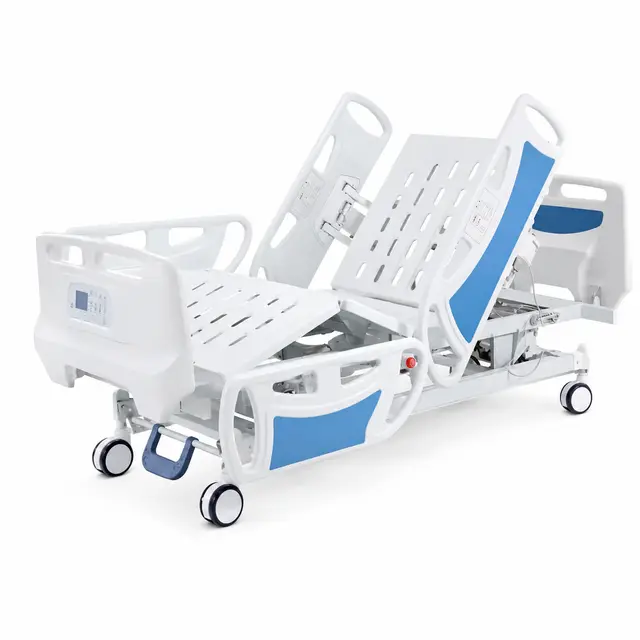
Electric positioning adds actuators, controls, wiring and associated assembly and testing. Manual mechanisms require a different component and maintenance arrangement. A semi-electric bed combines approaches, so identify which adjustments are powered and which require manual operation.
Count actual movements rather than accepting a marketing function count. Specify backrest, knee section, height and whole-bed tilt individually where required. Record angle and height ranges, the control arrangement and any emergency function. Keling's hospital-bed functions guide can help clarify the terminology before preparing an enquiry.
Frame, movement system and load limits
A quoted load rating should be supported by the manufacturer's documentation for the offered configuration. Do not compare products on steel appearance or a single capacity figure. Ask what the safe working load includes, which movements and accessories are covered, and what patient-weight limit applies.
For powered beds, compare the identified motor and control system, duty limits, serviceability and component replacement arrangements. A recognised component name does not prove the complete bed performs better, but vague substitutions make future service harder to predict. Specify whether changes to the agreed components require written approval.
Mattress, sides and accessories
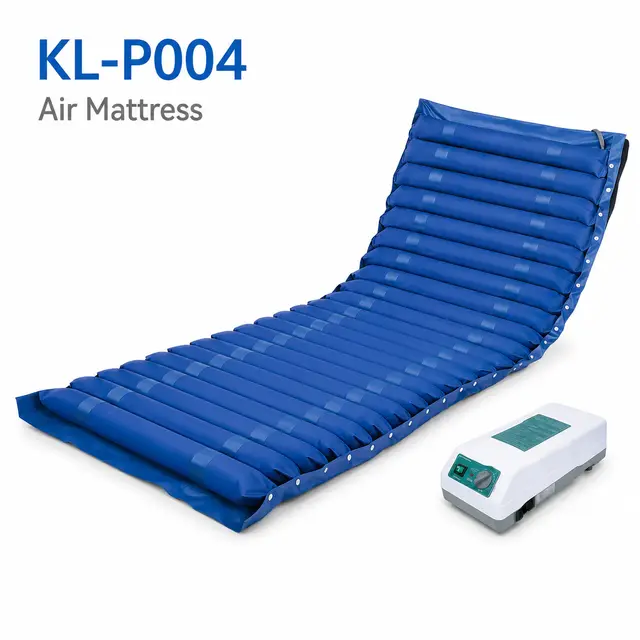
The mattress can materially change the complete package price. Foam and powered air systems have different support, cleaning and service requirements. Select the category with the clinical team and compare the approved mattress on each offer, including the pump where relevant.
Rails, head and foot boards, castors, IV poles and accessory sockets should be itemised. A photograph showing an overbed table or other furniture does not establish that it is included. Record quantities and part references so the commercial comparison follows the intended delivered package.
Documentation and compliance costs
Technical documentation, testing, traceability and quality controls require resources, but a higher quote is not proof of compliance. Evaluate evidence separately from price. ISO 13485 concerns a medical-device quality management system; it does not replace product-specific safety or market-access assessment. ISO's explanation of ISO 13485.
Specify the destination country and intended use early. Ask the supplier to identify the available model-specific documentation and any gap against the tender. If additional evaluation or registration support is needed, clarify its scope, responsible party, cost and timing before comparing totals.
Read Keling's CE marking and ISO 13485 guide alongside the requested documents. For a structured supplier review, use How to Vet a Chinese Hospital Bed Manufacturer Before You Order. A general certificate image should not be used to close an unresolved technical requirement.
Order volume, OEM work and packaging
Higher volume may spread certain setup and handling costs over more units, but the effect depends on the model mix and production arrangement. Ask for quantity-break quotations using the same specification. Do not assume that combining several models creates the same purchasing conditions as a single-model order.
Minimum order quantity can differ between a standard configuration and a customised one. Treat MOQ, sample availability and production lead time as quotation items to confirm. There is no need to invent a standard factory MOQ when a written project offer can state it directly.
For OEM or private-label supply, separate logo artwork, colours, labels, packaging, manuals and any product changes. Identify one-time charges and recurring charges. Changes that affect geometry, components or intended use may need additional evaluation; branding should not hide that distinction.
Packaging is part of the product's delivered cost. Compare assembled, partially assembled and disassembled packing where available, including protection, labelling, handling and destination assembly. A smaller carton may reduce freight volume while increasing installation work. Ask who supplies tools, carries out assembly and verifies the bed before clinical use.
Freight, trade terms and destination costs
Compare quotations with the same trade term, named place or port and version. ICC recommends identifying these elements explicitly when using Incoterms rules. The location where risk transfers can differ from the destination to which freight is paid, so a freight-inclusive quote does not automatically cover every transport risk. ICC Incoterms 2020 guidance.
Ask for packing dimensions, gross weight and the loading assumptions behind a container plan. Confirm whether mattresses, accessories and spare parts share the same shipment. An estimated loading quantity should be revised when the configuration or packaging changes.
At destination, identify clearance, duties and taxes, inspection, terminal costs, inland transport, unloading and storage as applicable. Obtain current figures from the relevant providers and qualified local advisers. Do not compare a supplier's export price with another supplier's delivered price without reconciling these items.
The total also depends on the receiving facility. Remote delivery, restricted unloading hours or the need to move equipment between buildings may create work that neither freight nor basic supply includes. Record these conditions before asking for a final offer.
A fair quotation comparison worksheet
Create a common request sheet and ask every supplier to return a deviation list. A blank response should remain unresolved rather than being interpreted as agreement. The following structure keeps price attached to scope.
| Comparison line | Information to align across offers | Cost treatment |
|---|---|---|
| Bed configuration | Model, movements, dimensions, loading limits and controls | Base unit price |
| Patient support surface | Mattress model, cover and pump where relevant | Included or separate line |
| Accessories | Rails, boards, poles and quantities | Included or separate line |
| Documentation | Required reports, manuals and language | Included work and additional charges |
| OEM requirements | Artwork, labels, colours and approved changes | One-time and recurring costs |
| Export packing | Assembly state, package size and protection | Per-unit or shipment charge |
| Freight and delivery | Agreed term, named location and scope | Current logistics quotation |
| Commissioning | Assembly, inspection, installation and training | Local or supplier service cost |
| Support | Warranty scope, spare parts and claim transport | Initial and future service exposure |
A useful purchasing calculation is the cost of the complete accepted equipment delivered and made ready for use. Add the relevant supply, logistics and commissioning items, then divide by the number of accepted usable units. This is a comparison method, not a forecast: use documented inputs and show estimates separately.
For example, one offer might include a mattress and IV pole while another lists only the bed. The second may still be competitive once those items are added, but the initial difference cannot support a decision. Resolve exclusions before ranking the offers.
Consider service cost without inventing savings
Ask which parts wear, how they are replaced and what the supplier recommends holding locally. Compare itemised spare-part prices and warranty responsibilities rather than relying on a broad promise of low maintenance.
Separate parts cover from labour, freight, diagnosis and site attendance. A warranty that supplies a replacement component may still leave the distributor responsible for sending a technician. Agree how model and serial numbers are used in a claim, what evidence is needed and who authorises repair.
Do not assign a guaranteed lifetime saving to a more expensive model without operating data. Where such data are unavailable, identify the service assumptions explicitly and use them to plan a pilot order or sample evaluation.
Getting an accurate Keling quotation
Start with a model or configuration from Keling's hospital bed range. Provide quantity by model, intended ward, destination country and delivery location. Include the required mattress, accessories, electrical configuration, documentation, packaging and any OEM requirements.
For a public project, attach the technical schedule and identify mandatory requirements using the public-health tender supply enquiry. For ordering mechanics, see the existing bulk procurement and OEM guide.
Ask Keling to show exclusions, optional items, validity, proposed lead time and payment milestones in the written offer. The resulting comparison should explain both the price and the delivered scope.
Frequently asked questions
Why can two five-function beds have different prices?
Their functions, ranges, materials, controls and included equipment may differ. Compare the signed specifications and accessory lists before treating the products as equivalent.
Is the lowest factory price the lowest project cost?
Not necessarily. Freight, local assembly, omitted accessories and service requirements may change the result. Calculate the complete cost using the same scope for every offer.
Can a supplier guarantee a container quantity in advance?
A loading proposal depends on the final packing and model mix. Ask for package dimensions and a confirmed plan for the accepted configuration before using the number in a shipping budget.
Should a buyer request a price range or a formal quotation?
A budget indication can help early planning, but procurement approval needs a written, configuration-specific offer. Keep estimated freight and other provisional inputs visible until they are confirmed.
Next step
To compare a complete hospital-bed package, request an itemised Keling quotation with your specification, quantities and destination details.
About the author
This article was written by the Keling Medical export team, drawing on the engineering data for the 33 bed, cot, mattress and accessory models Keling manufactures at its Yangzhou plant. Keling Medical has been making medical appliances since 1996 and holds CE, ISO 9001 and ISO 13485 certification. More about Keling.