Hospital Bed Side Rails: Materials, Safety Zones and How to Choose
Compare ABS, aluminium and stainless steel hospital bed side rails. Check entrapment risks, mounting compatibility and replacement specifications before ordering.
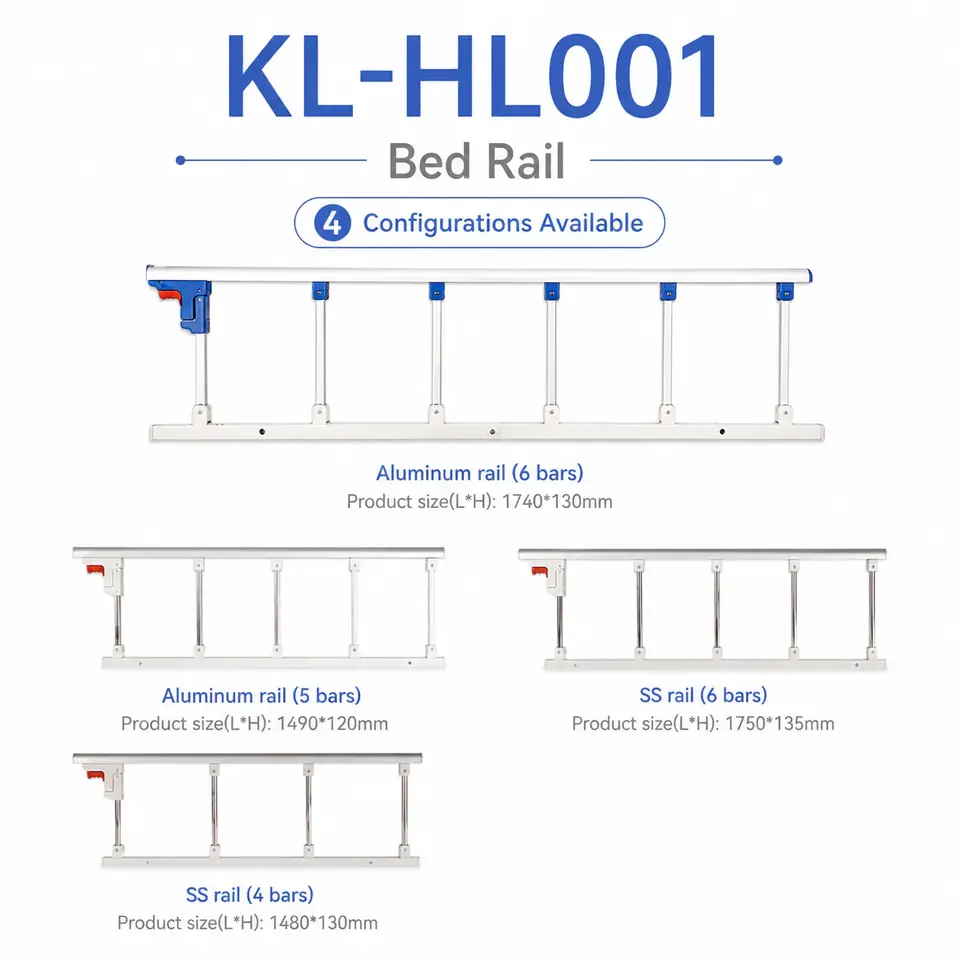
Hospital bed side rails should be specified as part of the complete bed system. Selecting a rail by its length, material or photograph alone can leave a hospital with parts that mount incorrectly, interfere with transfers or create unsafe spaces beside the mattress.
For procurement teams, the useful starting point is a compatibility record: which bed, which mattress, which rail and which intended patient group? Once that combination is defined, material and design choices become easier to compare. This guide explains the decisions behind new bed orders and replacement rail purchases.
What side rails can and cannot do
Rails may provide a boundary at the side of the bed and, when specifically designed for it, support repositioning. Their use needs an individual assessment. A rail can create an entrapment hazard or increase the consequences of a patient attempting to climb over it. Depending on its purpose and effect, rail use may constitute restraint; describing a product as a safety rail does not resolve that question. MHRA guidance on bed rails explains the need for patient assessment and compatible equipment.
Translate that distinction into the tender. Ask the supplier to state the rail's intended use, permitted loading and any restrictions on using it as a handhold. A rail intended to define the bed boundary should not automatically become the main support during a transfer. Clinical staff should decide the required access and supervision arrangements before purchasing chooses a full-length or split design.
ABS, aluminium or stainless steel?
Material names describe only part of the assembly. The latch, pivots, mounting brackets and connection to the bed also determine how a rail performs. Compare complete assemblies under the proposed cleaning and service conditions.
| Material | What to evaluate | Useful evidence to request |
|---|---|---|
| ABS plastic | Panel stiffness, accessible handholds, impact damage and chemical compatibility | Finished assembly drawing, cleaning instructions and replacement panel availability |
| Aluminium | Section design, finish, joint movement and latch durability | Alloy or construction specification, approved mounting details and functional test information |
| Stainless steel | Grade, weld finish, joint design and resistance to the intended cleaning process | Material identification, finish specification and cleaning compatibility |
Do not rank these options solely by weight or appearance. A hospital that repeatedly replaces damaged latches needs a different discussion from one that struggles with hard-to-clean joints. Ask maintenance staff to identify the failure modes in the current fleet and use those observations to set acceptance criteria.
For distributors, colour matching may matter, but a visually matching rail is not evidence of a matching fixing pattern. Keep product photographs together with dimensions and the exact variant code in the purchasing record.
Full-length, split and collapsible designs
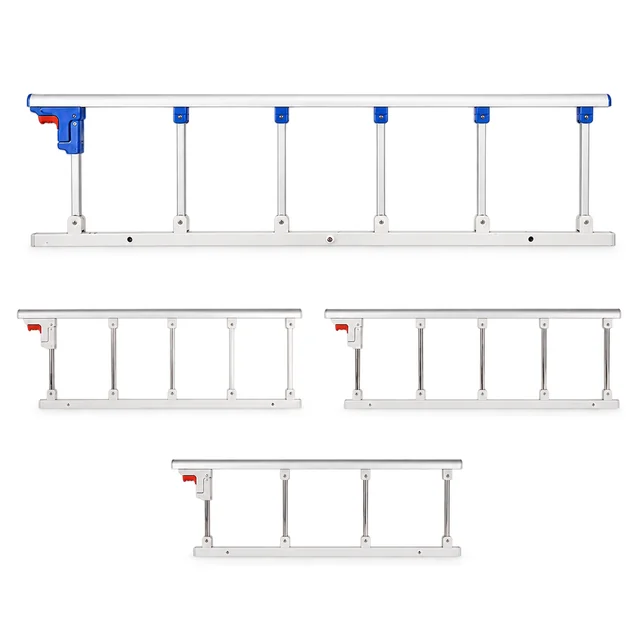
A full-length design provides a continuous boundary over much of the bed side, while split rails create separate sections that can be positioned around access needs. Collapsible rails fold or lower using a mechanism whose operating space must remain clear. These categories overlap: a long rail can also be collapsible.
Evaluate each design on the actual bed. Can staff reach the release without adopting an awkward position? Does the lowered rail obstruct a transfer aid? Can linen become caught in a joint? Does the rail remain clear of a bedside cabinet during movement? Record these observations during a sample assessment with the proposed mattress installed.
A split arrangement also needs a deliberate assessment of the space between sections. Leaving an opening for access is a clinical and engineering decision, not simply a way to save material. For low-bed projects, pair this review with Low Hospital Beds: Height, Alarms and Fall-Risk Planning so the rail arrangement supports the intended exit strategy.
The seven entrapment zones
The FDA identifies seven areas around an adult hospital bed system where entrapment may occur:
| Zone | Area to examine |
|---|---|
| 1 | Openings inside the rail |
| 2 | Space beneath the rail, between its supports or beside one support |
| 3 | Space between the rail and mattress |
| 4 | Space beneath the rail at its ends |
| 5 | Space between split rails |
| 6 | Space between a rail end and the headboard or footboard |
| 7 | Space between a mattress end and the headboard or footboard |
This is a hazard map, not a universal pass/fail template. The FDA document provides dimensional recommendations for Zones 1–4 and excludes paediatric, infant and bariatric beds from its dimensional scope. Use the relevant bed manufacturer's assessment and applicable local requirements. FDA dimensional assessment guidance.
For a purchase specification, request the assessment for the proposed configuration rather than a generic rail certificate. A mattress change, different attachment kit or revised headboard can change the relationship between components. The acceptance record should identify those components by model and revision so a later replacement can be compared with the approved system.
Confirming mounting and mattress compatibility
A practical replacement enquiry should include the bed manufacturer and model, serial or production reference where available, photographs of both mountings, mounting dimensions and the existing rail part number. Add the mattress dimensions and type, including any overlay that will remain in use.
Ask the supplier to return a written fitment confirmation and installation instructions. If an adapter is proposed, identify who approves the resulting bed system. Do not improvise holes, spacers or brackets simply because the new rail appears close to the original dimensions.
During sample review, compare the flat bed and all permitted articulated positions. Check latch engagement, rail movement, access to controls and compatibility with the mattress retainers. Hospital Bed Mattress Sizes and Compatibility: Getting the Fit Right explains the separate measurements needed for mattress fit. Rail selection should be completed alongside that work, not after the mattress order has shipped.
Cleaning, inspection and spare parts
Request cleaning instructions for the assembled rail, including latches, pivots and concealed joints. A general description such as “wipe clean” is insufficient for a facility that uses a defined disinfectant concentration and contact time. The supplier should identify compatible products and any disassembly restrictions.
Build the replacement strategy around identifiable parts. Ask whether a worn latch is supplied separately or only with the complete rail, whether left and right versions differ, and whether fixing hardware is included. Record how a replacement is inspected before the bed returns to service. The answer affects maintenance time as well as the initial purchase price.
Keling side rail options
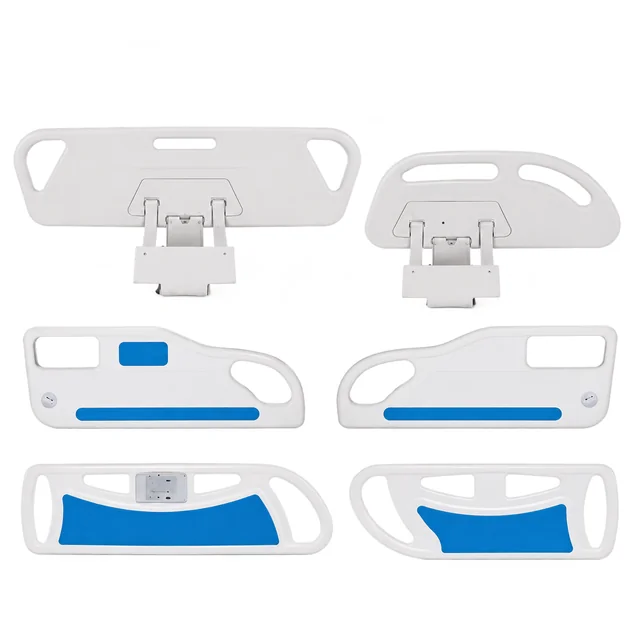
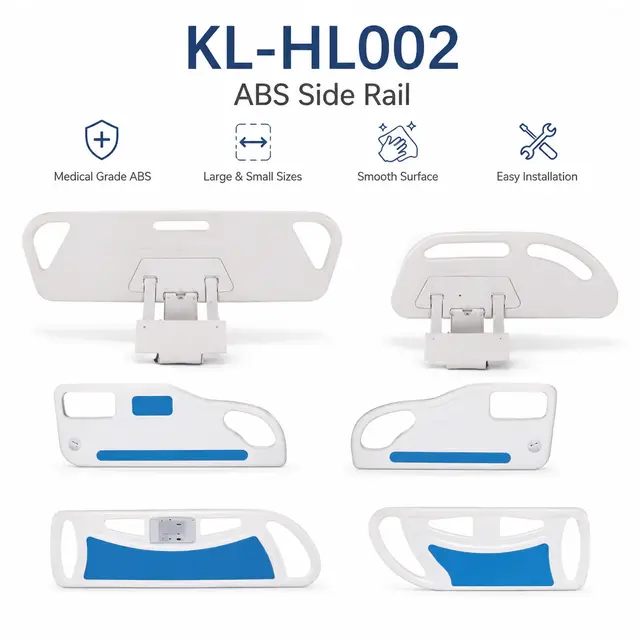
The KL-HL001 metal side rail range includes aluminium and stainless steel variants. The KL-HL002 ABS side rail is listed in two size options. Confirm the current assembly drawing, required side, mounting kit and fitted geometry before selecting a variant.
For a long-term nursing care project, send the planned bed and mattress combination with the rail enquiry. This gives the supplier a specific system to review instead of asking for a generic replacement.
Frequently asked questions
Are stainless steel rails always stronger than ABS rails?
No material name establishes the strength of the complete assembly. Compare the declared load, connection design and supporting test information for the exact product.
Can a taller mattress be used with the existing rails?
Only after confirming that the complete combination remains suitable. Check the bed's permitted mattress specification and request a compatibility review if an overlay or replacement changes the installed height.
Can hospital bed rails be fitted to any bed?
Do not assume interchangeability. A matching overall length does not establish the correct mounting, latch position or safe relationship with the mattress and end boards.
Should every patient have both rails raised?
That is an individual care decision. Procurement should provide equipment and instructions that support the facility's assessment process, rather than impose one rail arrangement on every patient.
Next step
To request a compatible rail quotation, send Keling your bed model, mounting photographs, mattress details and quantities. Specify whether the order is for complete bed sets or replacement parts.
About the author
This article was written by the Keling Medical export team, drawing on the engineering data for the 33 bed, cot, mattress and accessory models Keling manufactures at its Yangzhou plant. Keling Medical has been making medical appliances since 1996 and holds CE, ISO 9001 and ISO 13485 certification. More about Keling.