Hospital furniture checklist: everything a patient room needs, with the specification points that matter
Bed, mattress, overbed table, bedside cabinet, recliner, IV pole, bed head unit, lift and screens: a room-by-room checklist of hospital furniture and what to specify.
Short answer
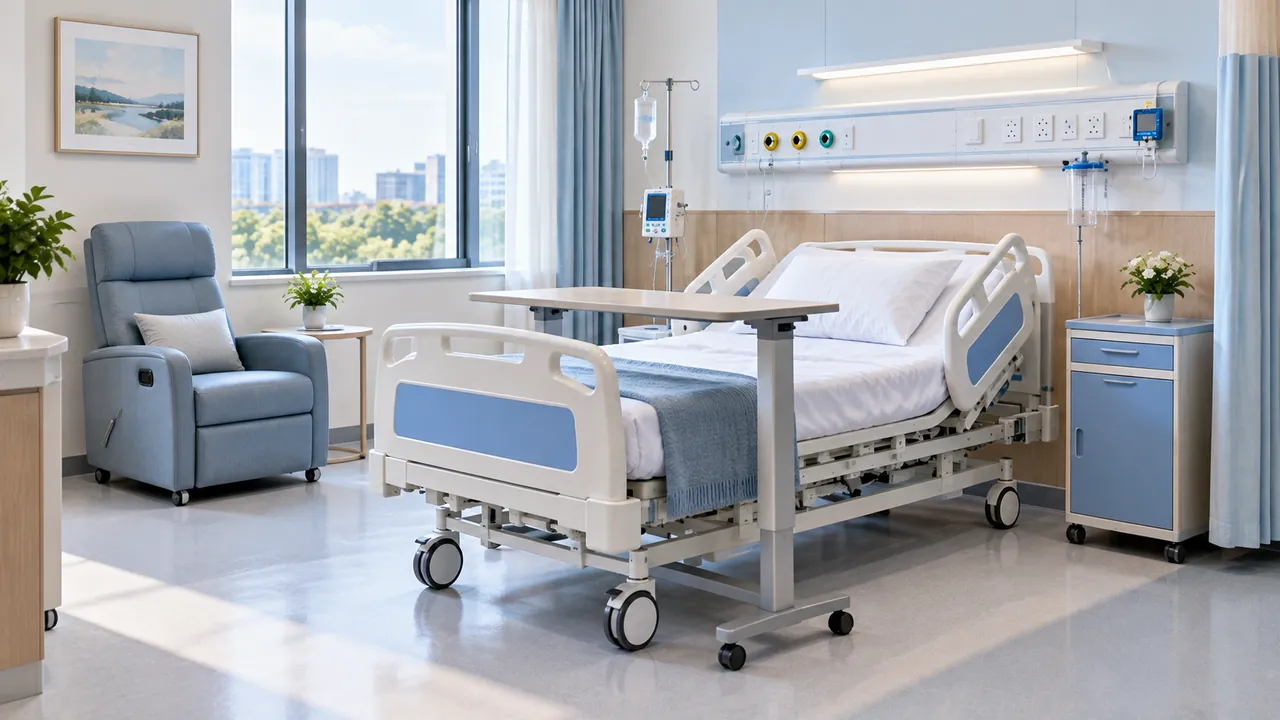
A hospital patient room needs a hospital bed with matched mattress and side rails, an overbed table, a bedside cabinet, a patient chair or hospital recliner, an IV pole, a bed head unit with power, medical gases and nurse call, privacy curtains or screens, and access to a patient lift. Specify each item against the bed's dimensions so the clear bed space, roughly 3,600 × 3,700 mm, stays usable.
A patient room is a system, and the bed is only one part of it. The hospital furniture around it, from the overbed table to the recliner chair, the IV pole and the bed head unit, decides whether a nurse can work on both sides of the patient, whether a family member can stay overnight and whether the room can be cleaned between admissions in the time allowed.
This checklist covers every item of hospital room furniture that a typical inpatient room needs, with the specification points that matter for each. For transparency: Keling Medical makes the beds, mattresses, side rails, headboards, castors, IV stands and bed head units. We do not make overbed tables, bedside cabinets, chairs, recliners, patient lifts or screens, so for those items this is a neutral buying guide.
What furniture does a hospital patient room need?
A standard inpatient room needs a hospital bed with a suitable mattress and rails, an overbed table, a bedside cabinet, a patient chair or recliner, an IV pole, a bed head unit with power, gases and nurse call, privacy curtains or screens, and access to a patient lift. Waste bins, a clinical supplies trolley and a visitor chair complete the set.
The space this furniture has to fit in is defined by health building guidance. England's Health Building Note 04-01 (adult in-patient facilities) states that most bedside activities can be accommodated within a clear bed space of 3,600 mm wide × 3,700 mm deep, excluding fixed storage and worktops. Its example schedule gives a single-bed room of 19.0 m² (23.5 m² with en-suite). Plan furniture so that this clear space is preserved on both sides and at the foot of the bed.
The hospital furniture checklist at a glance
Use the table below as a room-by-room acceptance list. The right-hand column shows which items Keling supplies.
| Item | Key specification points | Supplied by Keling? |
|---|---|---|
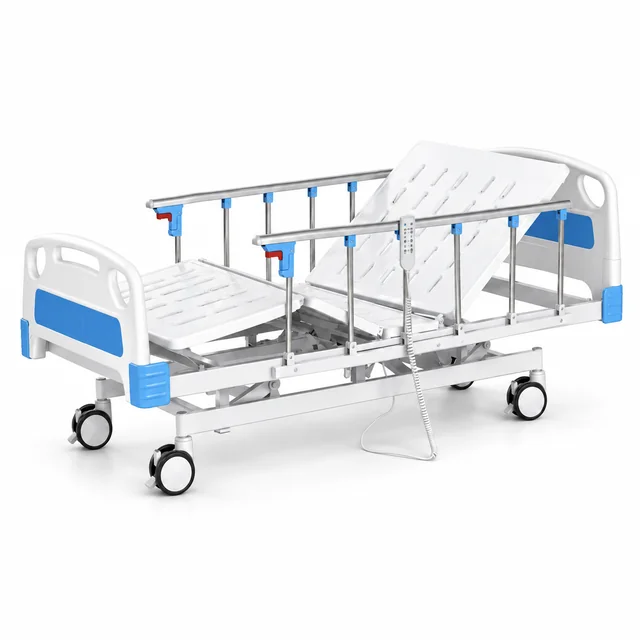
| Hospital bed | Functions, height range, safe working load, CPR release, castor brakes | Yes: hospital beds |
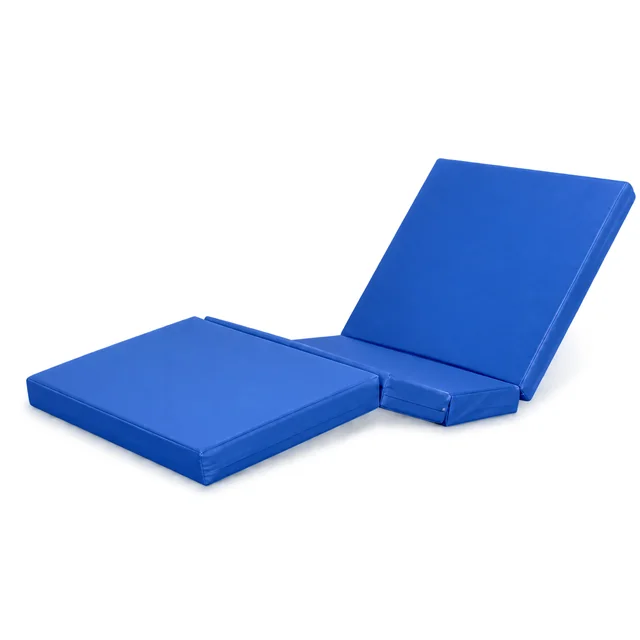
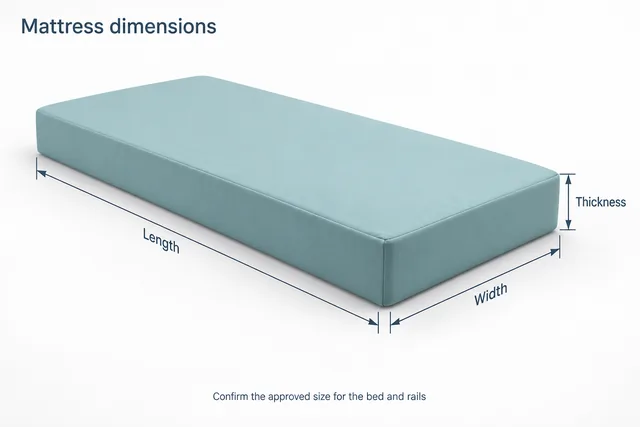
| Mattress | Size matched to platform, thickness vs rail height, cover, foam or air | Yes: KL-P001 to KL-P004 |
| Side rails and headboards | Material, gap dimensions, mounting fit | Yes: KL-HL001 to KL-HL004 |
| Castors | Diameter, brake type, load | Yes: KL-CA011 |
| Overbed table | Height range, base fits under bed, tilting top, cleanable edges | No |
| Bedside cabinet (hospital nightstand) | Drawer and locker, castors, wipe-clean top, left/right opening | No |
| Patient chair or hospital recliner | Seat height, armrests, recline positions, safe working load, cleanable upholstery | No |
| Visitor or sleeper chair | Fold-out length, footprint, weight | No |
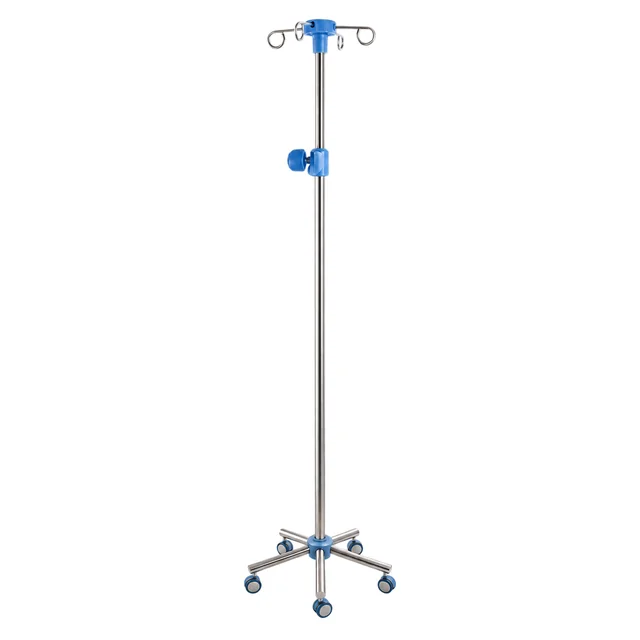
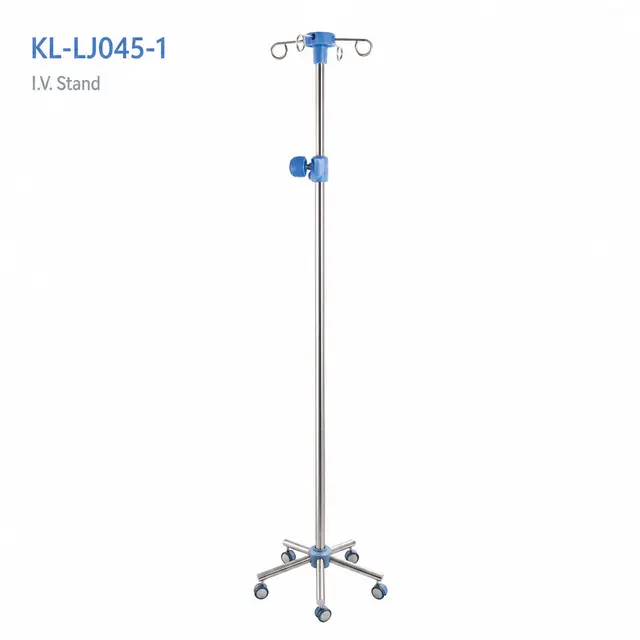
| IV pole (medical pole) | Bed-mounted or mobile, hooks, stainless steel, pump load | Yes: KL-LJ045-1 |
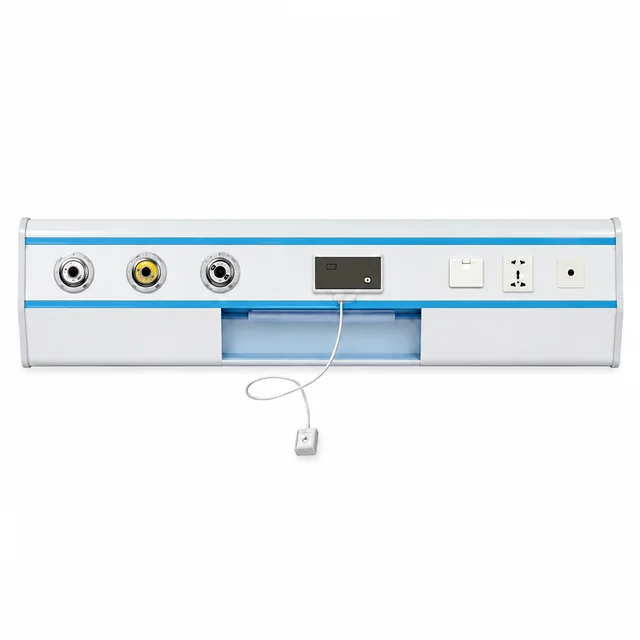
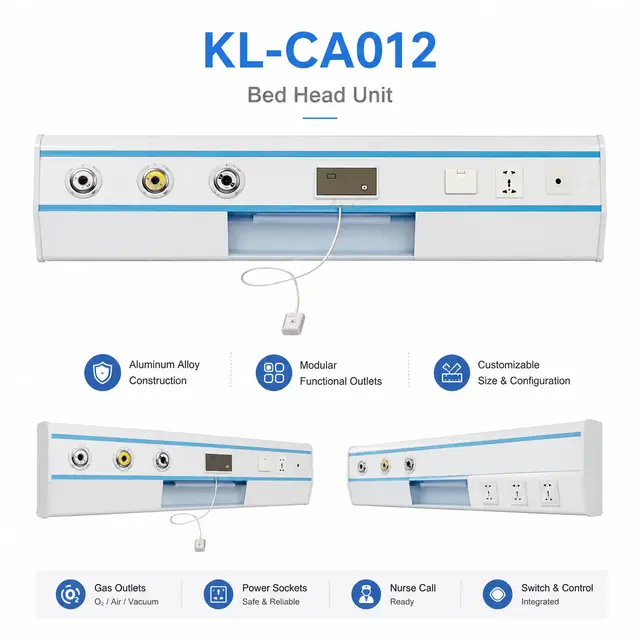
| Bed head unit | Sockets, gas outlets, nurse call, lighting, length | Yes: KL-CA012 |
| Patient lift (hoist) | Mobile or ceiling, sling type, rated load | No |
| Privacy curtains or screens | Track or mobile, washable or disposable fabric | No |
The hospital bed: the anchor of the room
The bed sets the dimensions everything else must work around. A typical adult hospital bed has a 1,930 × 900 mm platform and an external footprint of about 2,150–2,240 × 960–1,070 mm, depending on model.
Specification points:
- Functions and drive. A 3-function electric bed such as the KL-BC104 (backrest, knee-rest, height 450–760 mm) suits most general wards; ICU rooms need 5 functions and a CPR release.
- Height range. The upper end protects staff backs during care; the lower end lets the patient sit with feet flat on the floor.
- Safe working load. 200 kg or 240 kg on Keling models, including mattress and accessories.
- Clearances. Check that the overbed table base slides under the bed frame at the lowest height, and that the bed passes the door with rails fitted.
Our guide on how to choose an electric hospital bed covers the seven key decisions; the types of hospital beds guide helps if you need a bariatric, low or specialty bed instead.
Mattress, side rails, headboards and castors
The mattress and rails must be specified with the bed, not after it, because a mismatch creates gaps where a patient can become trapped. The FDA recorded 901 reports of patients caught, trapped, entangled or strangled in hospital beds between 1985 and 2013, most of them frail, elderly or confused.
- Mattress. Match length and width to the platform (Keling mattresses are 1,900 × 900 mm) and choose thickness so the rail top stays well above the mattress surface. Segmented foam such as the KL-P002 follows articulation; alternating-pressure air mattresses such as the KL-P004 are for patients at higher pressure-injury risk. See our mattress size and compatibility guide.
- Side rails. Aluminium, stainless steel or ABS. Keling's KL-HL001 rails run from 1,480 to 1,750 mm long and 120 to 135 mm high. Read side rail materials and safety zones.
- Headboards and footboards. Detachable ABS boards (KL-HL003, KL-HL004) give head-end access for intubation and are easy to wipe.
- Castors. 100 or 125 mm with brakes (KL-CA011); larger wheels roll better over thresholds.
Overbed table and bedside cabinet
An overbed table is a height-adjustable, wheeled table whose top extends over the bed for eating, reading and personal care; a bedside cabinet (hospital nightstand or locker) stores personal belongings within the patient's reach. Keling does not make either, so these points are a neutral specification guide.
Overbed table (hospital eating table)
- Height range that reaches above the mattress top with the bed at its highest working position.
- C-shaped or H-shaped base low enough to slide under the bed frame and the patient chair.
- Tilting top or split top if patients will read in bed; raised edge to stop spills.
- Smooth, seamless surfaces that tolerate hospital disinfectants; lockable castors.
Bedside cabinet (hospital side table)
- Drawer plus cupboard, with the door hinge on the side away from the bed, or a reversible door.
- Castors so the cabinet can be moved for cleaning and bed transfers.
- Rounded corners, wipe-clean top, optional lock for valuables.
Our separate guide to overbed tables and bedside cabinets goes into dimensions and materials.
Patient chairs and hospital recliner chairs
A patient chair is a high-backed, armed chair that lets a patient sit out of bed safely; a hospital recliner chair adds a reclining back and leg rest so that a patient can rest, or a visitor can sleep, without a second bed. Keling does not make chairs or recliners.
Types you will see in catalogues:
- Hospital bedside chair or high-back chair. Fixed frame, firm seat, armrests that help a patient stand. Suits general wards.
- Medical recliner chair. Multi-position recline, often on castors with central brakes; used for patient seating, dialysis and infusion.
- Cardiac chair. A wheeled stretcher-chair that converts from flat to seated, a hospital bed that turns into a chair, used to mobilise patients early. Requires a bed-to-chair transfer plan.
- Sleeper chair or hospital sofa bed. A visitor chair or couch that unfolds to a sleeping surface for a family member.
- Medical recliner lift chair. A powered chair that tilts forward to help the occupant stand; more common in home care.
Specification points for any patient chair: seat height suited to the patient population, armrests extending to the front of the seat, a stated safe working load, cleanable seamless upholstery, removable cushions, castors with brakes if mobile, and a recline mechanism that staff can operate quickly. Psychiatric hospital furniture also needs anti-ligature design and weighted or fixed construction; specify this separately.
IV poles and bed head units
An IV pole (IV stand or medical pole) holds infusion bags and pumps; a bed head unit is the wall-mounted service panel above the bed that delivers electricity, medical gases, nurse call and lighting. Keling supplies both.
IV pole
Decide between a bed-mounted pole, which moves with the bed, and a mobile stand on a five-castor base, which can follow a walking patient. Check the number of hooks, height adjustment, and stability with the heaviest pump the ward uses. The KL-LJ045-1 IV stand is stainless steel and designed for use with hospital beds and transfusion chairs. Our article on bed-mounted vs mobile IV stands compares the options.
Bed head unit
Medical supply units are covered by ISO 11197, which sets basic safety and essential performance requirements for factory-built and site-assembled units. Count the outlets per bed: electrical sockets (separated by circuit), oxygen, medical air and vacuum where needed, nurse call, reading light, and data. The KL-CA012 bed head unit is aluminium alloy with customisable size, functions and colour. Gas pipeline installation is room engineering and remains the responsibility of the building contractor. See specifying bed head units and medical gas panels.
Patient lifts, screens and the rest of the room
A patient lift (hoist) moves a person between bed, chair and toilet without manual lifting; screens and curtains give privacy; and small items such as bins and trolleys complete the room. Keling does not supply these.
- Medical lift equipment. Mobile or ceiling-mounted hoists and their slings are covered by ISO 10535:2021. HBN 04-01 discusses both types and schedules one mobile hoist parking bay per 24 beds. Confirm the lift base clears the bed frame at its lowest height.
- Privacy curtains or mobile screens. Ceiling-track curtains are standard in multi-bed bays; mobile screens cover temporary needs. HBN 04-01 recommends that patients can control curtains or blinds for privacy.
- Clinical supplies trolley parked in the room's clinical support zone, plus waste and linen bins.
- Waiting room furniture. Hospital waiting room chairs, medical reception desks and bariatric waiting room chairs belong to the public areas, not the patient room; specify them in a separate package.
Buying patient room furniture as a package
Buy the room as a package, but contract by item group. Beds, mattresses, rails and bed head units should come from one specification so that dimensions and connectors match. Chairs and casegoods can come from a furniture supplier, provided their dimensions are checked against the bed.
Room acceptance checklist:
- Bed passes the door with rails and IV pole fitted.
- Overbed table base slides under the bed at its lowest height.
- Rail top sits clear above the mattress surface; entrapment gaps checked.
- Recliner chair has clearance to recline fully without blocking the bed side.
- Bed head unit outlets reachable from the bed without trailing cables.
- Lift base fits under the bed; brakes on all wheeled items work.
- Every surface wipes clean with the facility's disinfectant.
Specification line: per room, 1 × 3-function electric hospital bed (height 450–760 mm, SWL 200 kg) with 1,900 × 900 × 100 mm segmented foam mattress, aluminium side rails both sides, ABS head and foot boards, 125 mm braked castors, 1 × stainless steel IV stand, 1 × aluminium bed head unit with sockets, nurse call and gas outlets to project schedule.
Keling can quote the bed, mattress, rail, IV stand and bed head unit lines together and match them to your furniture supplier's drawings. See our private patient room project for an example package, and if you are sourcing as a distributor, read our guide to working with medical equipment manufacturers. Contact the export team with your room schedule.
Sources and further reading
- NHS England, HBN 04-01 Adult in-patient facilities — bed space 3,600 × 3,700 mm, room areas, hoists, curtains.
- ISO 11197:2019 Medical supply units — standard for bed head units and service panels.
- ISO 10535:2021 Hoists for the transfer of persons — requirements for patient lifts.
- IEC 80601-2-52:2026 Medical beds for adults — current safety standard for hospital beds.
- FDA: Hospital Beds — entrapment reports and bed safety guidance.
Illustration: AI-generated image for explanation only; it does not show a specific Keling model. See the linked product pages for actual product photos and specifications.
Frequently asked questions
What furniture is in a hospital room?
A typical hospital room contains a hospital bed with mattress and side rails, an overbed table, a bedside cabinet or nightstand, a patient chair or recliner, a visitor chair, an IV pole, a wall-mounted bed head unit with sockets, gases and nurse call, privacy curtains, and access to a patient lift. Waste bins and a supplies trolley complete the room.
What is a hospital recliner chair used for?
A hospital recliner chair lets a patient sit out of bed and rest in a reclined position, which supports early mobilisation, and it is also used for dialysis and infusion. Many rooms add a sleeper chair so a family member can stay overnight. Specify seat height, recline positions, safe working load, braked castors and cleanable upholstery.
What is a cardiac chair in a hospital?
A cardiac chair is a wheeled stretcher-chair that converts between a flat position and a seated position. Staff transfer the patient laterally while it is flat, then raise it into a chair, which helps mobilise patients who cannot stand to transfer. It is a hospital bed that turns into a chair for short periods rather than overnight use.
What size should a hospital patient room be?
NHS England's HBN 04-01 says most bedside activities fit within a clear bed space of 3,600 mm wide by 3,700 mm deep, excluding fixed storage. Its example single-bed room is 19.0 m², or 23.5 m² with an en-suite. Local building guidance varies, so check the rules that apply to your project.
Which patient lift standard should hospital furniture meet?
Patient lifts and their body-support units are covered by ISO 10535:2021, which sets requirements and test methods for mobile, ceiling, wall and free-standing hoists. Whatever lift you choose, check that its base passes under the bed frame at the bed's lowest height, and that slings are compatible with the lift model.
Does Keling supply hospital chairs and overbed tables?
No. Keling Medical makes hospital beds, foam and air mattresses, side rails, headboards, castors, IV stands and bed head units. It does not make chairs, recliners, overbed tables, bedside cabinets, lifts or screens. Keling can quote the bed-side items as a matched package and check dimensions against your furniture supplier's drawings.
About the author
This article was written by the Keling Medical export team, drawing on the engineering data for the 33 bed, cot, mattress and accessory models Keling manufactures at its Yangzhou plant, and checked against the published standards and guidance listed in the sources. Keling Medical has been making medical appliances since 1996 and holds CE, ISO 9001 and ISO 13485 certification. More about Keling.