Overbed tables and bedside cabinets: what to specify for a hospital ward
The two most-touched pieces of furniture after the bed. How to choose an overbed table and bedside cabinet that fit your beds, clean easily and stay stable.
Short answer
An overbed table is a mobile, height-adjustable table whose top reaches over the bed while its C- or H-shaped base rolls underneath. Specify its height range from the bed: deck height plus mattress thickness plus leg clearance, often up to around 1,100 mm for height-adjustable beds. Check base clearance under the bed, a seamless cleanable top, locking castors and a stated load rating.
The overbed table and the bedside cabinet are the two pieces of furniture a patient touches most after the bed itself. They hold meals, drinks, glasses, phones and the call bell, and they decide whether a patient can eat sitting up, reach what they need without leaning out of bed, and keep personal items off the floor. They are also among the most handled surfaces in the room.
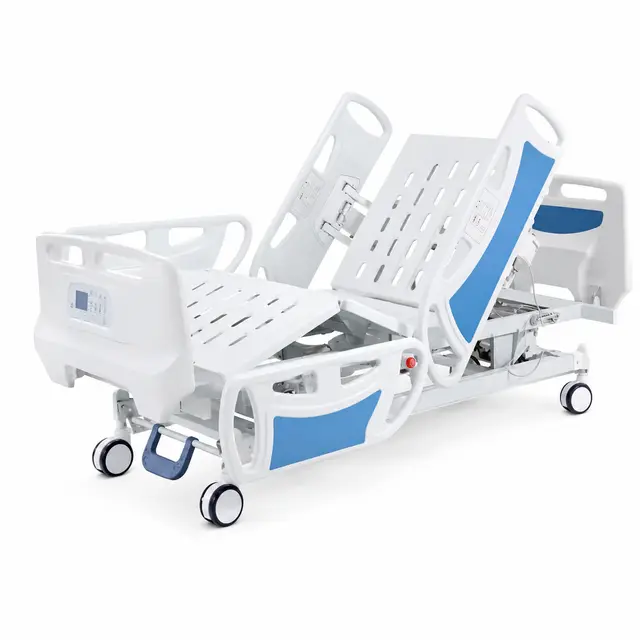
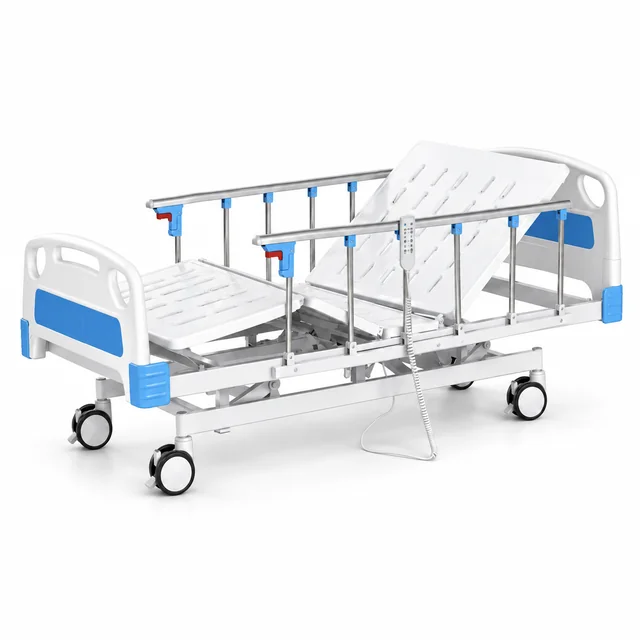
This guide explains what to specify for a hospital ward: table types, height ranges matched to the bed, bases, tops, bedside cabinet features, cleaning and stability. A note on scope: Keling manufactures hospital beds, mattresses and bed accessories but does not make overbed tables or bedside cabinets. We give neutral specification guidance here, plus the bed dimensions you need to match furniture to our beds.
What is an overbed table?
An overbed table is a mobile, height-adjustable table whose top extends over the bed while its base rolls under the bed frame. It lets a patient eat, read, write or use a device while sitting up in bed, and it doubles as a work surface for staff.
It goes by many names: over bed table, hospital tray table, hospital patient bed table, bedside tray table, overbed rolling table or simply hospital table. The design is almost universal: a single column on one side of a C-shaped or H-shaped base on castors, carrying a cantilevered top. The cantilever is what allows it to reach over the bed, and also what makes stability the key safety question.
Types of overbed table
Overbed tables differ mainly in how height is adjusted, how the top moves and what base they use. The table below summarises the common options.
| Type | What it does | Best for | Watch for |
|---|---|---|---|
| Fixed-height table | Single height, no adjustment | Low-cost wards with one bed height | Does not suit height-adjustable beds |
| Adjustable height overbed table (gas spring or lever) | Height set with a one-hand release | Most acute wards | Lift effort, pinch points, release lever position |
| Crank or screw adjustable | Height set with a handle | Heavy-duty or bariatric use | Slower; handle protrusion |
| Tiltable overbed table | Top tilts for reading or writing, often with a lip | Long-stay, rehabilitation | Spill risk if left tilted at meal times |
| Swivel top medical table | Top rotates to swing clear of the patient | Chair-side and bedside use | Locking of the swivel |
| Overbed table with drawer or vanity | Split top with flip-up mirror and storage | Private rooms, long stays | More joints and seams to clean |
| Folding overbed table | Folds flat for storage or transport | Home care, field hospitals | Rigidity once unfolded |
| Heavy duty hospital bed table | Wider base, higher load rating | Bariatric rooms | Base must clear a wider bed frame |
Hospital bed tables for home use follow the same rules; an over bed table for a double bed needs a longer reach and a base wide enough to stay stable at that reach, which is why most hospital-style tables are designed for single beds.
What height should an overbed table adjust to?
An adjustable over bed table needs a height range that clears the top of the mattress with the patient's legs underneath at every bed height the ward uses, and also comes down low enough to work beside a chair. The right range comes from the bed, not from a catalogue.
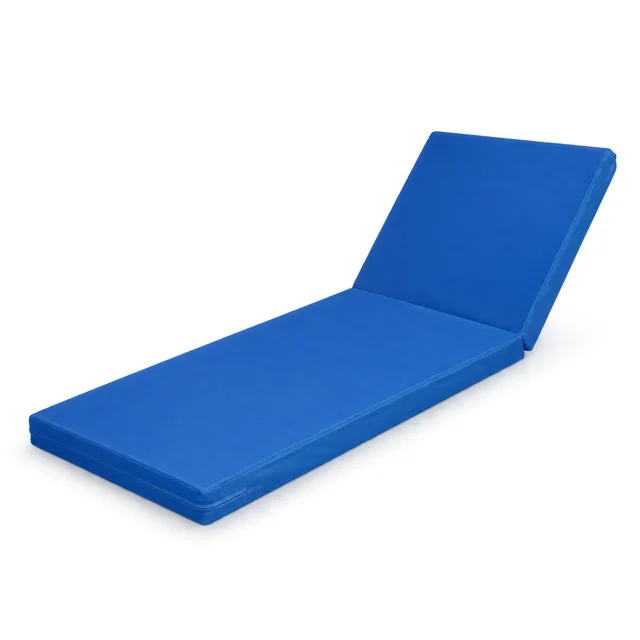
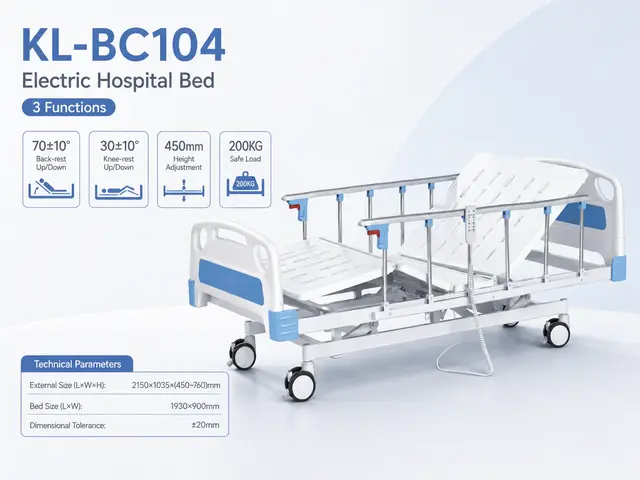
Work it out from three numbers: the bed's deck height range, the mattress thickness, and a clearance for the patient's thighs and a comfortable eating height above them. For example, a Keling KL-BC101 adjusts from 480 to 760 mm. With a 120 mm KL-P001 mattress, the sleeping surface sits at roughly 600–880 mm. A table that tops out well below about 1,100 mm may not clear a seated patient's legs when the bed is raised to its working height.
| Keling bed | Deck height | Mattress surface with 100 mm mattress | Implication for table range |
|---|---|---|---|
| KL-BC101 (5-function electric) | 480–760 mm | About 580–860 mm | Wide adjustable range needed |
| KL-BC104 (3-function electric) | 450–760 mm | About 550–860 mm | Wide adjustable range needed |
| KL-BC106 / KL-BC107 (manual, fixed height) | 500 mm | About 600 mm | Narrower range acceptable |
| KL-BC110 (birth bed) | 680–900 mm | About 780–1,000 mm | High maximum height needed |
Ask suppliers for the minimum and maximum top heights, and test the table with the bed at its lowest and highest positions before ordering in volume.
Base, castors and under-bed clearance
The base must roll under the bed without hitting the frame, castors or lifting mechanism, at every bed height. This is the most common fit problem with overbed tables.
- Base height. Compare the table's base height (including castors) with the clearance under the bed frame at its lowest setting. Low and hi-low beds leave less room; see our guide to low hospital beds.
- Base shape. C-bases slide in from one side; H-bases are more stable but need clearance on both sides of the frame.
- Base width. A wider base resists tipping, but must fit between or beside the bed's castors.
- Castors. Two locking castors help keep the table in place at mealtimes; smooth-rolling castors matter for patients who move it themselves.
Keling publishes external sizes and deck heights for every bed; for under-frame clearance of a specific model, ask us for the drawing. Our hospital bed dimensions guide explains the measurements that matter for room planning.
Table top size and materials
A bed table large enough for a meal tray plus a drink and personal items is the practical minimum; tops are commonly in the region of 750–900 mm long by 380–450 mm deep. A raised edge or lip stops items sliding off, especially on tiltable tops.
Top materials are chosen for cleaning as much as appearance:
- Moulded ABS or similar plastic: seamless, one-piece, with integral raised edges; resists disinfectants.
- High-pressure laminate (HPL): hard-wearing and impact-resistant; edges must be sealed so fluid cannot reach the core.
- Stainless steel: very durable, used in treatment areas; colder and noisier for patients.
- Frames: powder-coated or stainless steel, with smooth welds and no open tubes that trap dirt.
Overbed tables are a recognised high-touch surface. A 2010 study by Huslage and colleagues in Infection Control and Hospital Epidemiology identified bed rails, bed surfaces, supply carts, overbed tables and IV pumps as the five highest-touch surfaces in patient rooms, and CDC cleaning guidance lists bedside tables among common high-touch surfaces. Specify surfaces compatible with your facility's disinfectants and avoid fabric, open joints and exposed screw heads.
Hospital bedside cabinet: what to specify
A hospital bedside cabinet, also called a bedside locker or medical bedside table, provides storage for the patient's belongings, a surface for water and personal items, and sometimes a towel rail or bottle holder. It sits beside the bed head, usually within reach of a seated or lying patient.
In the UK, BS 1765-1 (1990) specifies requirements and test methods for general-purpose hospital bedside lockers and gives guidance on the information a purchaser should provide; check whether your market has an equivalent. Practical features to compare:
- Drawer and cupboard: a top drawer for small items and a lower cupboard for clothes and shoes; a hospital bedside table with drawer is the most requested layout.
- Handedness: doors that can be hung left or right, or a double-sided design, so one model works on either side of the bed.
- Castors: two or four, with locks, so cleaning staff can move the cabinet.
- Combination units: some cabinets include a swing-out or flip-up table top, combining an overbed bedside table with storage.
- Lockable compartment for valuables or patient medication where policy allows.
- Cleanability: rounded corners, removable drawer liners, no open shelving that collects dust.
Stability and patient safety
Overbed tables are not designed to bear a person's weight. Because the top is cantilevered, a patient who leans on it or uses it to pull up to standing can tip it or roll it away. Specify and train accordingly:
- Ask for the rated load on the top and the stability test the supplier uses.
- Prefer castors that lock and a base heavy and wide enough to resist tipping at full reach.
- Check the height-release lever cannot be triggered by accident and that gas-spring tables do not shoot up when unloaded.
- Keep the table and call bell within reach so patients are not tempted to stretch over side rails; see our guide to hospital bed side rails.
Regulatory treatment varies: in many markets overbed tables and lockers are procured as hospital furniture rather than medical devices. Ask suppliers how the product is classified in your market and what test reports they hold.
Overbed table and bedside cabinet specification checklist
- Bed models in the room, with deck height range and mattress thickness.
- Required table top height range, base height and base width.
- Top size, edge lip, tilt and swivel requirements.
- Rated load and stability test evidence.
- Materials and compatibility with your disinfectants.
- Cabinet layout: drawer, cupboard, handedness, lock, castors.
- Colour and finish to match bed headboards and room design.
- Spare parts: castors, gas springs, release levers.
Specification line: Hospital overbed table, C-base with two locking castors, gas-spring height adjustment with top height covering at least the mattress surface range of the specified bed plus leg clearance, seamless moulded top with raised edge, compatible with chlorine-based and alcohol disinfectants, rated load stated by manufacturer.
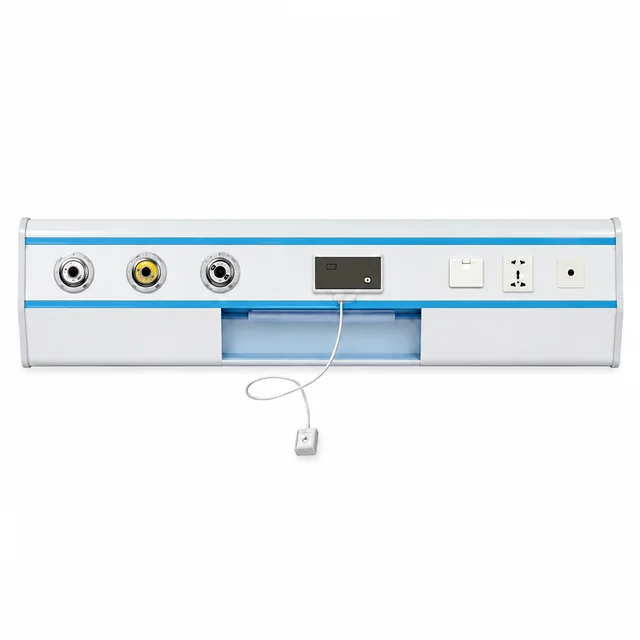
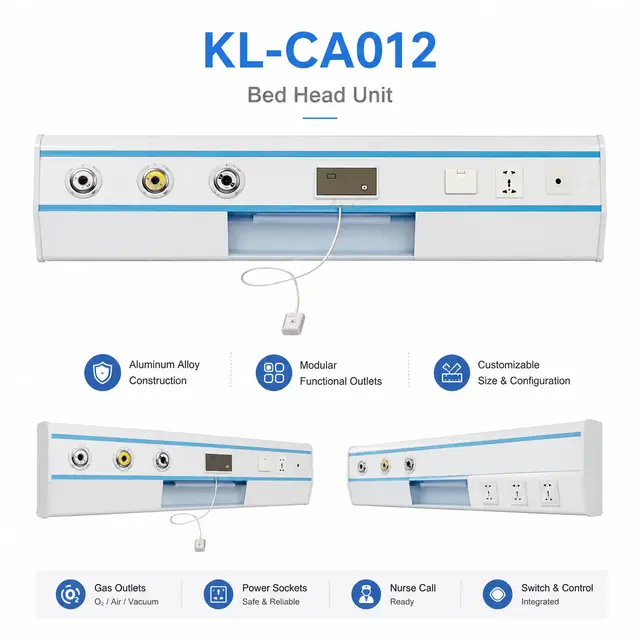
For a complete room package, our hospital patient room furniture checklist covers how tables and cabinets fit with the bed, bed head units and IV stands. Keling supplies the beds, mattresses, KL-CA012 bed head units and IV stands for that package; request a quotation and we will provide bed drawings so your furniture supplier can match tables and cabinets.
Sources and further reading
- Infection Control Today: Researchers define high-touch surfaces in hospitals — summary of Huslage et al., Infect Control Hosp Epidemiol 2010;31:850-853.
- CDC: Environmental Cleaning Procedures — bedside tables among common high-touch surfaces.
- BSI: BS 1765-1 Hospital bedside lockers, specification for general purpose bedside lockers for patients — requirements and test methods.
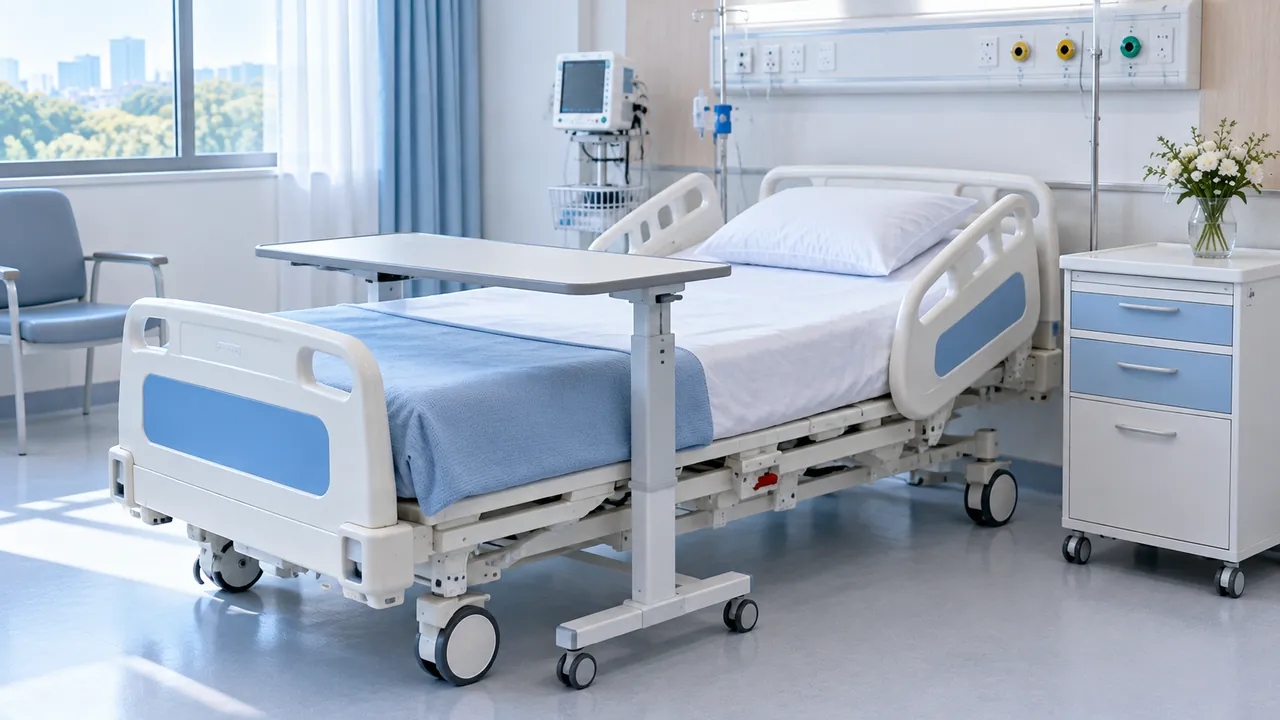
Illustration: AI-generated image for explanation only; it does not show a specific Keling model. See the linked product pages for actual product photos and specifications.
Frequently asked questions
What is an overbed table used for?
An overbed table gives a patient a surface over the bed for meals, drinks, reading, writing and devices while sitting up, and gives staff a work surface at the bedside. Its base rolls under the bed frame so the top can reach across the patient. It is not designed to support a person's weight.
What height should a hospital overbed table be?
It should cover the full range of the bed it serves. Add the bed's deck height range, the mattress thickness and clearance for a seated patient's legs. For a bed adjusting from 480 to 760 mm with a 120 mm mattress, the surface sits at about 600–880 mm, so the table needs to rise well above that.
What is the difference between an overbed table and a bedside table?
An overbed table is a mobile cantilevered table that reaches over the bed for eating and activities. A bedside table or cabinet stands beside the bed head and provides storage, usually a drawer and cupboard, plus a small surface for water and personal items. Some combination units add a swing-out table to a cabinet.
Are overbed tables with drawers worth it?
An overbed table with drawer or vanity compartment is useful in private rooms and long stays, where patients keep glasses, toiletries and small items within reach. The trade-off is more joints and seams to clean and more parts to maintain. On high-turnover acute wards, a simple seamless top with a raised edge is often preferred.
How do you keep an overbed table from tipping?
Choose a base wide and heavy enough for the top's reach, with locking castors, and ask for the rated load and stability test. Train patients and staff not to lean on or pull up using the table. Keep the table and call bell within reach so patients do not stretch for items over the side rails.
Does Keling make overbed tables or bedside cabinets?
No. Keling manufactures hospital beds, mattresses, side rails, headboards, castors, bed head units, traction frames and IV stands. We provide bed drawings, deck heights and mattress dimensions so your furniture supplier can match overbed tables and bedside cabinets to Keling beds in a complete room package.
About the author
This article was written by the Keling Medical export team, drawing on the engineering data for the 33 bed, cot, mattress and accessory models Keling manufactures at its Yangzhou plant, and checked against the published standards and guidance listed in the sources. Keling Medical has been making medical appliances since 1996 and holds CE, ISO 9001 and ISO 13485 certification. More about Keling.