IV Stands and Poles: Bed-Mounted vs Mobile, Stainless Steel vs Chrome
Compare bed-mounted and mobile IV stands, stainless steel and chrome finishes, mounting fit and pump loads. Build a clear hospital IV pole specification.
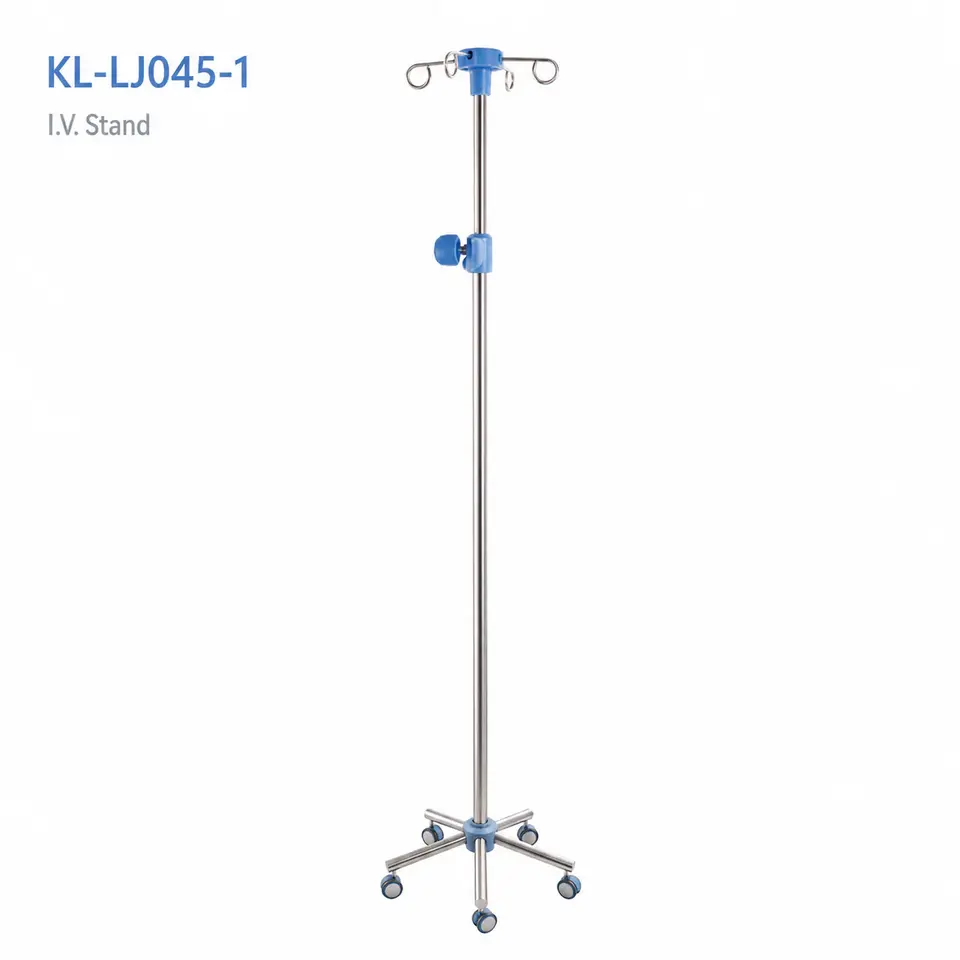
An IV stand specification should describe what it must support and how it will move through the ward. A pole used for fluid bags beside a stationary bed has a different purchasing requirement from a mobile assembly carrying approved infusion equipment during transfers.
For hospitals and distributors, the most useful comparison covers mounting, adjustable height, permitted load, cleanability and service parts. Hook count and appearance are secondary until the supplier confirms the complete configuration is suitable for the intended use.
Bed-mounted or mobile?
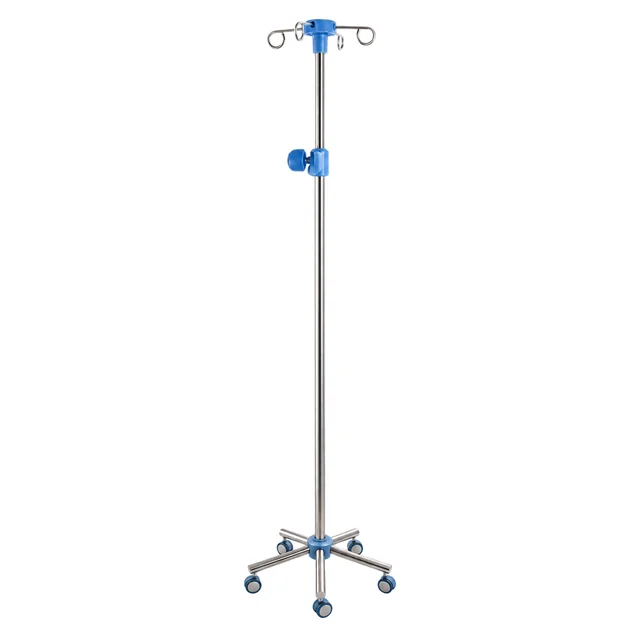
A bed-mounted IV pole fits an approved socket or bracket on the bed. It travels with that bed and does not add a separate mobile base beside it. A mobile IV stand uses its own base and castors, which may be useful when equipment needs to move independently.
| Configuration | Questions to resolve before ordering |
|---|---|
| Bed-mounted pole | Does the socket match? What loading is permitted? Does the pole clear doors and bed accessories? |
| Mobile stand | Is the base stable with the intended equipment? Does it fit the circulation space? Which wheels and brakes are supplied? |
| Pole for a transfusion chair | Is the mounting approved for the chair and its movement? Is it shared with other accessories? |
Review the whole patient route rather than the bedside position alone. A mobile stand can occupy space needed by a transfer aid, while a tall bed-mounted pole may need adjustment before transport. Define the workflow with ward staff and then ask the supplier for a matching assembly.
Stainless steel and chrome-plated options
For a stainless steel IV stand, request the specified grade, finish and cleaning instructions. Stainless steel is not immune to damage from unsuitable chemicals or poor maintenance. Inspect joints, clamps and the hook assembly as well as the main tube.
For chrome-plated components, clarify the underlying material and how the surface is protected. Ask how damaged plating is handled and which parts are replaceable. A polished appearance in a catalogue cannot establish long-term suitability for the facility's cleaning routine.
Evaluate a finished sample using the approved cleaning process. Include adjustment knobs, telescopic sections and mounting sleeves in the review. These areas can be more difficult to inspect and clean than the visible outer tube.
Height, hooks and pump compatibility
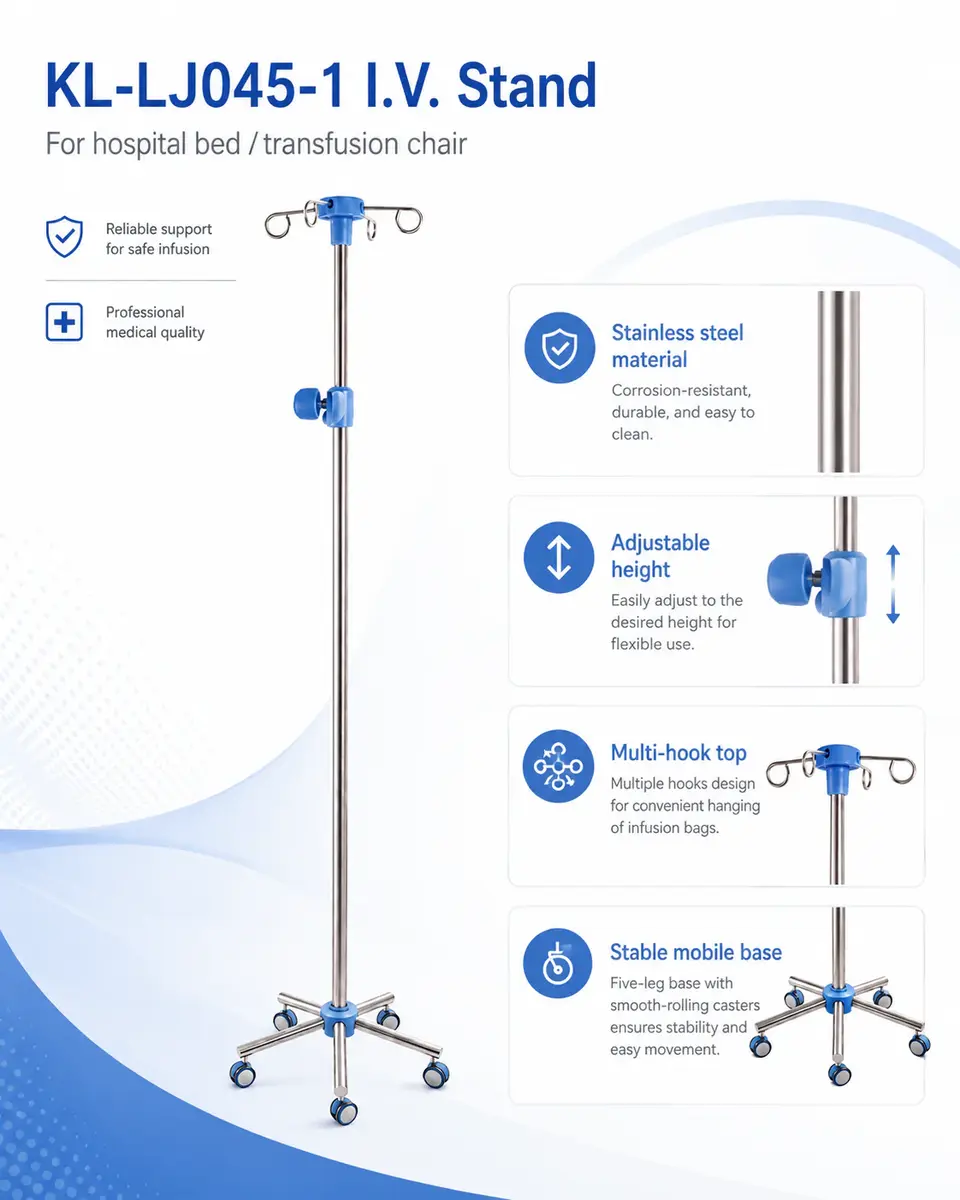
Specify the usable height range and how the adjustment is locked. Ask for the permitted load at the selected height, the rating of individual hooks and the rating of the whole assembly. More hooks do not automatically mean more total capacity.
If pumps or other devices are planned, provide their model, mass, mounting clamp and intended position. The supplier should confirm the approved configuration rather than treating a fluid-bag rating as approval for an equipment stack. Mounting limits are product-specific; for example, GCX provides dedicated assembly and operation instructions for its roll stands. Use the instructions for the product actually purchased, not another manufacturer's limits.
Require the quotation to distinguish a basic pole from a complete pump-support arrangement. Include any brackets, cable-management pieces or handles needed for the approved setup so competing quotations cover the same scope.
Mobile bases and castors
Compare base footprint, clearance around the bed, manoeuvring space and the way accessories are distributed on the stand. A leg count or base diameter alone does not establish stability with the proposed equipment. Request the manufacturer's documented loading arrangement and a representative demonstration.
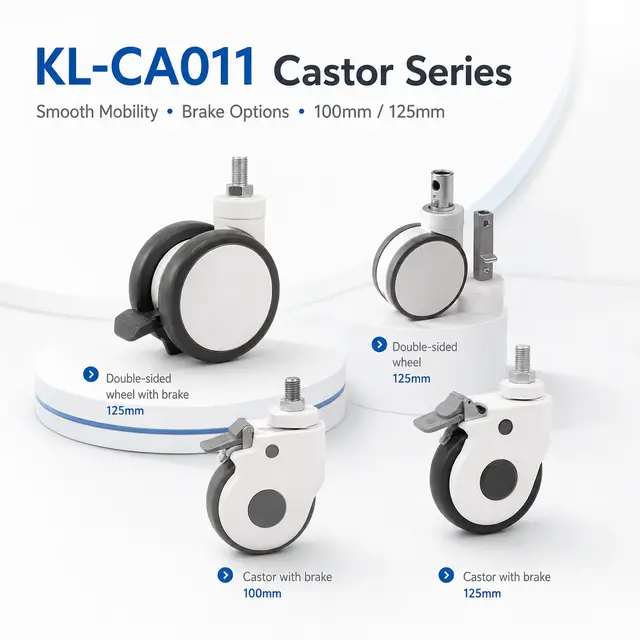
Check how the stand travels over the facility's floor joints and through narrow spaces. Assess the supplied castors, brake arrangement and service access. Hospital Bed Castors: Central Locking, Antistatic Options and Sizing explains the separate questions behind medical castor selection; a wheel replacement should preserve the approved stand configuration.
Matching bed sockets and brackets
Send the bed model and photographs of the socket or mounting bracket. Include the requested dimensions and any locking feature. Two poles with similar tube diameters may still have different insertion depths or retention arrangements.
Ask whether the proposed pole can be fitted in every socket on the bed or only a designated location. Confirm that it does not interfere with rails, headboards or articulation. For replacement orders, identify whether the socket sleeve and fixing hardware are included or must be purchased separately.
Keling IV stand options
The KL-LJ045-1 IV stand is listed as a stainless steel infusion pole for hospital beds and transfusion chairs. Ask Keling to confirm the exact mounting, height range, hook configuration, permitted loads and any suitable mobile-base option for the requested order.
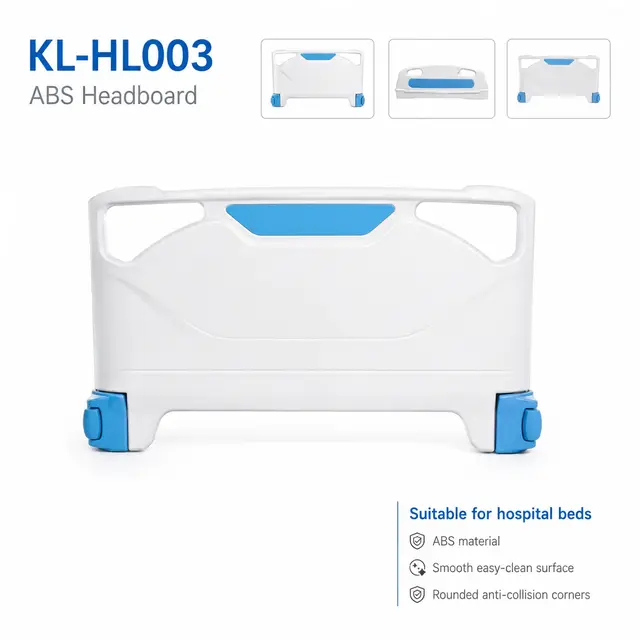
Use the full model reference: KL-LJ045 is the separate traction frame accessory. For a general ward equipment package, include IV poles in the approved accessory schedule alongside the bed and Hospital Bed Head and Foot Boards: Materials, Detachable Designs and Hygiene.
Frequently asked questions
Can any IV pole carry an infusion pump?
No. Confirm the pump, clamp, mounting position and total equipment load with the pole or stand manufacturer.
Is stainless steel always the best purchasing choice?
Compare the actual material specification, finish, cleaning compatibility and service needs. The material label alone does not settle the decision.
Are all hospital bed sockets interchangeable?
No. Confirm dimensions, insertion depth, retention and approved mounting position for the exact bed.
What information should a bulk enquiry include?
Provide quantities, bed or chair models, mounting photographs, height requirements and any equipment to be carried. State whether you need poles alone or complete mobile stands.
Next step
Send Keling your IV pole requirements to obtain a configuration-specific quotation for the ward or distributor order.
About the author
This article was written by the Keling Medical export team, drawing on the engineering data for the 33 bed, cot, mattress and accessory models Keling manufactures at its Yangzhou plant. Keling Medical has been making medical appliances since 1996 and holds CE, ISO 9001 and ISO 13485 certification. More about Keling.