Hospital Bed Mattress Sizes and Compatibility: Getting the Fit Right
Check hospital bed mattress dimensions, thickness, rail compatibility and articulation, with Keling size examples and a measurement checklist for buyers.
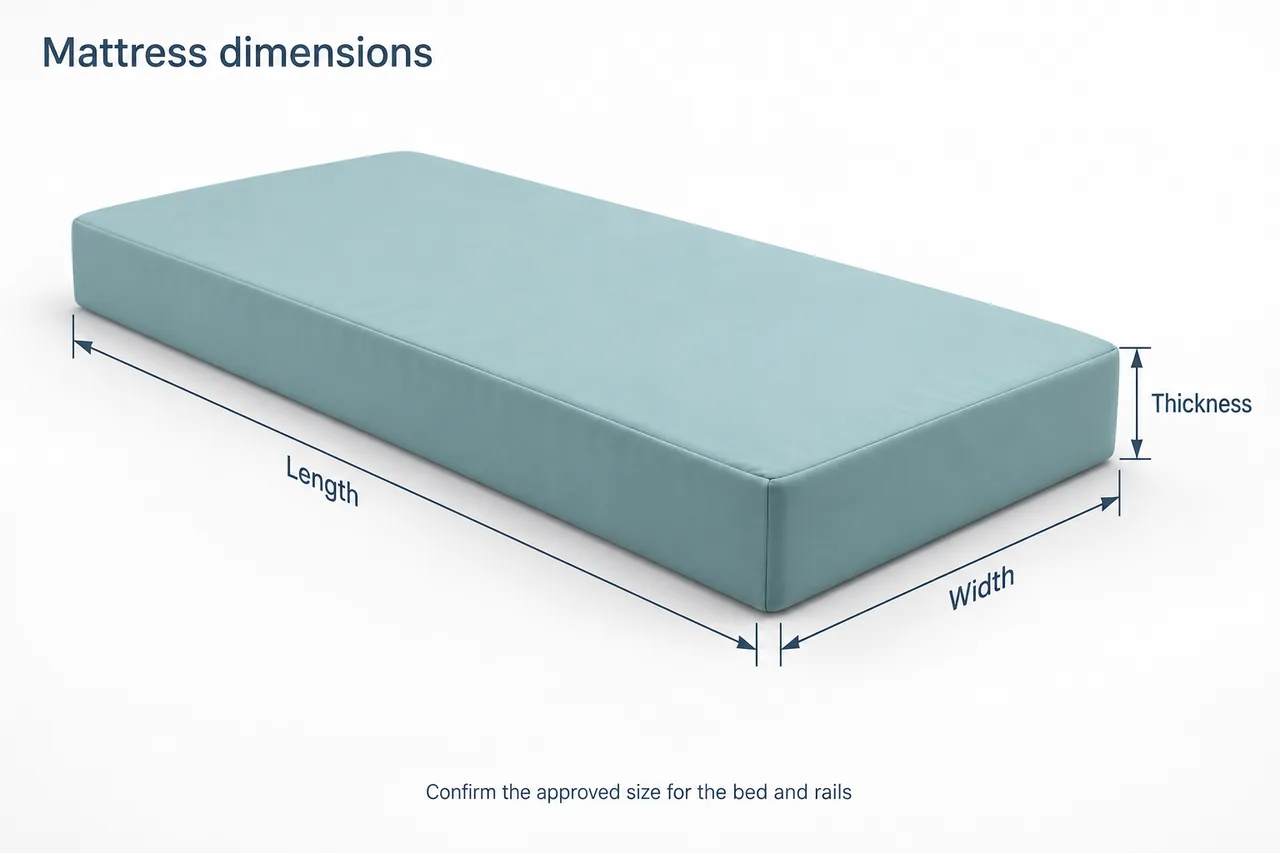
The correct hospital bed mattress size is the size approved for the specific bed, mattress and rail combination. A familiar length and width are only the beginning. Mattress height, edge behaviour, deck articulation and installation method can all affect whether the combination is appropriate.
For a hospital replacing a large mattress fleet, one incorrect assumption can be repeated across many beds. Start with an inventory of the bed models and their permitted mattress specifications. This gives suppliers a usable purchasing brief and helps the receiving team distinguish approved replacements from products that merely look similar.
Is there one standard hospital mattress size?
There is no single size that should be assumed to fit every hospital bed. Published examples illustrate the variation: Keling lists several mattresses at 1900 × 900 mm, while Arjo's Alpha Active 4 specifications include 1950 × 850 mm and 1950 × 900 mm configurations. These are product examples, not interchangeable regional standards.
Keep three measurements distinct: the overall bed dimensions, the mattress platform dimensions and the mattress dimensions. Overall bed length includes structure such as the headboard and footboard. It should not be copied directly into a mattress order. For room layout and transport planning, see Hospital Bed Dimensions and Standards: A Ward Procurement Sizing Guide; the measurements needed for those decisions differ from mattress fit.
When a supplier writes “standard size,” ask for the actual length, width and height in millimetres and the manufacturing tolerances. If a tender uses inches, preserve the original requirement and agree the corresponding metric specification. Do not silently substitute a rounded catalogue size.
Published Keling mattress dimensions
The following figures are listed on Keling's product pages. Use them as enquiry references and obtain the signed order specification before purchasing.

| Keling model | Published length × width | Published thickness information | Construction reference |
|---|---|---|---|
| KL-P001 | 1900 × 900 mm | 60, 80, 100, 120 or 150 mm | Multiple material options |
| KL-P002 | 1900 × 900 mm | 60, 80, 100, 120 or 150 mm | Three-section design |
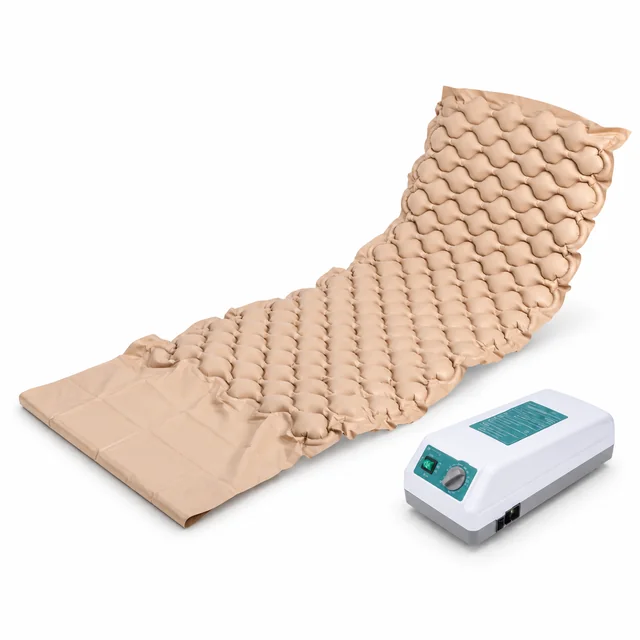
| KL-P003 | 1900 × 900 mm | Confirm installed height | Bubble-cell air mattress |
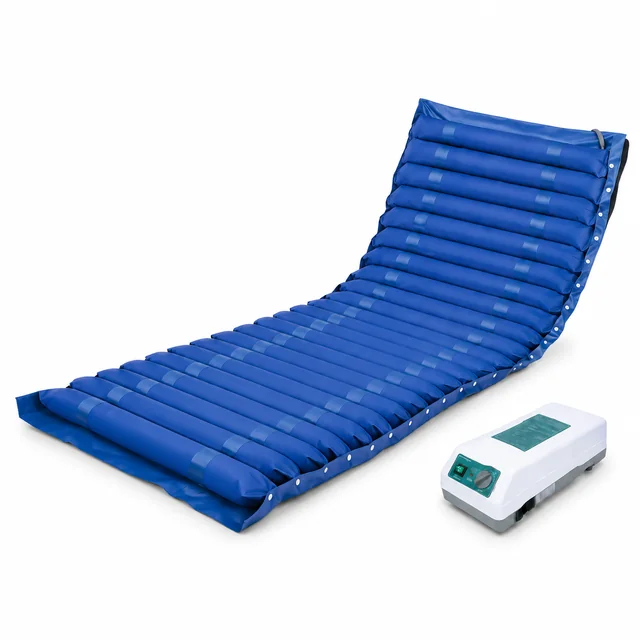
| KL-P004 | 1900 × 900 mm | Confirm installed height | Tubular alternating-pressure mattress |
A shared footprint does not mean every listed mattress fits every bed. The foam thickness choices require separate compatibility review. For air mattresses, ask whether the quoted height is measured inflated and whether an underlying mattress is required. Compare the complete installed arrangement.
Why thickness matters when rails are fitted
Adding a thicker mattress or overlay raises the support surface relative to the rails. Compressible edges can also affect gaps. MHRA advises assessment of the bed, mattress and rail system in its relevant configurations, including the conditions created by active surfaces. MHRA guidance on bed rails.
Do not solve a thickness conflict by improvising an extension, adding loose padding or changing rails without approval. Request a compatible configuration from the manufacturer and have the responsible team review it. A measurement sheet is useful for procurement, but it does not replace a competent assessment of the complete system.
Ask suppliers to state the permitted mattress-height range for each proposed rail combination. If the hospital uses more than one rail design on the same bed family, list each version separately. Small differences in the installed hardware can be missed when purchasing records identify only the main bed model.
Check articulation as well as flat dimensions
A mattress that appears to fit when flat still needs to be suitable when the backrest and leg sections move. Record whether the bed has fixed or adjustable length, the positions used by the ward, and any mattress retention components. For a segmented mattress, request the section dimensions and their intended relationship to the deck.
The FDA notes that some rail arrangements require particular attention in articulated positions, so assessment should not be limited to a flat bed. FDA bed-entrapment questions and answers.
Ask the supplier to demonstrate the proposed mattress on the named frame. Record the exact configuration used in the evaluation, including any overlay or cover variation. See Foam Hospital Mattresses: Density, Layers and Covers Explained for foam construction and Air Mattresses for Hospital Beds: Bubble-Cell vs Tubular Systems for air-mattress installation questions.
How to measure an existing bed before ordering
Prepare one record for each distinct bed configuration. Do not rely only on the dimensions of an old mattress, which may have changed in service or may not have been the correct original fit.
- Identify the equipment. Photograph the bed model label and record the rail references and any deck extensions.
- Find the instructions. Record the manufacturer's permitted mattress dimensions and compatibility information.
- Measure the platform. With the bed safely prepared under the facility's procedure, record its mattress-supporting length and width.
- Record the mattress arrangement. Note the intended replacement or overlay setup, orientation and installed height.
- Record articulation details. Include section lengths or a manufacturer drawing where needed, together with retention features.
- Send the record for review. Ask the supplier to confirm fit and identify any information still required for approval.
For larger projects, use a spreadsheet with bed model, rail model, approved mattress reference, dimensions, quantity and location. This allows procurement to group genuinely equivalent configurations while preserving differences that matter at installation.
Bariatric and paediatric exceptions
Do not scale an adult ward mattress specification up or down and assume the result is suitable. Bariatric equipment needs an appropriate combination of dimensions and documented capacity. Paediatric and infant equipment requires assessment for the intended patient population and the specific bed or cot system.
When an adjustable-width bed changes configuration, the corresponding mattress arrangement also needs to be correct. MHRA specifically highlights mattress-size compatibility on widened bariatric beds. MHRA bed-rail guidance. See Bariatric Hospital Mattresses: Width, Weight Capacity and Pressure Care for the purchasing questions associated with larger patients.
Weight also matters independently of size. A wide mattress does not increase a bed's rating, and a bed's safe working load is not automatically its maximum patient weight. Keling's safe working load guide introduces that distinction; obtain the manufacturer's stated limits for the selected equipment.
Confirm fit at receiving and handover
The receiving team should compare labels and dimensions against the approved order, not simply count cartons. Where multiple mattress types arrive together, make the intended bed pairing clear on the inventory record and handover documentation.
For replacement programmes, retain the approval record so future purchases can repeat the accepted specification. If a supplier changes a cover, height, core or air-system configuration, review the change before assuming that the existing compatibility approval still applies.
Frequently asked questions
Is a 1900 × 900 mm mattress universal?
No. It is a published size for several Keling models, but suitability still depends on the particular bed, rails, mattress height and installation arrangement.
Should buyers measure the old mattress or the bed?
Use the manufacturer's instructions and bed identification first, supported by platform measurements. The old mattress is useful as a reference but is not proof of the correct specification.
Can an overlay be added to any existing mattress?
No. Confirm the overlay's approved base arrangement and the compatibility of the resulting installed system.
Does a wider mattress increase patient capacity?
No. Size and load limits must be confirmed separately for the mattress and the bed system.
Next step
Replacing hospital mattresses? Send Keling your bed and rail references, measurements and quantities to request a confirmed mattress configuration and quotation.
About the author
This article was written by the Keling Medical export team, drawing on the engineering data for the 33 bed, cot, mattress and accessory models Keling manufactures at its Yangzhou plant. Keling Medical has been making medical appliances since 1996 and holds CE, ISO 9001 and ISO 13485 certification. More about Keling.