Adjustable bed vs hospital bed: what is actually different
Both raise the head and knees. Only one changes height, integrates tested rails, rolls on lockable castors and is built as a medical device. Here is when each one fits.
Short answer
An adjustable bed is consumer furniture that raises the head and foot of a household mattress for comfort. A hospital bed is a medical device: it also adjusts platform height, integrates side rails tested with the mattress, rolls on lockable castors, may tilt and has a documented safe working load under IEC 60601-2-52. Choose a hospital bed whenever a carer, transfers, rails or pressure care are involved.
An adjustable bed and a hospital bed can both raise your head and knees at the touch of a button, so it is easy to assume they are the same product at different prices. They are not. A consumer adjustable bed is furniture designed for comfort; a hospital bed is a medical device designed so that someone else can safely care for the person lying in it. The differences — height adjustment, rails, castors, tilt, cleanability and the standards behind them — decide which one a person actually needs.
This article sets the two side by side for home-care suppliers, DME distributors, care providers and families, and explains when an adjustable bed is enough.
What is an adjustable bed?
An adjustable bed is a consumer bed base with motors that raise the head and foot sections of a standard mattress. It is usually sold as an adjustable bed base that sits inside an existing bed frame or on legs, in household sizes such as twin, queen and king, often as split bases for couples.
Typical features include preset positions such as "zero gravity" (head and knees slightly raised), a "zero clearance" design that sits on a platform frame, wall-hugging movement, massage motors, under-bed lighting, USB ports and app control — which is where most "smart bed" products sit. Most adjustable beds articulate but do not change the overall platform height, and they have no side rails, castors or emergency functions. They are made and sold as household furniture and consumer electrical products, not as medical devices.
What is a hospital bed?
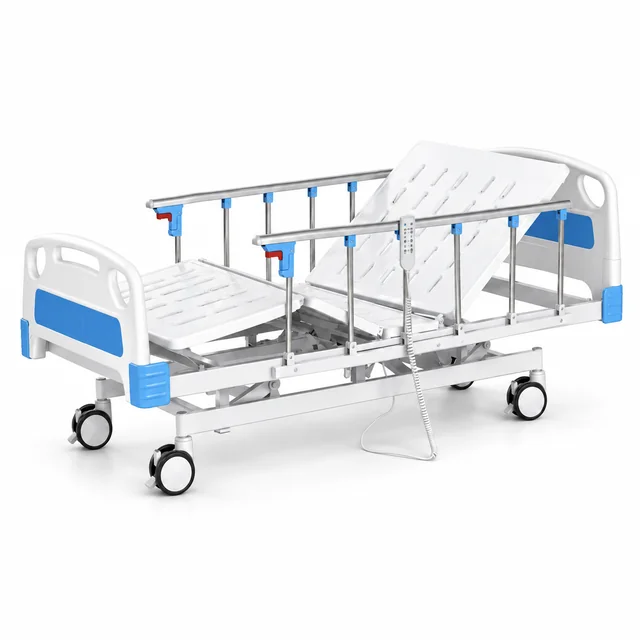
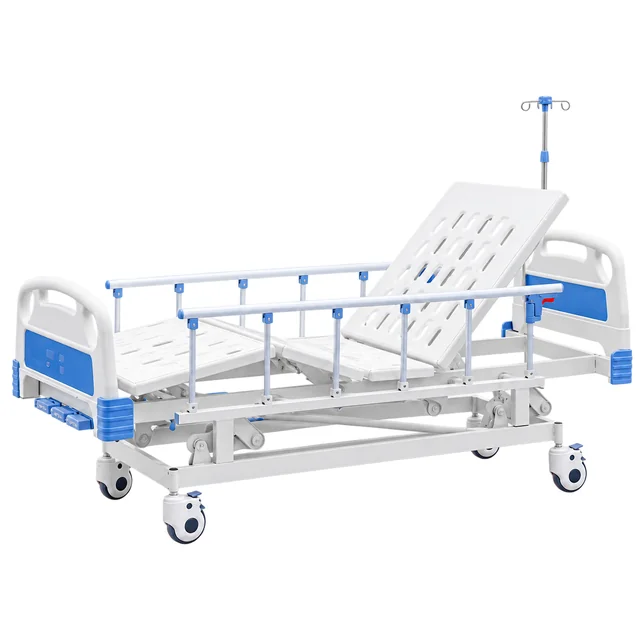
A hospital bed is a medical bed designed for patient care: it articulates like an adjustable bed, but it also changes platform height, integrates side rails, moves on lockable castors and is built and tested to medical device rules. In the US an electric hospital bed is a Class II medical device (21 CFR 880.5100), and a manual one is Class I (880.5120).
Internationally, medical beds are tested to IEC 60601-2-52, the particular standard for medical beds, which sets requirements for side-rail height and gaps, safe working load and stability, and defines application environments from intensive care to home care. That standard has now been superseded by IEC 80601-2-52:2026. Our explainer on hospital bed functions covers what each movement is for.
Adjustable bed vs hospital bed: side by side
The short answer: an adjustable bed changes the shape of the mattress for the sleeper's comfort, while a hospital bed also changes height, protects against falls and entrapment, and is built so carers can work safely. The table summarises typical differences; individual products vary.
| Feature | Consumer adjustable bed | Hospital bed |
|---|---|---|
| Purpose | Comfort, sleep, lifestyle | Patient care, carer safety |
| Regulation | Furniture / consumer electrical product | Medical device (e.g. FDA Class I/II, CE marked) |
| Medical bed standard | Not applicable | IEC 60601-2-52, now IEC 80601-2-52:2026 |
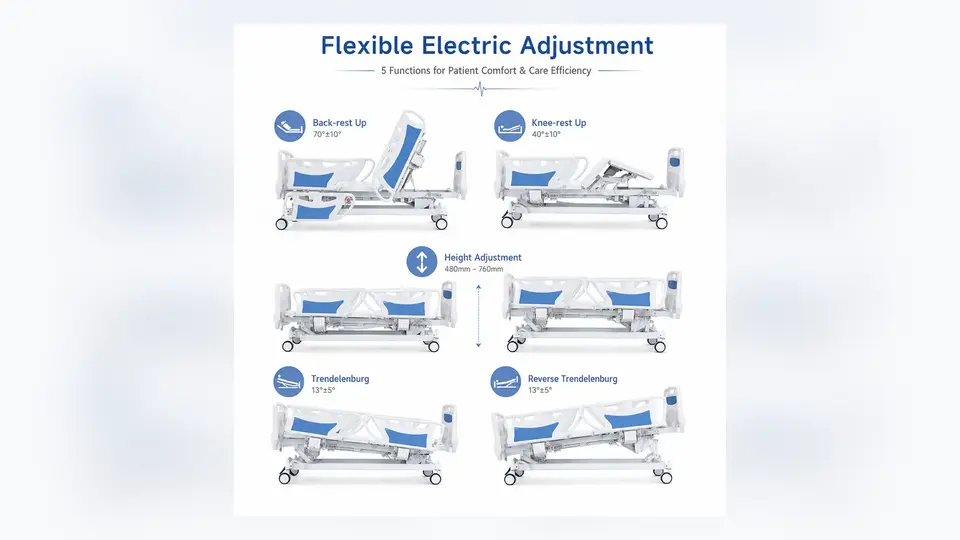
| Height adjustment | Usually fixed height | Hi-lo, e.g. 450–760 mm on many ward beds |
| Side rails | None built in; add-on rails sold separately | Integrated rails tested with bed and mattress |
| Castors and brakes | Usually none, or furniture glides | Lockable castors, e.g. 100–125 mm |
| Trendelenburg tilt | No | On five-function beds, e.g. 12° |
| CPR release and nurse lock | No | Common on higher-specification electric beds |
| Load rating | Stated by maker, varies widely | Documented safe working load, e.g. 200–240 kg |
| Sizes | Twin to king, split bases | Single, typically 900 mm platform width |
| Surfaces and cleaning | Upholstered, fabric covers | Coated steel, ABS, fluid-resistant mattress covers |
Beds that go up and down: why height adjustment matters
When people search for "beds that go up and down", what they often need is height adjustment, which most adjustable beds do not offer. A hospital bed — also called a hi-lo or high low adjustable bed — raises and lowers the whole platform.
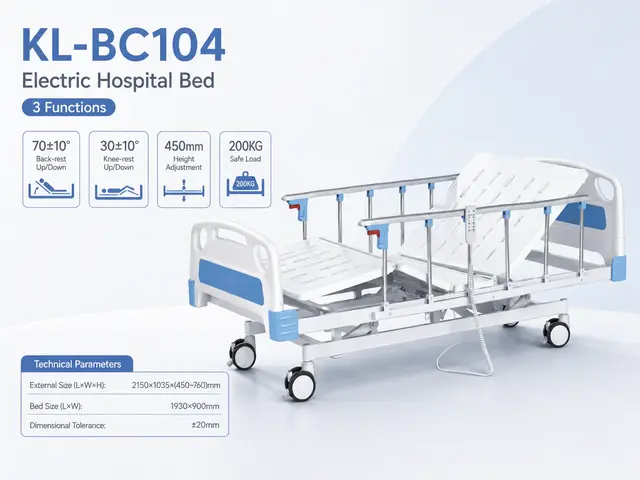
Height adjustment serves two people at once. Lowered, it lets the occupant sit on the edge with feet on the floor for a safer transfer, and reduces the distance of a fall. Raised, it brings the patient to the carer's working height for washing, dressing and repositioning without stooping. The three-function KL-BC104, for example, travels between 450 and 760 mm; its manual counterpart, the KL-BC108, covers the same range by crank where mains power is unreliable.
US Medicare criteria reflect this distinction: a variable-height hospital bed is justified when a patient needs a bed height different from a fixed-height bed to transfer to a chair, wheelchair or standing position. For very low positions, see our guide to low hospital beds and fall-risk planning.
Side rails and entrapment: the biggest safety difference
Hospital bed rails are designed and tested together with the bed and mattress; rails added to a consumer bed are not. That matters because gaps between rail, mattress and headboard are where people become trapped.
IEC 60601-2-52 and UK MHRA guidance set gap limits — for example, no more than 60 mm between rail end and headboard, and no more than 120 mm in openings within the rail. MHRA warns that third-party rails designed for divan beds can leave dangerous gaps on other bed types. In the US, adult portable bed rails sold for consumer beds now have a mandatory CPSC safety standard, introduced after the agency counted 284 entrapment deaths involving these rails between 2003 and 2021.
If the person needs rails, that alone is a strong reason to choose a hospital bed. Whether rails are appropriate at all is a clinical judgement; see bed rails for elderly patients, and note that clinical decisions follow the care provider's protocols and the treating clinician.
Cleanability, tilt and clinical positions
A hospital bed is designed to be cleaned and disinfected repeatedly; an adjustable bed is designed to look good in a bedroom. Hospital beds use coated steel frames, ABS panels and wipeable mattress covers, and their electrics carry an IP rating against water. Upholstered adjustable bases cannot be disinfected in the same way.
Hospital beds also offer positions that consumer beds do not. Five-function beds tilt the whole platform head-down or head-up — Trendelenburg and reverse Trendelenburg — and higher-specification electric beds add a CPR release that flattens the backrest within seconds. An adjustable bed's "incline bed" or zero gravity setting raises sections for comfort but does not tilt the platform as a whole.
Adjustable bed for a heavy person: check the documented load
For heavier users, the question is not just "will it hold?" but "what has been tested?". Hospital beds state a safe working load — the total of patient, mattress and accessories — that has been tested under the medical bed standard. Keling beds are rated 200 kg or 240 kg depending on model.
Consumer bariatric adjustable beds state a maximum weight chosen by the manufacturer, often on a different basis. If a heavy person also needs care, repositioning or transfers, specify a hospital bed whose safe working load covers patient plus mattress plus accessories, and read our explanation of what safe working load actually means.
Can you use a headboard with an adjustable bed?
Yes. Most consumer adjustable bases accept a headboard and footboard via headboard brackets for adjustable beds, or the base sits inside an existing bed surround. Hospital beds work differently: the head and foot boards are part of the bed, carry the bed's structure and wall protection, and are removable for access in some designs.
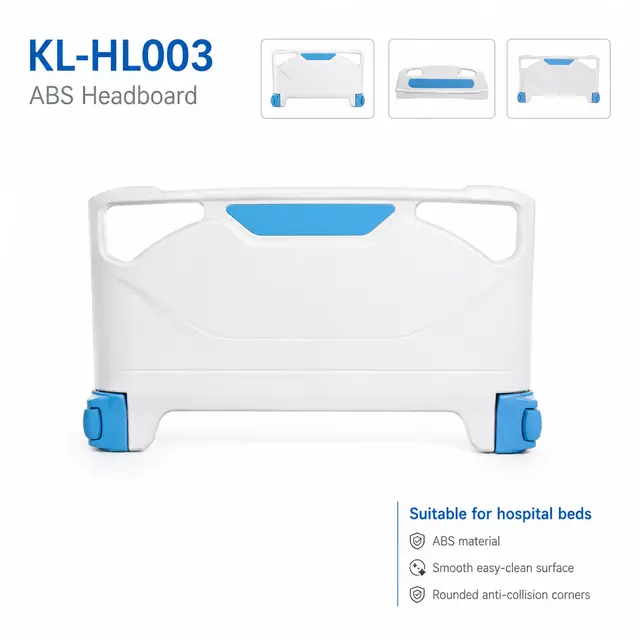
Keling's KL-HL003 and KL-HL004 ABS headboards include anti-collision wheels that touch the wall before the panel does, and our flat beds KL-BC129 and KL-BC130 can be ordered with customised headboards. For more, see hospital bed head and foot boards.
Are adjustable beds worth it — and when is one enough?
An adjustable bed is usually enough when the person is independent: they can get in and out of bed unaided, reposition themselves, do not need rails, and nobody is providing hands-on care in bed. For these users, the benefits of an adjustable bed — sitting up to read or watch TV, raising the head for comfort, a shared bed with a partner — come without the clinical look of a hospital bed.
A hospital bed is the better choice when any of these apply:
- a carer helps with washing, dressing, toileting or repositioning in bed;
- transfers in and out of bed are difficult or need a hoist or second person;
- the person is at risk of falls, or a clinician has recommended rails;
- the person spends most of the day in bed or is at risk of pressure injury and needs a pressure-redistributing mattress;
- they need positions such as Trendelenburg or a fast CPR release;
- funding depends on it — in the US, Medicare's coverage criteria apply to hospital beds supplied as durable medical equipment, not to furniture.
For a full home-care buying guide, see hospital beds for home use.
Checklist for DME suppliers and buyers
If you supply beds to patients at home or to care facilities, confirm these points before offering an adjustable bed for patients at home instead of a hospital bed:
- Is the product registered and labelled as a medical device in your market?
- Does it have a test report to IEC 60601-2-52 (or IEC 80601-2-52) and IEC 60601-1, and which application environment is claimed?
- Does it adjust height, and over what range in mm?
- Are rails integrated and tested with the specified mattress?
- Is the safe working load documented, including mattress and accessories?
- Can the surfaces and electrics be cleaned to your infection-control protocol?
- Are spare parts and service available for the life of the bed?
Specification line: Electric medical bed for home or long-term care; height-adjustable platform (e.g. 450–760 mm); electric backrest and knee-rest; integrated side rails tested with the specified mattress to IEC 60601-2-52 / IEC 80601-2-52; lockable castors; documented safe working load of at least 200 kg; wipe-clean surfaces; CE marked; manufacturer certified to ISO 13485.
Keling manufactures medical beds, not consumer adjustable bases. To discuss home-care or long-term care models for your market, contact our export team.
Sources and further reading
- 21 CFR Part 880 Subpart F (eCFR) — US identification and classification of electric and manual hospital beds.
- IEC 80601-2-52 and medical bed safety (UL Solutions) — the 2026 medical bed standard replacing IEC 60601-2-52.
- Bed rails: management and safe use (MHRA) — gap limits and the risk of third-party rails.
- CPSC mandatory safety standard for adult portable bed rails — consumer bed rail rule and entrapment data.
- Hospital beds and accessories — Medicare provider compliance tips (CMS) — coverage criteria for fixed, variable-height and electric hospital beds.
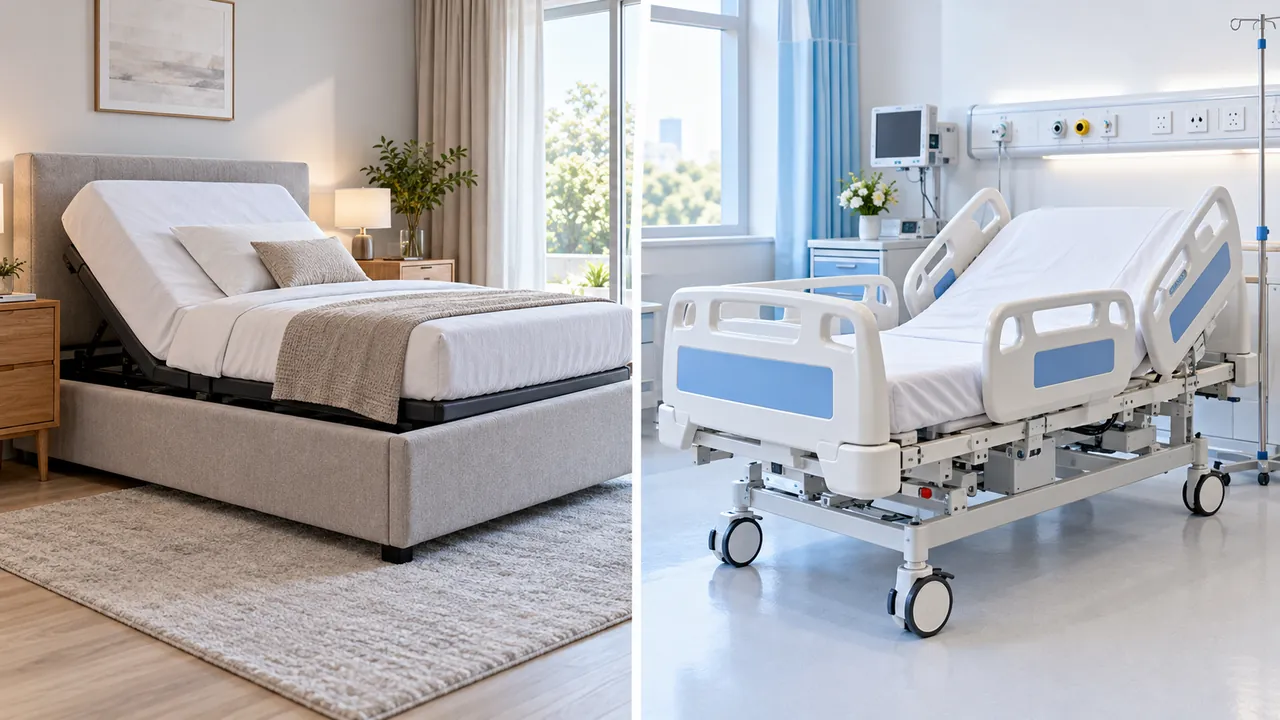
Illustration: AI-generated image for explanation only; it does not show a specific Keling model. See the linked product pages for actual product photos and specifications.
Frequently asked questions
What is the difference between an adjustable bed and a hospital bed?
An adjustable bed is household furniture that raises the head and foot sections for comfort, usually at a fixed height and without rails or castors. A hospital bed is a medical device that also adjusts platform height, has integrated side rails tested with the mattress, lockable castors and a documented safe working load, and is built to the medical bed standard IEC 60601-2-52.
Are adjustable beds worth it for seniors?
For an independent older person who gets in and out of bed without help, an adjustable bed can make sitting up, reading and resting more comfortable. Once a carer is helping with transfers, repositioning or personal care, or rails are being considered, a height-adjustable hospital bed is usually the safer and more practical choice.
What are the beds called that move up and down?
Beds that raise and lower the whole sleeping platform are called height-adjustable, hi-lo or high low beds; most are hospital or homecare beds. Consumer adjustable beds usually move only the head and foot sections. Hospital beds typically travel through a range such as 450 to 760 mm, helping transfers at the low end and carer access at the high end.
Can I put bed rails on an adjustable bed?
Add-on rails can be fitted to many consumer beds, but they are not tested as a system with the bed and mattress, and gaps can cause entrapment. US adult portable bed rails now have a mandatory CPSC standard, and UK MHRA warns third-party rails can leave dangerous gaps. If rails are needed, a hospital bed with integrated rails is safer.
Can you use a headboard with an adjustable bed?
Yes. Most consumer adjustable bases accept a headboard and footboard through headboard brackets, or sit inside an existing bed frame. Hospital beds have integrated head and foot boards that are part of the structure; Keling's KL-HL003 and KL-HL004 ABS headboards add anti-collision wheels that protect the wall when the bed is moved.
Is an adjustable bed a medical device?
Usually not. Consumer adjustable bed bases are sold as furniture and consumer electrical products. Hospital beds are regulated medical devices, for example Class I or Class II in the US depending on whether they are manual or electric, and CE marked in Europe. Check product labelling and registration rather than relying on how a bed is described.
About the author
This article was written by the Keling Medical export team, drawing on the engineering data for the 33 bed, cot, mattress and accessory models Keling manufactures at its Yangzhou plant, and checked against the published standards and guidance listed in the sources. Keling Medical has been making medical appliances since 1996 and holds CE, ISO 9001 and ISO 13485 certification. More about Keling.