Low Hospital Beds: Height, Alarms and Fall-Risk Planning
Assess low and hi-low hospital beds by mattress height, transfers, rail compatibility and alarm workflow without assuming any bed guarantees fall prevention.
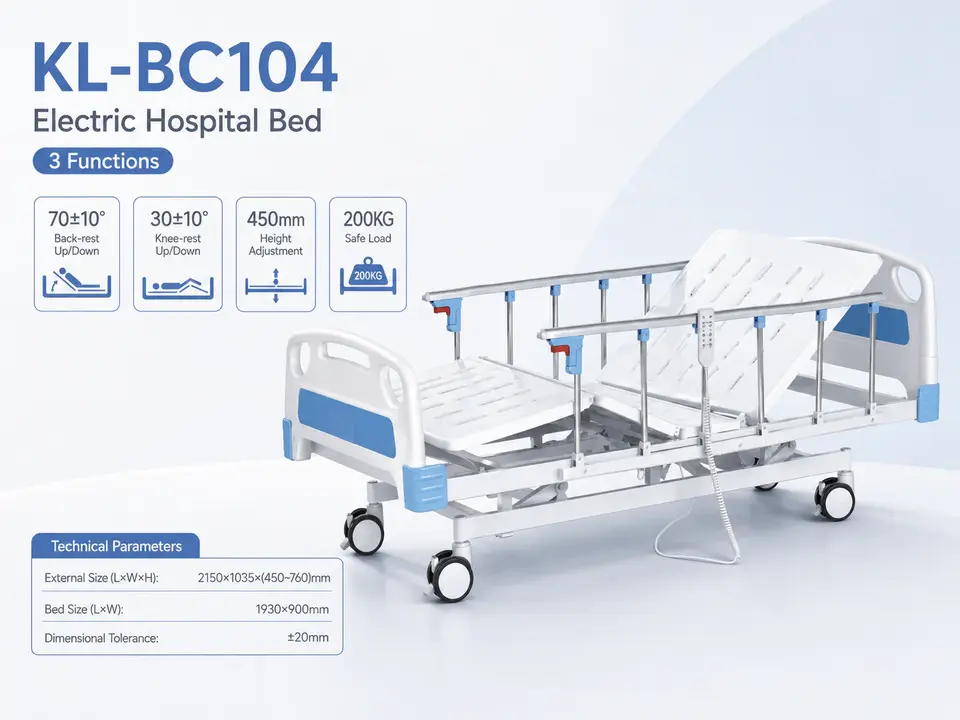
A low bed brings the mattress-support platform closer to the floor. A hi-low bed can also raise that platform for care and transfers. These functions can support an individual care plan, but no bed, rail or alarm guarantees that a patient will not fall.
For nursing homes, geriatric wards and long-term care projects, the buying decision should begin with the intended patient population and transfer workflow. The lowest possible platform is not necessarily the most suitable height for standing up, assisted transfer or staff care. Mattress thickness and the arrangement of nearby equipment also change how the bed works in practice.
Buyers need measured heights, a compatible bed system and a clear operating plan. Labels such as “ultra-low,” “floor bed” or “fall prevention bed” are not sufficiently precise to replace those details.
Why bed-related falls need more than an equipment response
A person may attempt to leave bed because they need the toilet, feel disoriented, are uncomfortable or believe they can walk independently. Medication effects, mobility limitations and the surrounding environment may contribute to risk. The appropriate response depends on the individual and can change during a stay.
NICE's falls guidance calls for assessment and management of relevant risk factors. Its accompanying evidence discussion notes limited evidence for individual environmental measures such as low beds and bed alarms. These devices should not be marketed as a stand-alone solution with a guaranteed injury reduction. NICE NG249 recommendations and rationale.
The procurement team's role is to provide equipment that supports the facility's agreed approach. That includes controls staff can use consistently, measurements that match the specification and accessories that do not obstruct care. The clinical team determines how each person's bed is set up.
Minimum height: measure the right surface
Three measurements are easily confused: height to the mattress platform, height to the top of the installed mattress and the height of the raised rail above that mattress. A low platform with a thick mattress may have a higher patient surface than a buyer expects.
For a tender, specify the measurement reference and configuration. State whether dimensions are required with a particular mattress, with the bed unloaded or under another manufacturer-defined condition. Ask for minimum and maximum platform height separately from the available travel range.
Do not interpret “floor bed” literally unless the product documentation supports that description. Ask for the actual minimum height and clearance beneath the base. The design may lower close to the floor while leaving space for wheels and mechanisms. What matters is the measured configuration the facility will receive.
Transfer height and working height
A person who can stand with assistance may need a different height from a person who requires a mobile lift. Staff also need access for care without repeatedly working in an awkward position. A hi-low bed allows adjustment, but the useful range must be evaluated against these tasks.
Ask the handling team to review the mattress edge, foot placement, rail opening and approach of transfer aids. If a mobile lift is used, confirm that its base can enter beneath the bed at the required positions. A low base that blocks the existing lift can undermine the intended workflow.
The maximum height matters as much as the minimum. During sample evaluation, have staff assess bed making, hygiene tasks and equipment access using the proposed mattress and room layout. Record whether the working range is adequate, rather than assuming that every adjustable bed provides the same ergonomics.
Rails, mats and alarms have different roles
Side rails
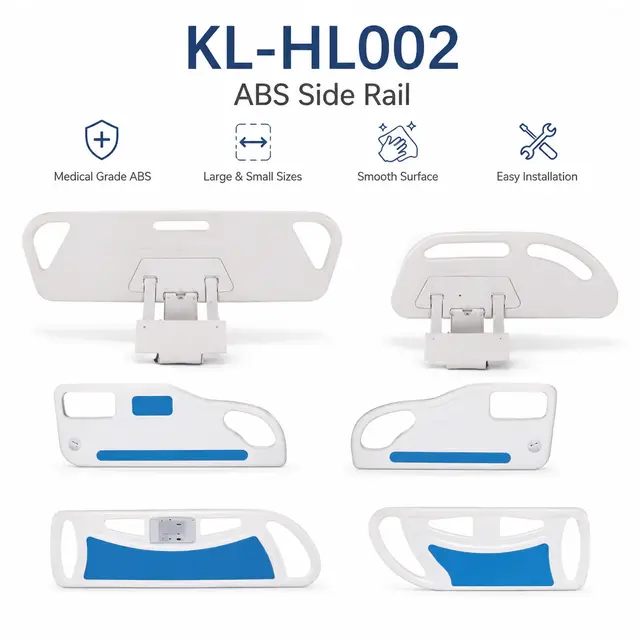
Rails may assist repositioning or provide a handhold, but their suitability requires assessment. The FDA identifies entrapment and injuries from climbing over rails among the risks. Raising all rails is therefore not an automatic falls-prevention decision. FDA: A Guide to Bed Safety.
For buyers, the key requirement is a documented compatible frame, mattress and rail combination. Split rails, shorter rails or removable rails introduce different access arrangements, not a universal ranking of safety. Ask how rail latches, access openings and mattress fit are checked throughout the approved movement range.
Floor mats
A floor mat may be considered in an individual care plan, but it occupies the same space that staff, walking aids and transfer equipment may need. Review its location, edges, cleaning and storage. A mat that moves into a transfer route can create an additional obstacle.
Specify the approved mat and bed arrangement if the facility intends to purchase them together. Assess whether the mat interferes with lowering, braking or lift access. Do not substitute a general exercise mat or improvised padding for a documented equipment choice.
Bed-exit alarms
An alarm is a notification system. It depends on correct setup and a response process; it does not physically assist a patient who is leaving bed. Decide who receives alerts, how staff recognise the originating bed and what happens if several alerts occur together.
Ask whether the proposed alarm is an integrated feature or a separate accessory. Check sensitivity settings, reset procedures, power requirements, cleaning instructions and any connection to the nurse-call system. A supplier's statement that an alarm “connects to nurse call” needs confirmation of the exact interface used in the receiving facility.
Write a usable low-bed specification
Keep the specification focused on features the facility can verify. Include the bed's loading limits and intended use alongside its dimensions, because low height does not establish suitability for every patient.
| Specification item | What to define |
|---|---|
| Low position | Minimum platform height and installed mattress height |
| Working range | Maximum height and permitted operation with accessories |
| Transfer access | Lift clearance, rail opening and approach space |
| Controls | Caregiver access, patient functions and lockout requirements |
| Rails and mattress | Approved combinations and thickness limits |
| Alarms, if required | Included hardware, alert route, power and reset workflow |
| Maintenance | Inspection instructions and replacement components |
Agree a sample assessment in a representative room. Include day and night workflows, cable routing and cleaning access. Acceptance should check what was purchased and whether it fits the approved workflow; a short equipment demonstration cannot prove a reduction in future falls.
Reviewing Keling options without assuming ultra-low capability
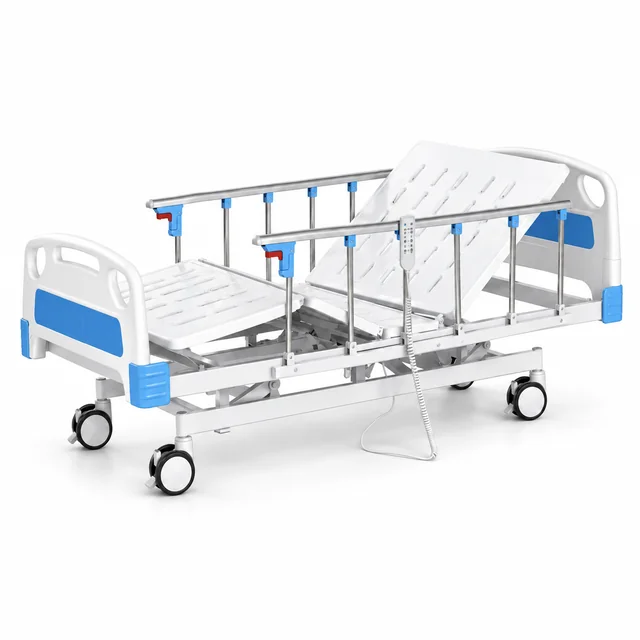
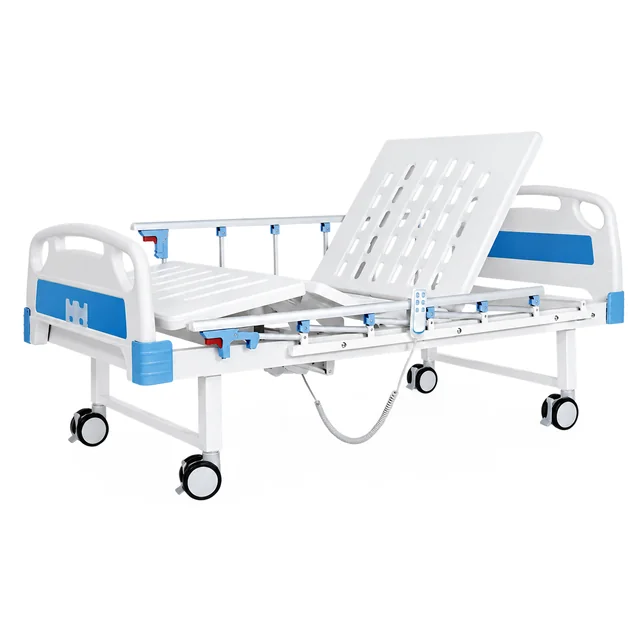
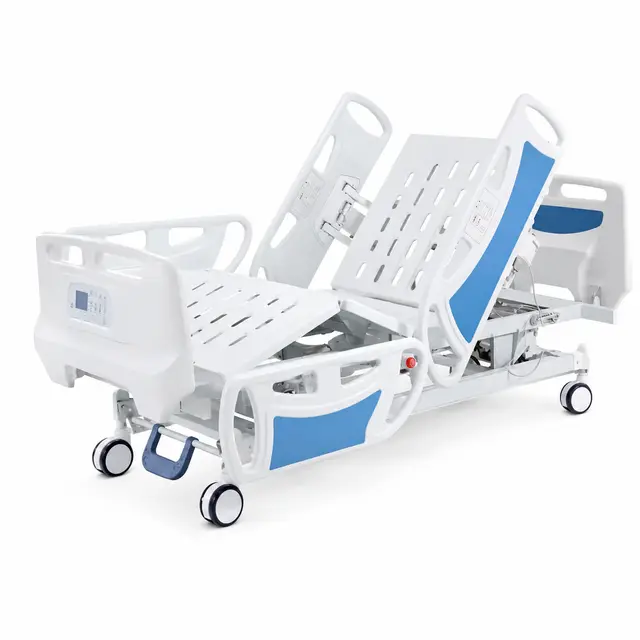
Keling's KL-BC104 electric bed has a published height range of 450–760 mm. The KL-BC105 has a listed fixed height of 450 mm. Those specifications distinguish a height-adjustable model from a fixed-height model; they do not establish floor-level or ultra-low capability.
For a specialist low-bed requirement, ask Keling to confirm whether a configuration meets your specified minimum patient-surface height. Similarly, request written confirmation of any integrated bed-exit alarm rather than assuming one is included. The long-term nursing care project page can help organise the broader room discussion.
Keep the mattress selection connected to that discussion. A change in support-surface thickness may alter transfer height and rail geometry, even if the frame model remains unchanged. See the hospital mattress sizing guide before finalising the bed-and-mattress order.
Frequently asked questions
Does a low bed prevent all falls?
No. It changes the bed's height and may support an assessed care plan. Falls depend on several factors, and the facility still needs appropriate observation, transfer support and individual management.
Is the lowest setting always best for getting out of bed?
No. Transfer height should suit the patient and the approved assistance method. A low resting position and an appropriate standing or lift-transfer position may be different.
Should every low bed have full-length rails?
No. Rail use and configuration require individual assessment and manufacturer compatibility. Full-length rails should not be selected automatically as a barrier to independent exit.
Can an alarm be added later?
Possibly, if the proposed accessory is compatible and the facility can support its alert workflow. Confirm fit, cleaning, electrical requirements and connection details before ordering it for an existing fleet.
Request a measured low-bed proposal
Send your minimum and maximum height requirements, mattress details and transfer-equipment information through Keling's quotation form. Ask the supplier to confirm which requirements its offered configuration meets and to identify any low-height or alarm features that need a different solution.
About the author
This article was written by the Keling Medical export team, drawing on the engineering data for the 33 bed, cot, mattress and accessory models Keling manufactures at its Yangzhou plant. Keling Medical has been making medical appliances since 1996 and holds CE, ISO 9001 and ISO 13485 certification. More about Keling.