Hospital Bed Head and Foot Boards: Materials, Detachable Designs and Hygiene
Specify hospital bed headboards and footboards by mounting fit, access, cleaning and replacement needs. Compare ABS and metal designs for ward orders.
A hospital bed headboard or footboard is easy to underestimate during purchasing. It is visible in every product photograph, yet the quotation may describe it only as “ABS panel” or “detachable board.” Those descriptions do not establish whether it fits the bed, supports the intended handling method or can be removed as required by the care team.
For a new ward, specify the boards together with the frame, rails and mattress. For replacements, work from the existing mounting arrangement and part identification. The objective is a board that performs its defined role throughout the bed's service life, with a clear route for replacing damaged parts.
What the end boards need to do
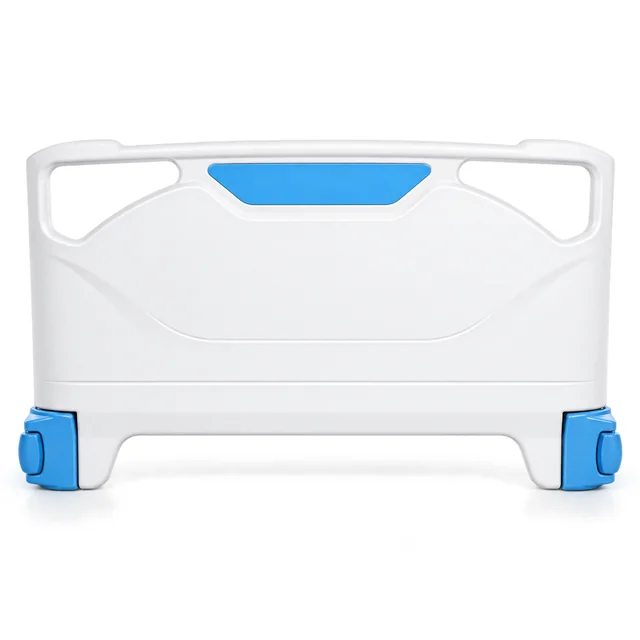
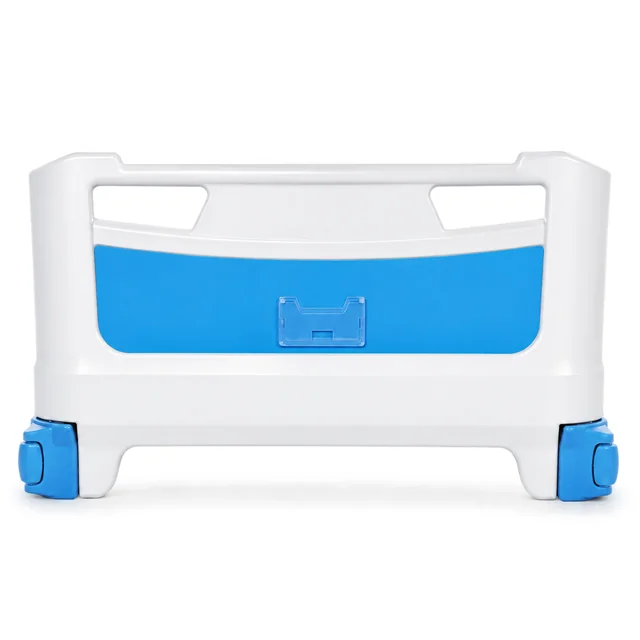
Head and foot boards form the ends of the bed system and can provide attachment locations for approved accessories, identification holders or controls. Some incorporate designated handling grips. Others mainly provide an end panel and should not be assumed to carry pushing, pulling or accessory loads.
Write the expected use into the enquiry. If porters move occupied beds regularly, ask where they should apply force. If a pump will hang at the foot end, give its weight and mounting requirements. If the board holds patient identification, decide whether the facility needs a removable holder that can be cleaned separately.
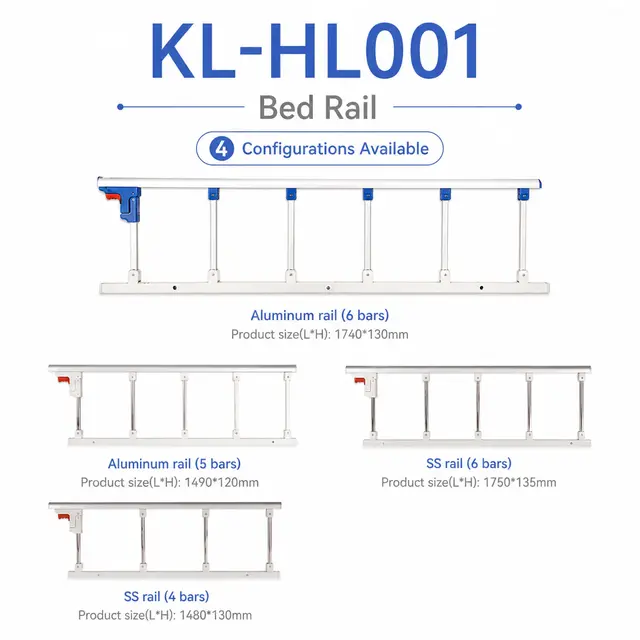
The position of end boards also matters to the complete bed layout. A replacement with different brackets or panel thickness may alter clearances around rails or the mattress. Review those interfaces through the complete bed supplier rather than judging the new board in isolation; Hospital Bed Side Rails: Materials, Safety Zones and How to Choose covers the associated rail assessment.
Materials and manufacturing methods
ABS describes a plastic material. Blow moulding describes a manufacturing process. They are not opposing product categories: a purchasing comparison should identify both the actual material and how the panel is constructed.
| Option | Purchasing questions |
|---|---|
| Moulded plastic board | What material is specified? Are inserts, handles and fixing points replaceable? |
| Steel board or frame assembly | What finish protects the steel, and how are scratches or damaged coatings managed? |
| Stainless steel assembly | Which grade and finish are supplied, and how are welds and joints finished? |
| Mixed-material board | Can each material tolerate the facility's cleaning process, including hidden fittings? |
Ask for a finished sample when colour, surface texture or handling comfort matters. Catalogue photography cannot show how a seam feels, whether a handle is comfortable with gloves or how easily a cleaning cloth reaches around a fixing.
For replacement stock, separate cosmetic differences from functional differences. A change in trim colour may be acceptable; a change in mounting depth can require a different approval. Identify the permitted substitutions in the order rather than allowing them to be decided during packing.
Detachable designs and emergency access
A removable board can support access at the end of the bed, but the release method needs to be clear. Ask whether removal is tool-free, whether the board lifts vertically or requires another movement, and how accidental disengagement is prevented. Demonstrate removal and refitting using the actual sample.
Do not confuse headboard removal with the bed's CPR function. Removing a panel may improve physical access; flattening an articulated backrest is a separate function with its own instructions. The equipment schedule should describe both if both are required.
Also plan where a removed board will be placed. A ward that has no designated storage point may leave it in a circulation route or damage its mountings against the floor. This is a simple room-planning question that is easier to resolve before the beds arrive.
How to order replacements that fit
Begin with the original bed model, production reference and headboard or footboard part number. Photograph the panel on the bed and the exposed mounting interface. Measure fixing centres, insertion depth, bracket shape and any locking feature requested by the supplier.
A supplier's description of a panel as “universal” should start a compatibility discussion. It does not replace it. Ask for confirmation against the particular bed and identify whether brackets, bolts, sleeves or adapters are supplied in the price.
Include the accessories already installed. A footboard carrying a control box or pump hook cannot be evaluated only as a plastic panel. If the replacement changes the arrangement, the supplier should explain the approved configuration and any work required before returning the bed to use.
Hygiene and maintenance planning
Compare how easily the complete board can be cleaned, including the reverse side, handles, inserts and lower mounting points. Request the approved cleaning method and compatible chemicals. Smooth appearance alone does not demonstrate resistance to the facility's disinfectants or cleaning frequency.
Ask maintenance to define the inspection record for loose fittings, damaged panels and missing bumpers. Keep the component identity with the bed asset record, so a later reorder uses the correct revision. Where several ward bed models share a similar appearance, photographs should supplement the part number rather than replace it.
Agree on export protection for the boards and hardware. Separate panels may save packing space, but they also create an assembly task at destination. Label each hardware set and clarify whether installation instructions are included with every shipment or supplied centrally to the distributor.
Keling headboard options
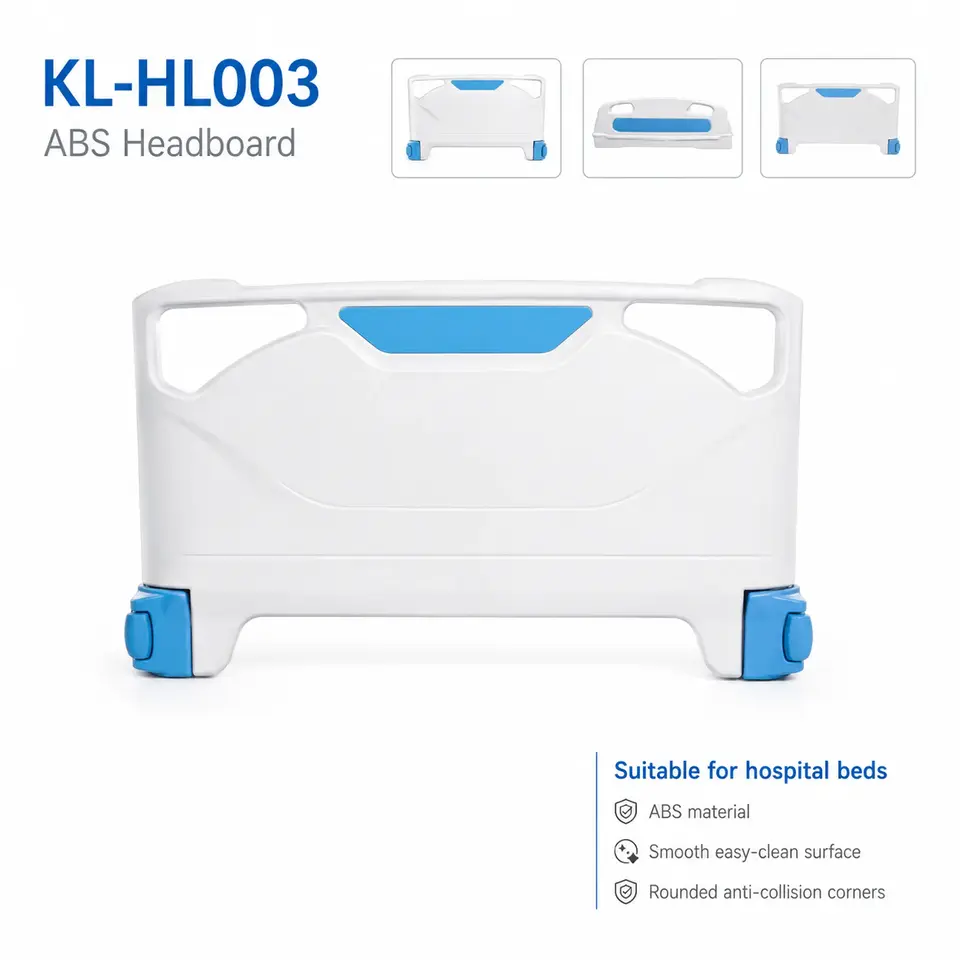
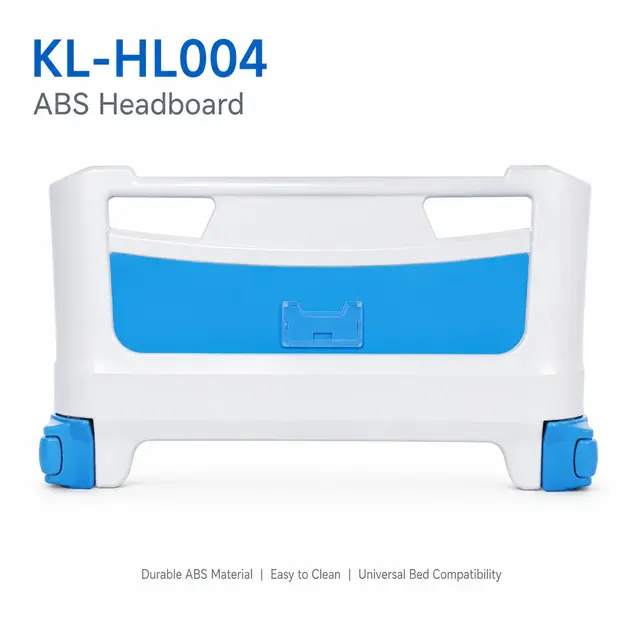
Keling lists the KL-HL003 ABS headboard and the KL-HL004 ABS headboard. The published descriptions identify different panel designs and anti-collision protection. Confirm the supplied end-board arrangement, mounting dimensions and compatibility for the intended bed.
When purchasing a general medical ward package, include spare boards in the same component schedule as Hospital Bed Castors: Central Locking, Antistatic Options and Sizing and the rail assemblies. Set quantities from the maintenance plan and installed fleet; there is no single spare percentage that suits every facility.
Frequently asked questions
Can the headboard and footboard be interchanged?
Only if the bed manufacturer confirms this. Their mounting details, heights and accessory interfaces may differ even when the panels look similar.
Does a detachable board mean the bed has CPR release?
No. Board removal and backrest flattening are separate functions. Specify the required access and CPR mechanism individually.
Is an ABS board automatically compatible with my cleaning products?
No. Confirm the finished panel's cleaning instructions, including inserts and fittings, against the products and contact times used by the hospital.
What should an enquiry include?
Send the bed identity, mounting photographs, dimensions, required colour, quantities and any attached controls or accessories. Indicate whether you need a headboard, footboard or matched set.
Next step
Request a Keling replacement-board quotation with the existing bed details, so the proposed panel and mounting kit can be reviewed before ordering.
About the author
This article was written by the Keling Medical export team, drawing on the engineering data for the 33 bed, cot, mattress and accessory models Keling manufactures at its Yangzhou plant. Keling Medical has been making medical appliances since 1996 and holds CE, ISO 9001 and ISO 13485 certification. More about Keling.