Trendelenburg and Reverse Trendelenburg: Positions and Bed Requirements
Understand Trendelenburg and reverse Trendelenburg positions, clinical limits, tilt specifications and the questions to ask before ordering hospital beds.
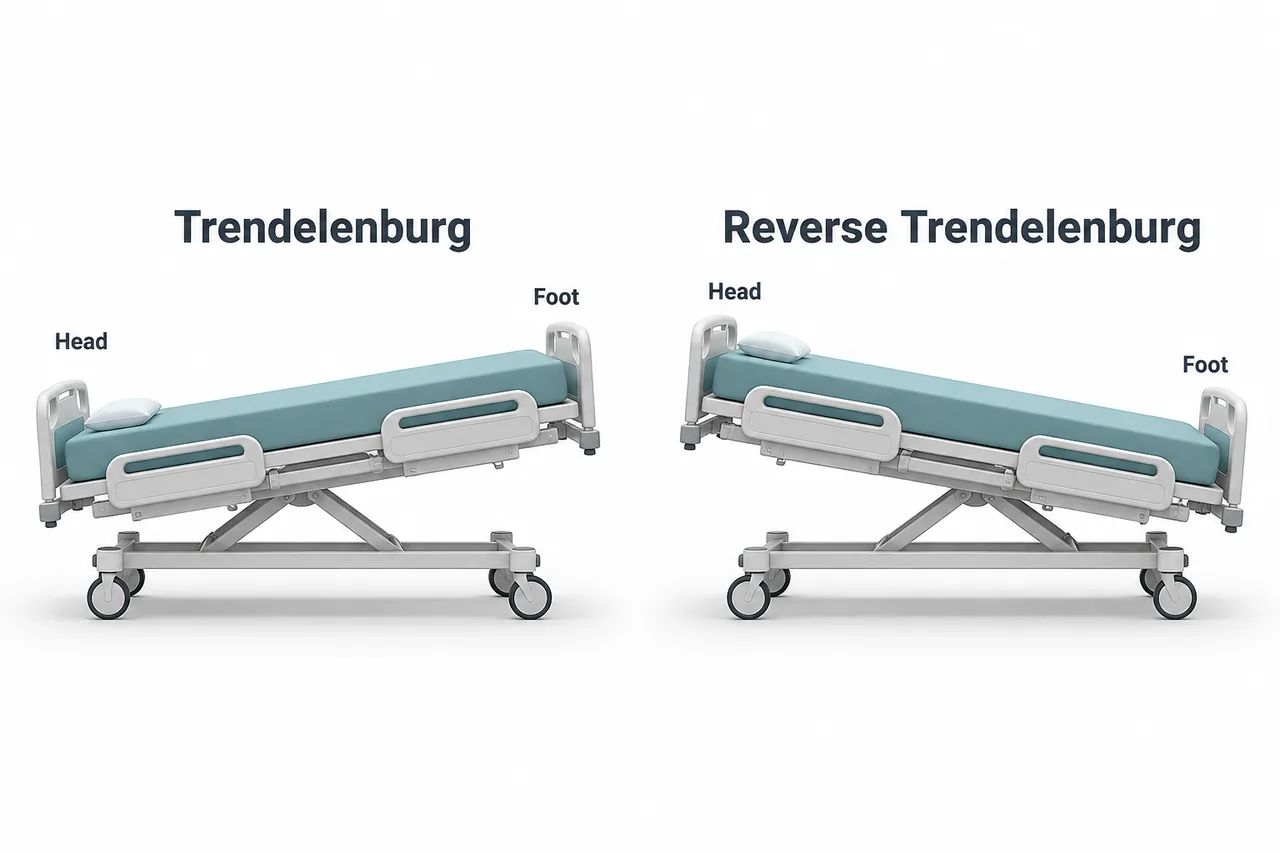
The Trendelenburg position places a patient on a surface tilted with the head lower than the feet. Reverse Trendelenburg tilts the surface in the opposite direction, with the head higher than the feet. For hospital procurement teams, the important distinction is that both involve the whole mattress platform. Raising a backrest or elevating a leg section does not, by itself, provide either function.
A tender that asks only for a “five-function bed” leaves room for misunderstanding. The supplier may count movements differently, and a product photograph rarely demonstrates the available tilt range. Buyers need the movement names, angles, load limitations, controls and emergency procedures for the exact configuration being supplied.
This guide explains the terminology and translates it into purchasing questions. Clinical positioning decisions belong to the treating team; a bed's technical capability does not establish whether a position is appropriate for a particular patient.
What the two positions actually look like
With the platform flat, the head and foot ends are at the same level. In Trendelenburg, the head end moves lower relative to the foot end while the platform remains inclined as a whole. In reverse Trendelenburg, the head end is higher. Articulated sections may also move on some beds, but their position must be specified separately.
| Position or movement | What changes | What the buyer should request |
|---|---|---|
| Trendelenburg | Whole platform tilts head down | Maximum head-down angle and operating restrictions |
| Reverse Trendelenburg | Whole platform tilts head up | Maximum head-up angle and operating restrictions |
| Backrest elevation | Upper platform section rises | Backrest range measured against the stated reference |
| Leg elevation | Thigh or lower-leg section moves | Section arrangement and adjustment method |
| Lateral tilt | Platform inclines toward one side | Separate confirmation; it is not a longitudinal tilt function |
The terms “modified Trendelenburg” and “shock position” are used inconsistently. They may refer to lying flat with the legs elevated rather than tilting the whole body. Do not put these phrases into an equipment specification without a drawing and a clear movement description. “Steep Trendelenburg” generally belongs to a surgical positioning discussion and should not be assumed to be available on a ward or ICU bed.
Clinical uses and limits buyers should understand
Surgery and procedural positioning
Head-down tilt is used in selected surgical procedures to improve access to the operative area. The Anesthesia Patient Safety Foundation describes steep Trendelenburg in robotic pelvic surgery and the associated physiological and positioning risks. That surgical context involves anaesthesia, monitoring, specialist supports and an operating table; it does not establish an interchangeable use for a hospital bed. APSF: Obesity and Robotic Surgery.
For a procurement team, the practical implication is to separate operating-table requirements from inpatient-bed requirements. If a department asks for a steep surgical angle, first confirm whether the equipment being purchased is intended for that procedure. Increasing a ward bed's requested angle on paper cannot make it a surgical positioning system.
Hypotension and shock
Do not describe Trendelenburg as a routine treatment for shock. The 2024 American Heart Association and American Red Cross first-aid guidance discusses supine positioning and, in selected circumstances without trauma, raising the feet. It does not make whole-body head-down tilt the standard response. These positions should not be conflated in product copy. AHA and American Red Cross: 2024 First Aid Guidelines.
An ICU may require longitudinal tilt for its approved protocols, but the equipment specification should describe the available movement rather than promise a clinical outcome. Avoid tender language such as “automatically corrects low blood pressure.” The bed supplies positioning capability; clinicians assess the cause of deterioration and determine treatment.
Respiration, feeding and aspiration risk
Head-up positioning and backrest elevation are also different technical requests. CDC pneumonia-prevention guidance describes head-of-bed elevation for selected patients at aspiration risk, subject to contraindications. It should not be repackaged as evidence that Trendelenburg prevents aspiration or that reverse tilt is universally interchangeable with backrest elevation. CDC: Healthcare-Associated Pneumonia Guidance.
If the intended workflow involves maintaining a prescribed head-up position, ask the clinical team which surface angle matters and how staff will verify it. A backrest indicator may measure the backrest relative to the platform, while a platform tilt indicator measures something else. The displayed number needs a clear reference so that users do not mistake one for the other.
Cautions that affect the equipment specification
Head-down positioning can alter respiratory mechanics and pressures in the head and eyes. Sliding and nerve injury are additional concerns, particularly in steep surgical positioning. The risks depend on the procedure, angle, duration and patient's condition; there is no single angle suitable for every patient. APSF positioning discussion.
The corresponding procurement questions are concrete. Can authorised staff lock out patient controls? Is there a visible angle reference? What mattress retention system is approved? Can staff return the platform to level predictably? What happens to tubing, drainage bags and accessories throughout the movement? Each question should be answered using the proposed bed's instructions and a demonstration.
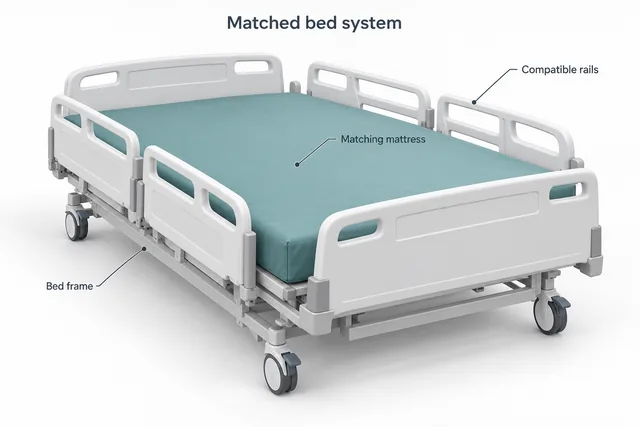
Side rails require their own compatibility assessment. They are not substitutes for a positioning plan or approved supports. A buyer should not ask staff to improvise straps, blocks or braces to achieve a tilt beyond the manufacturer's stated range. If an accessory is necessary, identify its intended use, attachment point and compatibility before including it in the order.
How a hospital bed delivers longitudinal tilt
An electrically driven design may raise and lower the head and foot ends of the support structure independently to create inclination. A manual or mechanical design may use a different linkage or adjustment arrangement. The visible movement can look similar while operating effort, adjustment speed and emergency recovery differ substantially.
Ask the supplier to demonstrate both directions from a level platform and to explain whether a minimum starting height is necessary. Some movement combinations may be restricted. A bed that reaches its maximum tilt only at a particular height should not be described as offering that angle at every height.
Also establish whether tilt can be combined with backrest and leg-section movement. A catalogue that lists several functions separately does not prove that every combination is permitted. The acceptance record should capture usable combinations, any control interlocks and the relevant limits under the manufacturer's specified load conditions.
The purchasing checklist that prevents specification gaps
State angles independently
Record the maximum head-down and head-up angles as separate values. Do not accept an unexplained “±” figure if the two ranges differ. Ask how the angles are measured and whether the values apply to the supplied platform and accessories. Keep the signed technical schedule consistent with the instructions for use.
Confirm controls and emergency recovery
Compare caregiver controls, patient controls, lockout arrangements and the location of movement buttons. Staff wearing gloves should be able to distinguish platform tilt from backrest adjustment. Identify any battery-supported functions and ask what remains possible when mains power is unavailable.
CPR release deserves a separate demonstration. A release that lowers the backrest does not necessarily level a tilted platform or lower the whole bed. Request a plain explanation of what the emergency control actually moves, whether it is mechanical or electrical and what staff must do afterward.
Match loading and stability requirements
Request safe working load, maximum patient weight and any restrictions associated with tilt or accessories. These values should come from the model documentation rather than a generic product-family brochure. Include mattress weight and the manufacturer's specified accessory allowance in the load review.
Verify the complete installation
Test rail movement, mattress retention, pump mounting, cables and accessory clearance throughout the approved range. A technically capable bed can still be inconvenient if its footboard-mounted pump hits nearby furniture or its controls become inaccessible in the intended room layout. Use the department's normal accessories during a sample evaluation.
Reviewing Keling models for a tilt requirement
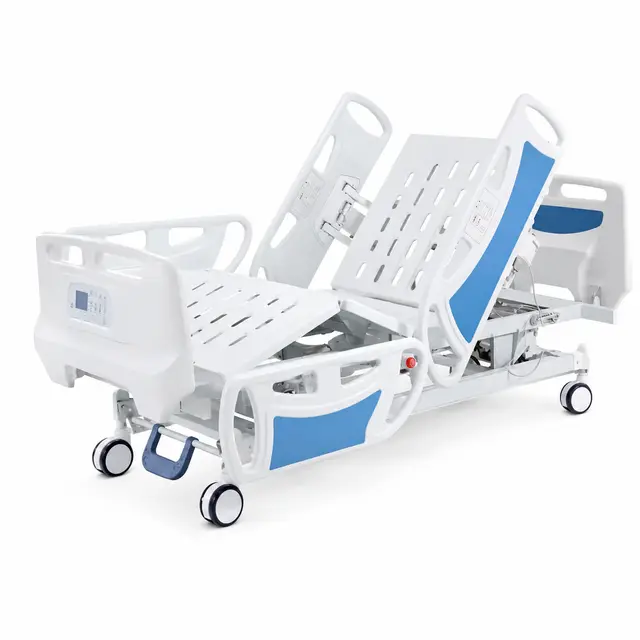
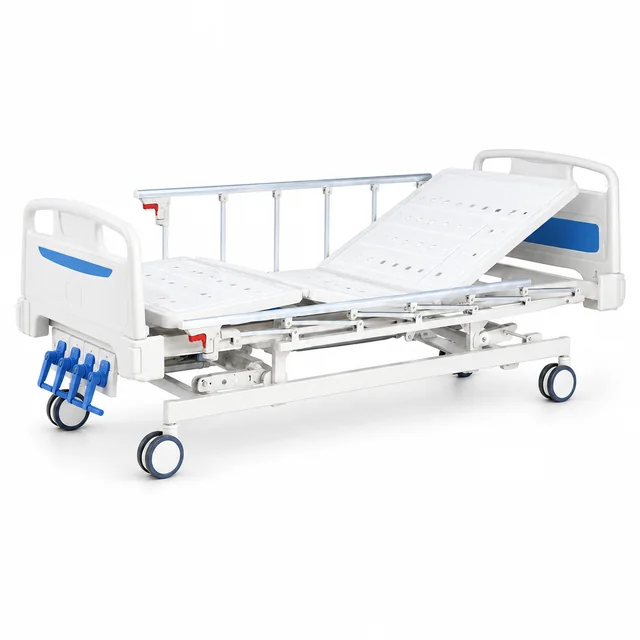
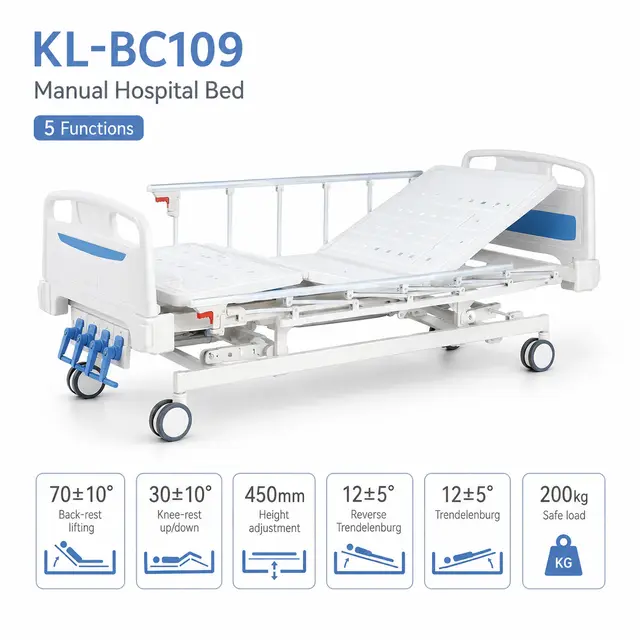
Keling's published specifications list the KL-BC101 electric bed with Trendelenburg and reverse Trendelenburg of 13 ± 5°, a 240 kg safe working load and backrest CPR release. The KL-BC109 manual bed lists both tilt directions at 12 ± 5° and a 200 kg safe working load. These are published product values, not independent test results. Obtain signed specifications clarifying the tolerances, operating limits and emergency arrangements before approval.
For a broader comparison, read Keling's hospital bed function guide. Keep the individual movement schedule attached to the enquiry, even when selecting a familiar model.
For a critical-care project, review the ICU bed planning page alongside the ICU procurement guide. The most useful enquiry includes the number of beds, intended department, destination market, required movements, mattress choice and electrical supply. Request pricing only against the configuration that satisfies those requirements.
Frequently asked questions
Is Trendelenburg the same as raising the patient's legs?
No. Trendelenburg tilts the whole supporting platform head down. Raising the legs can leave the torso horizontal. These should be separate entries in a technical specification and should not be substituted without the clinical team's approval.
What angle should a Trendelenburg bed provide?
Specify the angle required by the intended clinical workflow and verify that the proposed model provides it within its documented operating limits. There is no universal angle that makes every bed appropriate for every procedure, and steep surgical positioning requires equipment intended for that application.
Does a five-function bed always include both tilt directions?
No. Function-count terminology varies. Ask the supplier to list every movement and show it in a video or sample demonstration, then record the agreed configuration in the purchase specification.
Can the CPR button return the bed to horizontal?
Possibly, but this must be verified for the exact model. Some controls primarily flatten the backrest. The word “CPR” alone does not explain whether platform tilt, leg sections or bed height also change.
Request a bed specification built around your department
Send your required head-down angle, head-up angle, loading criteria and emergency-control requirements through Keling's quotation form. Include the intended care setting and any existing mattress or accessory requirements so the proposed bed can be assessed as a complete system before the order is confirmed.
About the author
This article was written by the Keling Medical export team, drawing on the engineering data for the 33 bed, cot, mattress and accessory models Keling manufactures at its Yangzhou plant. Keling Medical has been making medical appliances since 1996 and holds CE, ISO 9001 and ISO 13485 certification. More about Keling.