Bariatric Hospital Mattresses: Width, Weight Capacity and Pressure Care
Specify a bariatric hospital mattress using patient size, documented capacity, pressure-care needs and bed compatibility, with an RFQ checklist for buyers.
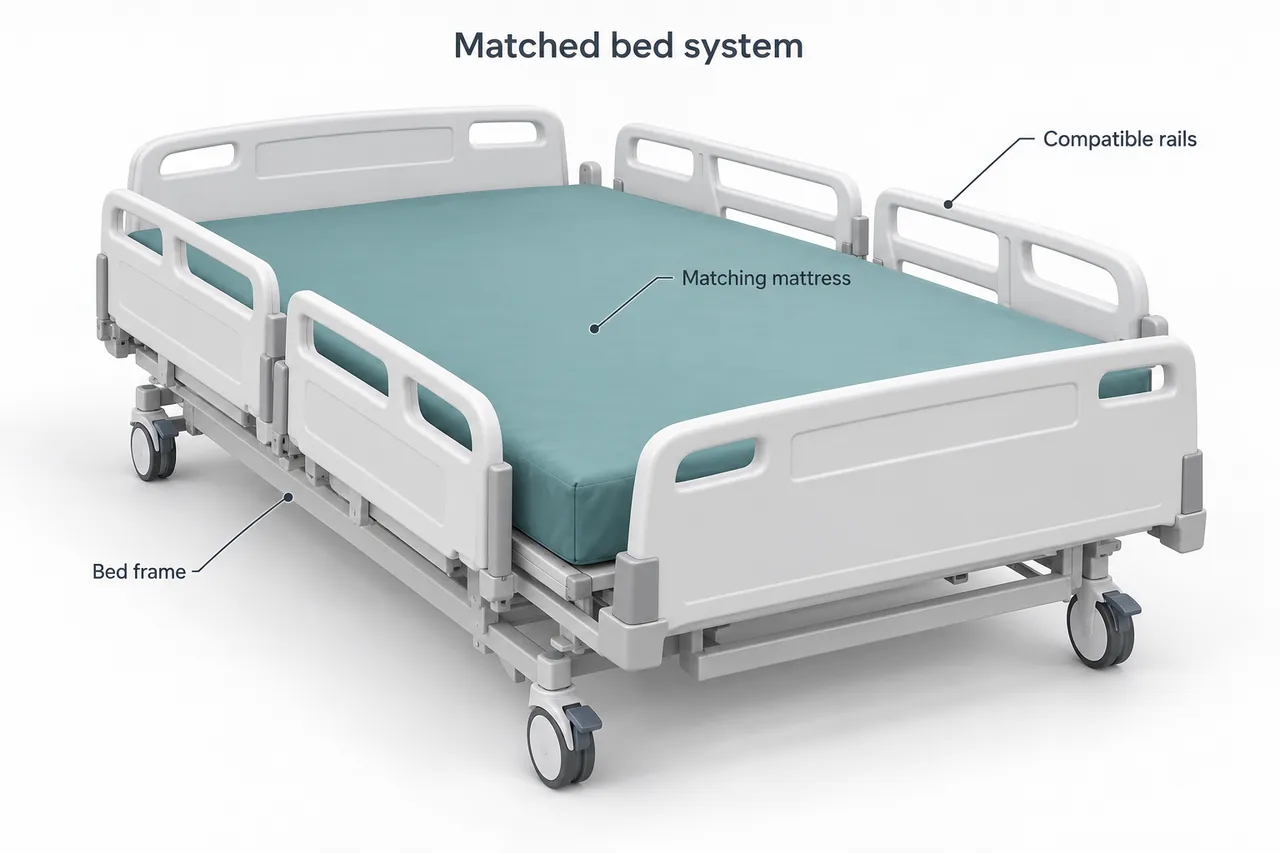
A bariatric mattress should be selected as part of a complete bed system for the intended patient. Width, patient-weight limits, pressure-care performance and the practical needs of staff all matter. Buying the thickest mattress, the highest-pressure pump or a bed labelled “240 kg” does not establish that the combination is suitable.
For procurement teams, the task is to turn a defined care requirement into an approved equipment configuration. This guide explains what to request from suppliers and which assumptions to avoid when comparing a heavy-duty pressure mattress with a standard ward option.
Assess size and care needs together
Bariatric requirements are not determined by body weight alone. Rotherham Doncaster and South Humber NHS guidance considers physical size, shape, width, mobility and equipment limitations within assessment and care planning. RDaSH bariatric care guidance.
For an individual patient, the clinical and moving-and-handling teams should define the requirement. For a hospital project, ask those teams to specify the patient population the equipment must accommodate and the escalation route for people outside that range. Procurement should not invent a universal weight threshold for every facility.
This prevents two common specification errors: assuming a patient needs a wider mattress solely because of weight, or assuming an apparently generous weight rating solves a problem of insufficient space. Both dimensions and documented limits belong in the assessment.
Width and capacity are separate specifications
Request the usable mattress dimensions and the manufacturer's intended patient-weight range. Then confirm the corresponding bed configuration and rails. Where the frame changes width, obtain the approved mattress arrangement for each intended setting rather than assuming one mattress can cover every configuration.
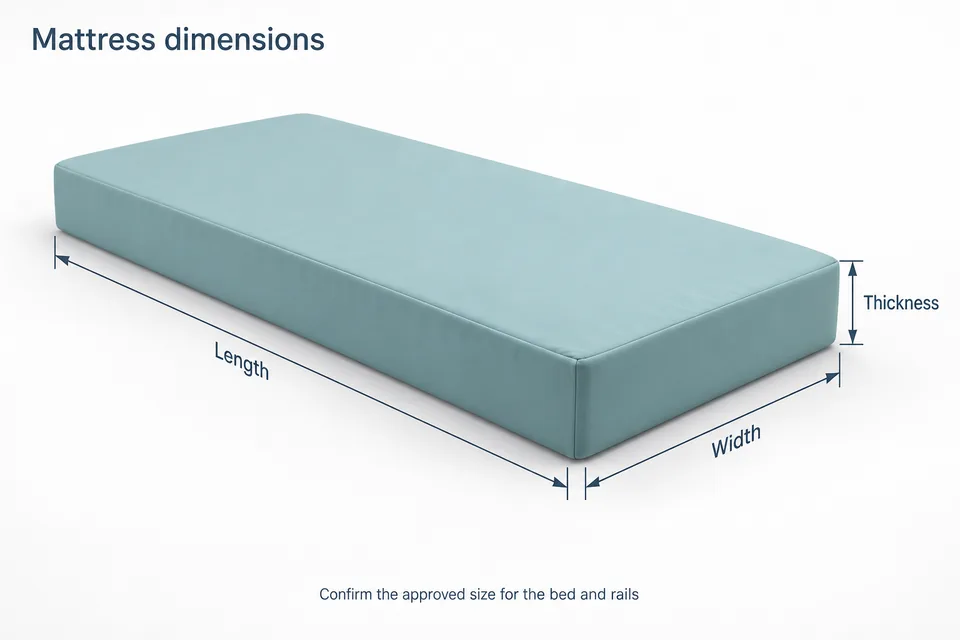
The appropriate width also needs to work for care delivery. A Dudley Group NHS guideline notes the importance of room for patient movement while recognising that an excessively wide bed can make staff access and patient mobility more difficult. Dudley Group bariatric handling guidance.
The mattress rating must not be confused with the bed's safe working load. The latter accounts for the supported load under the manufacturer's definition, while maximum patient weight is a separate limit to confirm. A bed advertised with a 240 kg SWL must not be presented as approved for a 240 kg patient. Read Keling's safe working load explanation and request the signed limits for the selected equipment.
Pressure redistribution: ask for evidence, not larger numbers
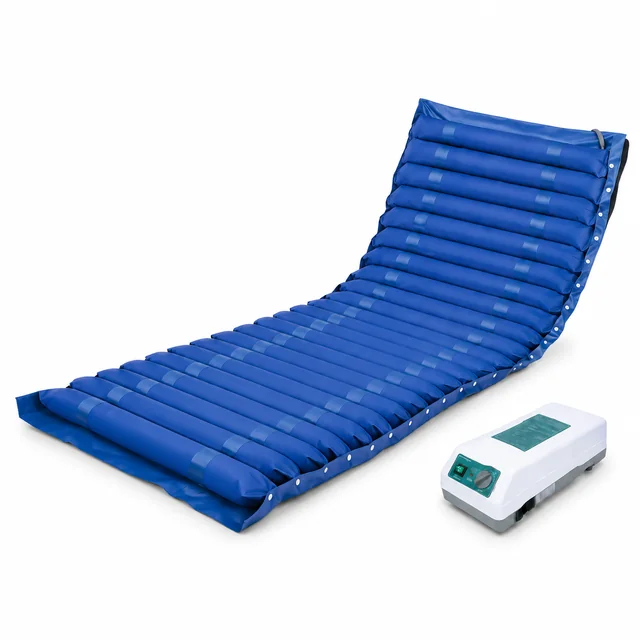
A bariatric hospital bed mattress may use foam, air or another designed support-surface arrangement. Its suitability cannot be established by firmness or air-cell height alone. Ask for the intended patient range, complete construction and relevant performance evidence for the actual product.
Avoid writing “higher pump pressure provides better pressure relief” into a tender. The supplier should define the operating settings and their intended application. More pressure is not a procurement substitute for evidence that a system provides appropriate support for the proposed users.
Similarly, “reinforced cells” should be clarified into a material or construction description with relevant supporting information. Ask which components differ from the supplier's standard system and whether the pump, cover, base and attachments are all part of the bariatric configuration.
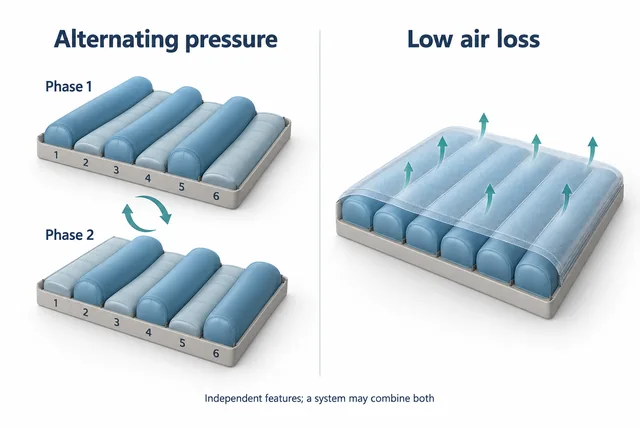
If the clinical team requires alternating operation or microclimate-related performance, specify those separately. Read Alternating Pressure vs Low-Air-Loss Mattresses: What Buyers Should Compare for the distinction between alternating pressure and low-air-loss features. A higher weight rating does not establish either function.
Review the bed, rails and mattress together
Request a written compatibility statement for the proposed combination, including all intended width settings and positions. The review should identify the exact model references. It should also make clear whether the mattress is a replacement system or requires an approved underlying mattress.
MHRA warns that an incorrect mattress size on a widened bariatric bed can increase entrapment risk. MHRA bed-rail guidance. A standard-width mattress should therefore not be assumed suitable simply because it sits within a wider frame.
Coordinate the mattress order with the wider equipment plan. RDaSH's specialised equipment guide calls for the capacity of each required item to meet the person's needs. This includes the bed and appropriate mattress as well as other equipment involved in care and transfers.
Covers, handling and hygiene
Ask for the cover material, closure design, cleaning instructions and available replacement parts. Where a supplier highlights handles, confirm their intended purpose. Handles used to reposition an empty mattress should not be assumed suitable for lifting or transferring an occupied mattress.
For a wider or heavier system, plan how staff will remove covers, access service components and move equipment for cleaning under the manufacturer's instructions. Sample review should involve the teams responsible for these tasks, not just the purchasing department.
Agree how spares will be identified and stored. A bariatric cover may look similar to a standard cover while differing in size or construction. Use model and part references in the stock register, and request confirmation before substituting a component.
A purchasing checklist for bariatric mattress packages
| Requirement | Supplier response to request |
|---|---|
| Patient population | Intended size and weight range, with limitations |
| Mattress dimensions | Length, width, installed height and available configurations |
| Bed compatibility | Named frame, rails, width settings and installation arrangement |
| Support-surface performance | Intended use and relevant evidence for the offered system |
| Powered functions | Pump model, modes, alarms and interruption behaviour, if applicable |
| Cover and handling | Material, cleaning instructions and intended handle use |
| Logistics | Product mass, packing dimensions and approved storage conditions |
| Lifecycle support | Spare references, warranty scope and service arrangements |
For a project order, specify the quantity of complete approved packages rather than independent counts of beds and mattresses with no pairing record. This reduces ambiguity when the equipment is distributed across departments.
Discussing bariatric requirements with Keling
Keling's mattress category is a starting point for an enquiry. However, the published KL-P004 page does not establish a bariatric patient rating or a widened configuration. Its listing should not be used as proof that it satisfies a bariatric tender.
Send the required patient range, mattress dimensions and proposed bed configuration for technical review. Ask Keling to confirm whether a suitable documented configuration is available. For the bed-side requirements, see Bariatric Hospital Beds: Width, Safe Working Load and Patient Fit; an increased SWL on its own does not establish a dedicated bariatric platform.
Frequently asked questions
Does a 240 kg bed rating mean the patient can weigh 240 kg?
Not when the figure is the bed's safe working load. Obtain the manufacturer's maximum patient weight and confirm the mattress and accessory limits separately.
Is the widest mattress always the safest choice?
No. Width should support the person's needs while allowing appropriate care and movement. The complete bed arrangement requires assessment.
Must a bariatric mattress be an air mattress?
No. Material alone does not establish suitability. Request evidence and intended-use information for the proposed foam, air or other configuration.
What should a bariatric RFQ include?
Include the intended patient range, required dimensions, clinical requirements, bed and rail references, quantities and destination. Ask for confirmation of the complete configuration and any limitations.
Next step
Planning equipment for larger patients? Send Keling your bariatric bed-and-mattress requirements for a documented suitability review and quotation where an appropriate configuration is available.
About the author
This article was written by the Keling Medical export team, drawing on the engineering data for the 33 bed, cot, mattress and accessory models Keling manufactures at its Yangzhou plant. Keling Medical has been making medical appliances since 1996 and holds CE, ISO 9001 and ISO 13485 certification. More about Keling.