Bariatric Hospital Beds: Width, Safe Working Load and Patient Fit
Learn how to specify a bariatric hospital bed by patient fit, usable width, safe working load, mattress compatibility, transfer access and transport limits.
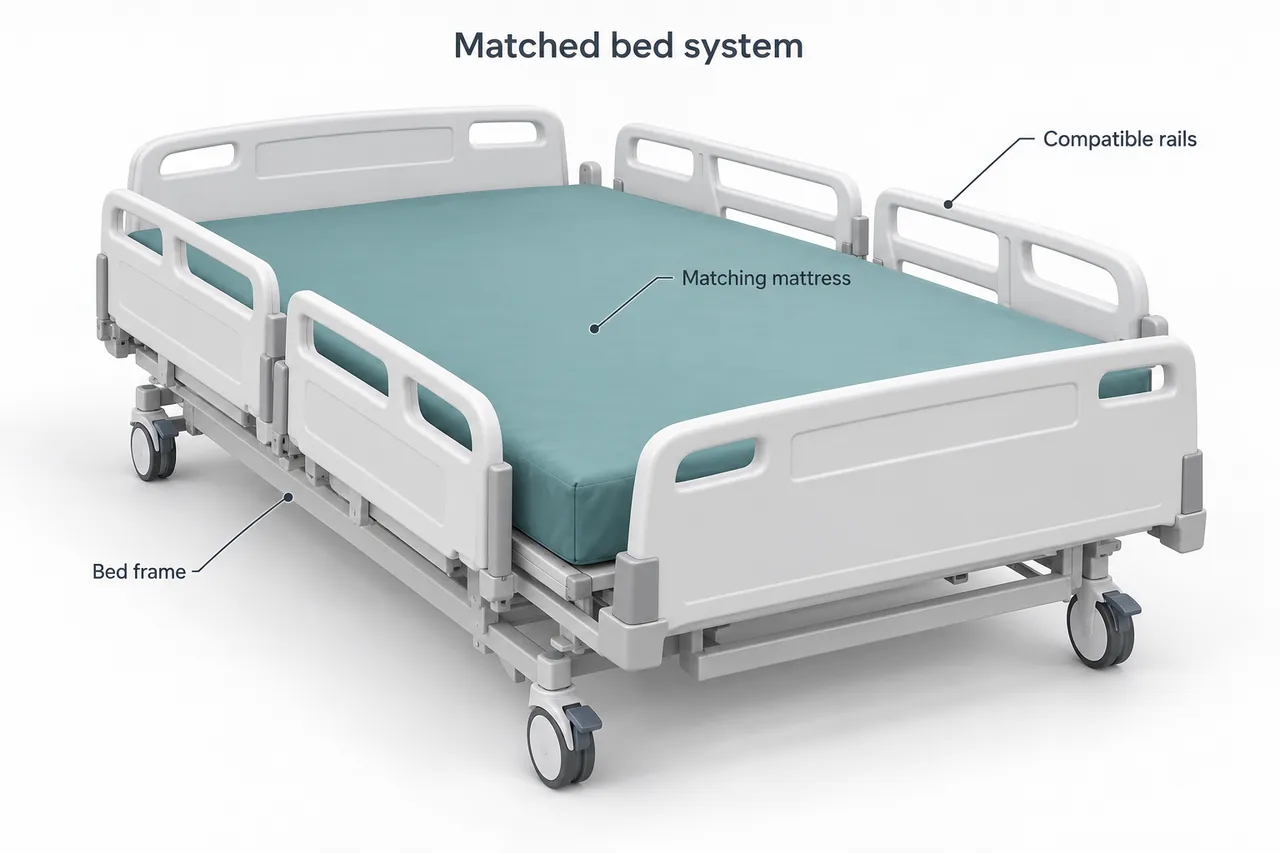
A bariatric bed must meet the patient's loading, space and care requirements as a complete system. A high safe working load is only one part of that decision. The patient may also need additional usable width, a suitable pressure-care mattress, compatible transfer equipment and enough room for staff to work on both sides.
This distinction matters when comparing hospital bed quotations. A standard-width bed advertised with a 240 kg safe working load does not automatically become a bariatric hospital bed, and that figure does not necessarily permit a patient weighing 240 kg. Buyers should establish the manufacturer's maximum patient weight and the total loading allowance before considering patient fit.
For distributors and project teams, the most useful starting point is an equipment schedule covering the bed, mattress, rails, lifting equipment and route through the building. The goal is to purchase a workable care setup, rather than an isolated frame with an impressive capacity number.
When a standard bed is not enough
Weight alone cannot describe the space a patient needs. Body width, height, mobility and the assistance required during care may make a conventional platform unsuitable even when the patient is below its permitted weight. A bed also needs to accommodate approved repositioning and transfer methods without placing the patient against the rails.
Ask the clinical and handling teams to define the intended patient population. For a ward preparing for occasional larger patients, the requirement may be a small number of specialist beds supported by a wider equipment plan. For a dedicated service, it may be appropriate to standardise several rooms and their transfer routes around a common configuration.
Avoid deriving a bed specification from a BMI category alone. Convert the service requirement into measurable criteria: minimum usable surface width and length, maximum patient weight, overall loading, transfer method and required operating positions. Those criteria can then be checked against supplier documentation.
Safe working load and maximum patient weight
Safe working load describes the permitted working load under the manufacturer's stated conditions. Maximum patient weight is a separate value that accounts for the allocation of load to the mattress and other supported items. The exact relationship must come from the bed's labelling and instructions; a buyer should not invent a universal allowance.
For example, if the bed documentation requires the mattress and specified accessories to be included in the overall load, a patient cannot consume the full allowance before those items are added. Equally, subtracting an estimated mattress weight from SWL does not create a new manufacturer-approved patient rating. Request both values explicitly.
Keling's safe working load guide provides background for comparing its published ratings. For an actual bariatric requirement, obtain the rating label, intended-use statement and relevant test documentation for the offered bed and configuration.
Ask how loading limits apply during articulation, tilt and transport. A test report should identify the model and configuration it covers. Photographs of weights placed on an empty frame are not an adequate substitute for a documented evaluation of the complete system.
Width: fixed, expandable and transport configurations
A fixed wide platform is straightforward to describe, but its external width can create access problems. An expandable design may offer more flexibility, yet the buyer needs to understand its permitted width settings and the procedure for changing them. Expansion must be a documented product feature, not a modification added locally.
Ask for the usable mattress-support width and overall width at every approved setting. Confirm whether the rails move with the platform and whether the mattress requires inserts or a different cover. If the bed can be narrowed for transport, establish whether that operation is permitted with a patient on it and how the mattress is managed.
The UK's MHRA notes that a widened bariatric bed requires the correct mattress for the selected size. The purchasing implication is to order each approved width configuration with a documented mattress and rail arrangement. MHRA: Bed Rails Management and Safe Use.
Do not rely on a nominal “wide” description. A measurement of the bed outside the rails does not tell you how much room the patient has on the support surface. Put both measurements in the comparison sheet and keep units consistent.
Frame, platform and drive system
Reinforcement is useful only when the complete assembly is rated for its intended use. The frame, hinges, mattress deck, actuators, bearings, castors and attachments all contribute to performance. A heavier-looking tube or larger motor is not enough to establish suitability.
Request operating limits, maintenance instructions and replacement-part references. For powered beds, ask which adjustments remain available at the stated load and whether there are duty-cycle restrictions. These details affect a busy ward where staff may need several adjustments close together.
During sample assessment, use only the manufacturer's authorised test method and appropriate personnel. Check movement, noise, stability, control accessibility and brake operation at the agreed conditions. Document the supplied components so production units can be compared with the approved sample.
Pair the mattress, rails and handling equipment
The mattress must meet the patient's support-surface needs as well as the bed's dimensional and loading requirements. Review width, thickness, articulation and the approved method of securing the mattress. A mattress marketed as “bariatric” is not automatically compatible with every wide frame.
Pressure care should be planned with the responsible clinical team. Weight capacity, inflation settings and cell depth do not independently establish clinical effectiveness. For powered surfaces, ask how the system responds to power loss and whether its controls and emergency features remain accessible on the proposed bed. See the bariatric mattress guide for the related purchasing questions.
Transfer equipment deserves equal attention. Confirm the capacity, clearance and compatibility of the chosen lift, sling and transfer surface. A bed's SWL does not cover the rating of a separate lift or overhead patient-assist device. Each component needs its own documentation and an agreed role in the handling plan.
Transport routes and room access
An appropriate bed can still be unusable if it cannot reach the allocated room. Check entrance doors, internal doors, lift cars, corridor turns and thresholds using the actual external dimensions in the approved transport configuration. Include projecting handles, rails and accessories.
Building and facilities staff should evaluate the total transported load, including bed mass, patient and equipment, against lift limits and any relevant floor constraints. Wheel contact loads and turning space may also require review. Do not equate the bed's patient capacity with the building's capacity to support or move the whole system.
Inside the room, allow access for the intended transfer method and routine cleaning. A floor plan should show staff working zones and equipment parking, not just rectangles representing bed footprints. Test the route with a sample or dimensionally accurate mock-up before approving a large order.
What Keling's published 240 kg models establish
Keling lists the KL-BC103 and KL-BC103-A with a 240 kg safe working load and a 1925 × 900 mm bed surface. Their published overall dimensions are 2150 × 960 mm, with height adjustment from 450 to 760 mm.
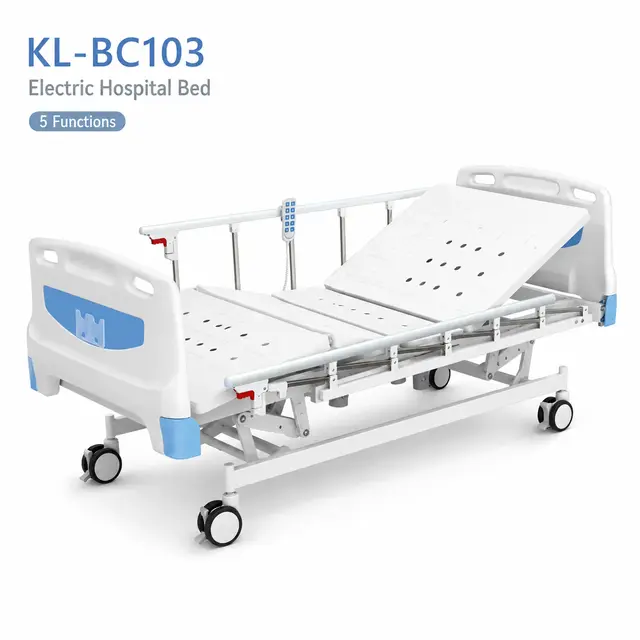
Those values describe the listed standard-width models. They do not confirm an expandable platform, a specialist bariatric configuration or a 240 kg maximum patient weight. If a project requires greater width or a higher patient rating, ask Keling whether a documented configuration meeting those requirements is available before treating either model as a suitable option.
Include the intended patient-weight range, required usable width and length, care setting, mattress and handling equipment in the enquiry. Request written confirmation of compatibility and availability instead of assuming a standard model can be widened.
Frequently asked questions
Is every 240 kg bed a bariatric bed?
No. SWL alone does not establish patient capacity, usable width or suitability for bariatric care. Review the manufacturer's intended use and the complete bed, mattress and transfer arrangement.
Are expandable beds always better than fixed wide beds?
No. Expansion can help with room or transport requirements, but it adds configuration and compatibility questions. The appropriate choice depends on the patient population, building access and staff workflow.
Can a bariatric bed be supplied for home care?
Potentially, if the intended-use documentation permits that setting and the building, electrical supply, carers and equipment plan are suitable. A home order requires the same attention to patient fit, safe access, maintenance and emergency arrangements.
Request a suitability review before a quotation
Send Keling your required patient rating, support-surface dimensions and room-access constraints through the quotation form. Ask for a documented bed-and-mattress proposal that addresses those requirements, including any unavailable features, before comparing purchase prices.
About the author
This article was written by the Keling Medical export team, drawing on the engineering data for the 33 bed, cot, mattress and accessory models Keling manufactures at its Yangzhou plant. Keling Medical has been making medical appliances since 1996 and holds CE, ISO 9001 and ISO 13485 certification. More about Keling.