ICU and Critical-Care Beds: What Separates Them from Ward Beds?
Compare ICU bed functions, emergency controls, imaging access, scales and accessories, then build a model-specific specification for your critical-care unit.
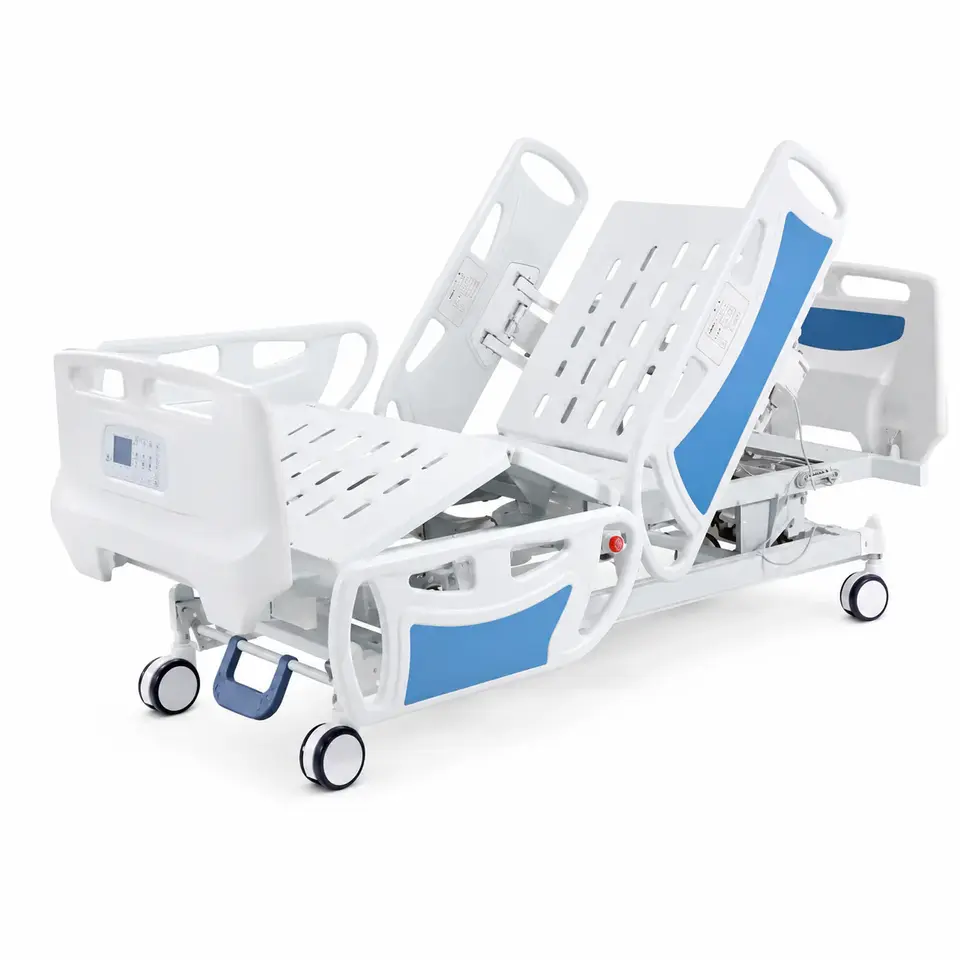
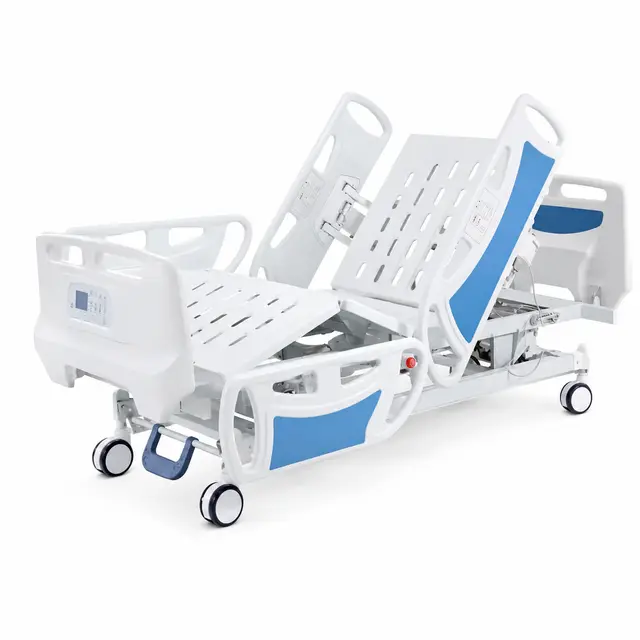
An ICU bed should be selected around the work performed at the bedside: frequent repositioning, emergency access, patient transfers, equipment management and cleaning between admissions. A general ward bed may support several of these tasks, but an intensive care unit usually needs a more detailed specification and a more demanding acceptance process.
“ICU bed” is not a complete feature list. Integrated weighing, lateral tilt and an X-ray-translucent backrest may be useful for a particular unit, yet they are not automatically included in every product carrying that label. The purchasing team must establish which functions are necessary, which are optional and which are absent from the quoted model.
The strongest comparison therefore starts with the department's workflow, then checks the bed, mattress and accessories as one configuration. It does not start with the number of buttons on the side rail.
ICU bed versus general ward bed
A ward order often emphasises dependable backrest adjustment, ease of patient transfer, cleaning and fleet maintenance. An ICU order may add more frequent height changes, longitudinal tilt, access for portable imaging, emergency flattening and support for a larger collection of lines and bedside devices.
These are differences in the purchasing brief rather than a rigid boundary between two product categories. Some ward beds have sophisticated electrical functions. Some critical-care projects use relatively simple beds because their clinical protocols and supporting equipment make that configuration appropriate. Suitability should be decided by the unit responsible for care.
Before issuing a tender, bring together nursing, clinical engineering, infection prevention, portering and procurement staff. A feature welcomed by one group may create work for another. For example, a larger base may carry additional equipment but restrict the approach of an existing mobile lift.
Positioning functions: specify the movement, not its name
Articulation and auto-contour
Identify each adjustable section and the range the department requires. Ask whether the backrest and thigh section operate separately or together, and whether the supplier's “auto-contour” description means a particular coordinated movement. Request a demonstration with the proposed mattress installed.
Pay attention to how the mattress folds, where the patient controls sit and how much access remains beside the patient. A movement that looks smooth with an empty platform may be less convenient with the unit's normal bedding and accessories. The demonstration should represent the intended setup without exposing a patient to unapproved testing.
Longitudinal and lateral tilt
Trendelenburg and reverse Trendelenburg are whole-platform movements in the head-to-foot direction. Lateral tilt is a separate side-to-side function. They should occupy separate rows in a compliance schedule, each with its own angle and operating limitations. The Trendelenburg bed guide explains why backrest elevation is not an equivalent substitute.
Do not add tilt functions simply to increase the specification. Ask the clinical team which protocols need them, how staff will monitor the position and whether training or additional accessories are necessary. If lateral tilt is essential, a bed offering only longitudinal inclination does not meet that requirement.
Emergency controls need a practical demonstration
A CPR release can be mechanical, electrical or supported by more than one method. The label alone does not explain what happens. Ask whether the control lowers the backrest, returns other sections to a flat position, levels the platform or changes overall height. Establish which actions depend on power.
The sample evaluation should include staff access from the working side of the bed, control identification and the documented response when mains power is unavailable. Record any required manual steps. Avoid treating a low-profile mattress valve and the bed's CPR mechanism as the same device; they act on different parts of the system.
Clarify how the unit will manage the support surface during resuscitation under its clinical protocol. Procurement can ensure the instructions, controls and accessories are available, while the clinical team determines the procedure and trains staff to follow it.
Imaging, weighing and batteries: valuable when verified
X-ray access
An X-ray-translucent backrest is not the same as a complete imaging platform. Ask which sections are intended to permit imaging, whether a cassette or detector holder is included, and what detector dimensions are supported. Have radiography staff assess the proposed configuration and the access required by their equipment.
If a quoted bed lacks this capability, state that openly in the comparison. Do not infer it from a plastic-looking deck or from the term “critical care.” A photograph cannot verify radiographic performance or the compatibility of a detector compartment.
Integrated scales
If bedside weighing is required, specify the measurement range, stated accuracy, calibration procedure and local servicing arrangements. Ask how bedding and accessory changes are managed when weighing and whether readings can be taken in every position. These requirements should be supported by model-specific documentation.
A scale also introduces maintenance and training needs. The purchase decision should account for who checks it, how faults are recognised and how the unit obtains a weight when the scale is unavailable. If an integrated scale is not necessary, the tender can allow a documented alternative workflow.
Battery backup and transport controls
Ask which movements operate on battery, how charge status is shown and what maintenance is required. “Battery included” says little about usable operation at the specified load or the effects of battery age. Request the manufacturer's test conditions instead of relying on an unexplained number of operating cycles.
For castors, examine braking, steering and access to pedals from the intended working positions. Porters should assess the proposed bed along a representative route, including thresholds and turns. A central brake is useful only if its operation is clear and its condition can be checked.
Match the mattress and accessories to the ICU bed
Support-surface selection should follow the patient's assessed needs and the facility's care pathway. NICE recommends that adults admitted to secondary care receive a high-specification foam mattress and that additional surface decisions consider clinical circumstances. A powered air system is not automatically the correct choice for every ICU admission. NICE pressure-ulcer recommendations.
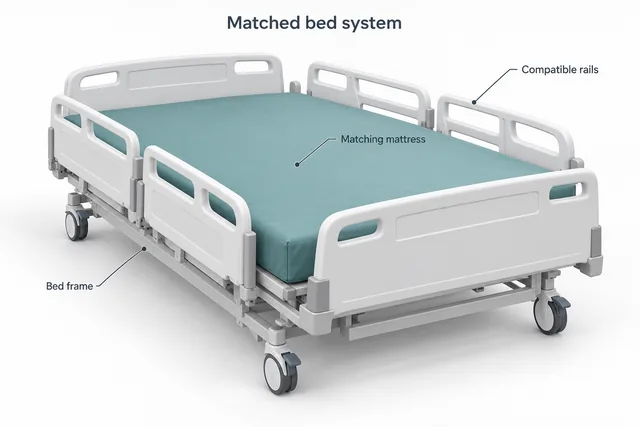
For the order itself, confirm platform dimensions, approved mattress thickness, articulation and rail compatibility. Review pump placement, cable routing, hose protection and access to mattress controls. The pressure-relief mattress guide provides a useful starting point for the support-surface discussion.
Accessories need an itemised schedule. Define IV-pole positions, drainage-bag hooks, oxygen-cylinder holders and any monitor supports actually required. Specify their individual load ratings and compatibility. Listing “complete ICU accessories” invites different interpretations and makes later delivery checks difficult.
Build a tender that can be checked
Use a response matrix that makes the supplier state an offered value and supporting document for each requirement. Separate essential criteria from desirable options so quotations can be compared fairly.
| Requirement area | Evidence to request |
|---|---|
| Positioning | Individual movements, angle ranges and restrictions |
| Emergency access | CPR procedure, power dependence and removable components |
| Patient loading | Safe working load, maximum patient weight and accessory limits |
| Imaging or weighing | Model-specific capability, limitations and included components |
| Electrical supply | Input rating, plug, battery details and cleaning instructions |
| Mattress integration | Approved size, thickness and rail compatibility |
| Maintenance | Parts list, service instructions, warranty terms and training scope |
Add an acceptance process covering document review, physical inspection and functional checks conducted according to the manufacturer's instructions. Agree who signs off the sample and whether the accepted sample configuration will be retained as the reference for the production order. This helps prevent substitutions that preserve the model name while changing important components.
Discussing a Keling ICU project
Keling's ICU bed planning page can support the initial enquiry. The published KL-BC101 specification lists five electric positioning functions, backrest CPR release and nurse lock, with weighing and battery storage shown as optional accessories. Ask for the exact options included in the quotation.
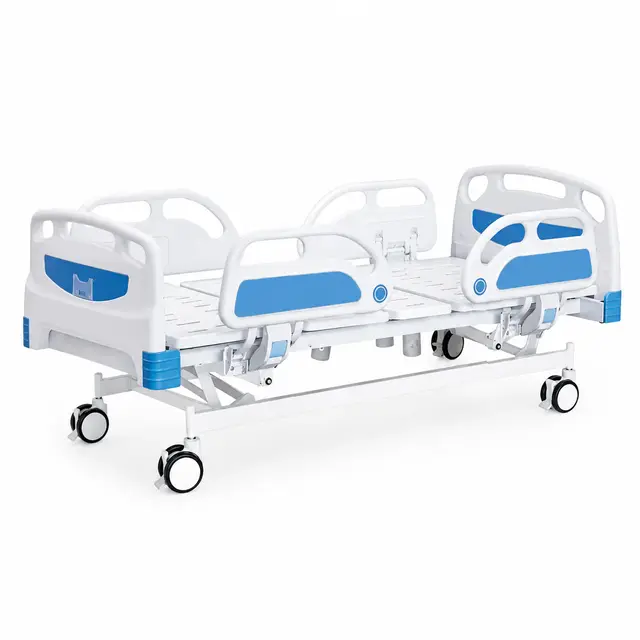
The KL-BC103-A product page describes a five-function electric inpatient bed. Its function count does not establish equivalence to a fully specified critical-care configuration. Have the supplier mark each required feature as included, optional or unavailable, particularly CPR operation, imaging, weighing and lateral tilt. Send the bed quantity, department workflow, mattress and destination requirements together.
Frequently asked questions
Does every ICU bed have an integrated scale?
No. Weighing is a configuration-specific feature. If it is essential, put measurement performance, calibration and service support into the tender and verify the quoted model includes the system.
Is a five-function bed enough for intensive care?
The function count does not determine suitability. The clinical team should review the actual movements, emergency operation, loading, mattress compatibility and accessory access against the unit's intended care pathways.
Can a ward bed be used in a critical-care project?
Only after the responsible team confirms that the exact configuration satisfies its clinical and operational requirements. A category name alone cannot establish suitability or exclude an otherwise appropriate bed.
What should be checked before a bulk order?
Review the technical documents and sample as a complete bed system. Include nursing, engineering and transport staff, record deviations and confirm the final accessory list before approving the production configuration.
Request a critical-care bed comparison
Submit your ICU requirements through Keling's quotation form. Include a required-feature matrix and ask for a model-by-model response with confirmed specifications, optional items and supporting documents, so your team can compare complete configurations before purchasing.
About the author
This article was written by the Keling Medical export team, drawing on the engineering data for the 33 bed, cot, mattress and accessory models Keling manufactures at its Yangzhou plant. Keling Medical has been making medical appliances since 1996 and holds CE, ISO 9001 and ISO 13485 certification. More about Keling.