Pressure Relief Hospital Mattresses: A Buyer's Guide to Reducing Risk
Compare pressure relief hospital mattresses, clinical selection factors, covers and bed compatibility, with a practical checklist for ward procurement.
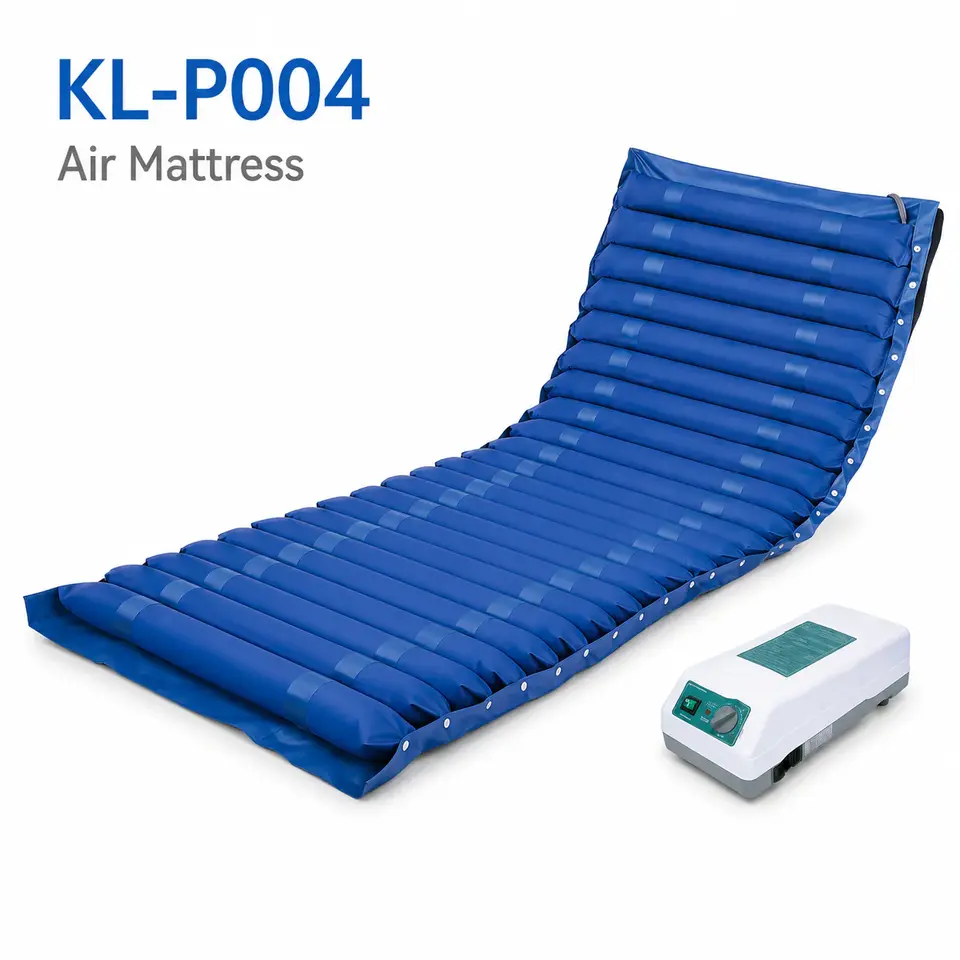
A pressure relief mattress is part of a hospital's pressure-injury prevention equipment. For buyers, the important question is whether a particular support surface fits the patients, bed frames and care processes in the intended ward. A product name such as “anti decubitus mattress” does not answer that question, and no mattress can guarantee that a patient will never develop a pressure injury.
The strongest purchasing specification connects a clinical requirement to a documented product capability. It also addresses the practical details that determine whether the equipment remains usable: replacement covers, compatible pumps, clear instructions, maintenance support and the right dimensions. This guide explains how to build that specification for general wards, rehabilitation facilities and long-term care projects.
What causes pressure injuries?
Pressure injuries involve damage to skin or underlying tissue associated with pressure and shear. People who cannot change position independently need particular attention; moisture, reduced sensation and serious illness can add to their vulnerability. A mattress supports one part of care, alongside skin assessment, repositioning and management of other individual needs. An air mattress does not remove the need to reposition. Chelsea and Westminster Hospital's pressure-ulcer guidance explains these factors.
For procurement, this means that a bed count alone is an incomplete starting point. A ward accommodating mobile patients for brief stays has a different equipment plan from a facility with many residents who need assistance throughout the day. Ask the clinical team to describe its support-surface requirements and escalation process before requesting prices.
“Pressure ulcer,” “bedsore” and “pressure injury” appear in different purchasing documents. Keep familiar search terms in supplier discussions, but define the intended equipment clearly. A request for a “bedsore mattress” should become a specification for a particular type of pressure-redistributing support surface, with an identified patient range and evidence requirements.
Use risk assessment to inform selection
Braden and Waterlow scores support clinical judgement rather than automatically determining mattress type. NICE recommends high-specification foam in several adult care settings, including for adults with pressure ulcers, with a dynamic surface considered when that support is insufficient. NICE CG179 recommendations.
Translate the clinical team's assessment into a purchasing brief. Useful questions include whether patients can reposition, which existing surfaces are inadequate, whether transfers require particular support, and whether staff can manage a powered system. Record who will approve the proposed equipment and how suitability will be reviewed during a trial.
Avoid writing a tender around an unqualified claim such as “suitable for every risk level.” Ask what that claim means, which patient groups the manufacturer assessed, and which operating conditions apply. A clear statement of intended use is more useful than a broad risk label printed on packaging.
Static and dynamic pressure redistribution
Support surfaces may respond to a person's weight or change their loading characteristics through powered operation. Foam and air describe materials; alternating pressure describes an operating feature. These terms should be recorded separately in the specification. NPIAP's support-surface terminology distinguishes surface categories, materials and design features.
Foam and other reactive surfaces
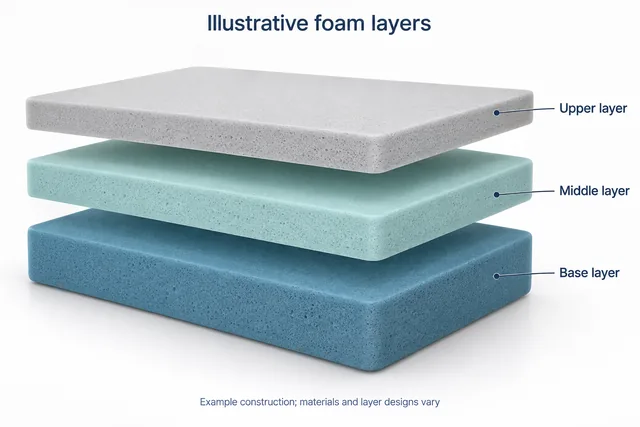
For a foam mattress, request evidence for the complete construction rather than judging it by appearance or softness. A basic foam pad and a designed pressure-redistributing foam mattress should not share one undifferentiated tender line. The cover, core, profile and intended weight range all belong in the supplier's response.
Foam can be attractive where a facility wants straightforward deployment and fewer powered components. However, that operational advantage does not establish clinical suitability. Obtain clinical approval for the proposed model and identify the circumstances in which the ward needs an alternative surface. Our guide to Foam Hospital Mattresses: Density, Layers and Covers Explained examines foam specifications in more detail.
Alternating pressure and low-air-loss features
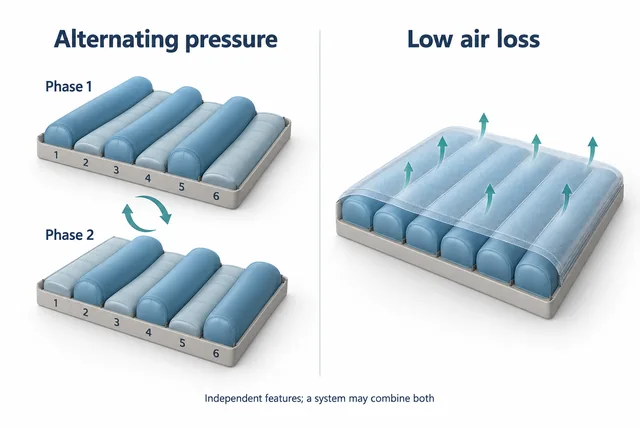
An alternating-pressure system changes loading through repeated changes in air-cell pressure. Low-air-loss terminology concerns an airflow design that can assist pressure redistribution and microclimate management. A mattress may combine these features, but one does not prove the presence of the other. The International Guideline's support-surface chapter explains why performance information matters more than feature names alone.
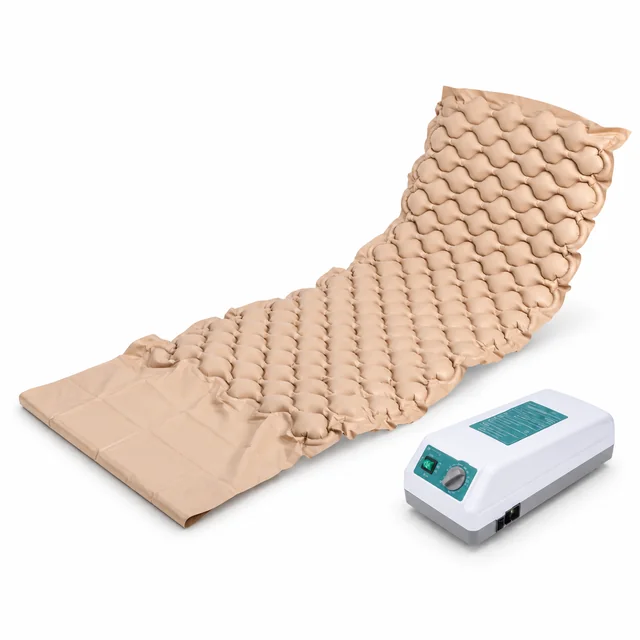
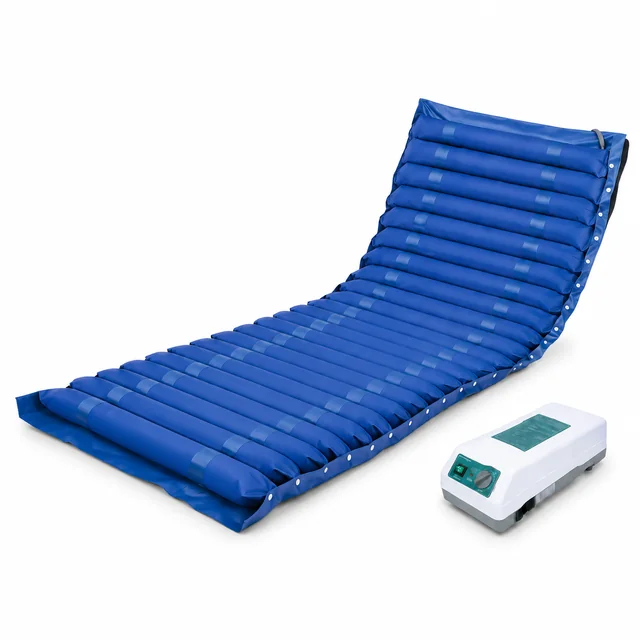
On a quotation, place alternating operation and airflow or microclimate performance in separate rows. Require the supplier to mark each as included, optional or unavailable. Read Alternating Pressure vs Low-Air-Loss Mattresses: What Buyers Should Compare for a focused comparison and Air Mattresses for Hospital Beds: Bubble-Cell vs Tubular Systems for the differences between common medical air-mattress constructions.
What a useful mattress specification includes
Ask bidders to complete the same schedule. This makes omissions visible and prevents a low initial price from concealing a different configuration.
| Specification area | Information to request | Procurement purpose |
|---|---|---|
| Intended use | Patient population, care setting and limitations | Establish a common clinical scope |
| Complete system | Mattress, pump, cover, hoses and supplied accessories | Compare like-for-like quotations |
| Patient range | Minimum and maximum patient weight where applicable | Identify suitability limits |
| Construction | Foam structure or air-cell layout; overlay or replacement | Confirm installation requirements |
| Powered functions | Available modes, controls and alarm descriptions | Plan training and support |
| Dimensions | Length, width, total height and tolerances | Match the named bed system |
| Cover | Material, closure, cleaning instructions and replacements | Plan infection-control maintenance |
| Documentation | Instructions, test evidence and model identification | Support review and acceptance |
Cell height, cycle time and pump output can help describe an air system, but none is a standalone quality score. A taller cell is not automatically a better clinical choice, and a shorter cycle is not automatically more effective. Ask the manufacturer to explain the intended operation instead of selecting the largest number in each column.
For electrical equipment, specify the destination's supply requirements and request the exact pump label and plug configuration. Include alarm demonstrations in the evaluation. Ask how the system behaves after interruption of power, what users must do after restarting it, and what replacement equipment the facility should keep available.
Match the mattress to the bed platform
A mattress order should name the bed models it will serve. Record the mattress platform dimensions separately from the bed's overall dimensions, then confirm allowable mattress height, retention features and articulation. A shared description such as “standard hospital bed” is insufficient when several frame designs are in use.
The FDA describes a bed system as the frame, mattress, rails and compatible accessories together. Changes to mattresses or overlays can affect gaps and require compatibility assessment. FDA guidance on modifying bed systems.
During sample review, inspect the proposed system flat and in the positions used by the ward. Document the exact mattress and rail references, rather than approving a brand name generally. Ask for written confirmation of the combination and preserve that approval with the purchase record. See Hospital Bed Mattress Sizes and Compatibility: Getting the Fit Right for a measurement workflow that can be used before sending an RFQ.
Covers, cleaning and replacement planning
The cover is a working component, not a decorative finish. Ask the infection-control team to compare the supplier's cleaning instructions against the products and processes actually used at the facility. Request written information on permitted chemicals, concentrations, contact times and drying requirements. Do not infer compatibility from “wipe-clean” alone.
Damage can allow fluids to enter a mattress and contaminate its interior. MHRA advises inspection of covers and mattress interiors for damage or contamination and action when faults are found. MHRA mattress contamination alert.
Water resistance, water-vapour transmission, stretch and fire performance describe different properties. Ask for the applicable test or material documentation for each requirement. An antimicrobial claim does not explain how to clean a cover, and a fire-related statement should identify the tested configuration and relevant requirement for the destination market.
Include replacement covers in the budget and agree how they will be identified and ordered. A mattress can be difficult to return to service if a low-cost cover is unavailable locally. For distributors, stock records should distinguish core, cover and pump versions so that apparently similar parts are not supplied interchangeably without confirmation.
Evaluate a sample before a bulk order
Use a short, documented evaluation with procurement, clinical, maintenance and cleaning staff. Each team should assess the parts it will manage. Record observations and unresolved questions against the supplier's specification, then obtain an updated offer that reflects the accepted sample.
For a powered mattress, demonstrate installation, mode selection, audible and visual indicators, permitted cleaning access and routine component replacement. For foam, compare delivered dimensions and construction against the approved drawing and sample. Clinical performance claims need appropriate evidence; a brief hands-on inspection cannot establish that a mattress prevents pressure injuries.
Agree acceptance criteria before shipment. Useful records include model labels, packing lists, supplied manuals and an inventory of spare parts. Where different wards receive different surfaces, identify packages clearly to reduce installation mistakes during a large opening or replacement programme.
Planning a Keling mattress enquiry
Start with Keling's hospital mattress category and identify whether you need foam options, an air system or a mixed ward package. Reference KL-P003 or KL-P004 when requesting details about air-mattress options, and provide the bed model and intended clinical requirements.
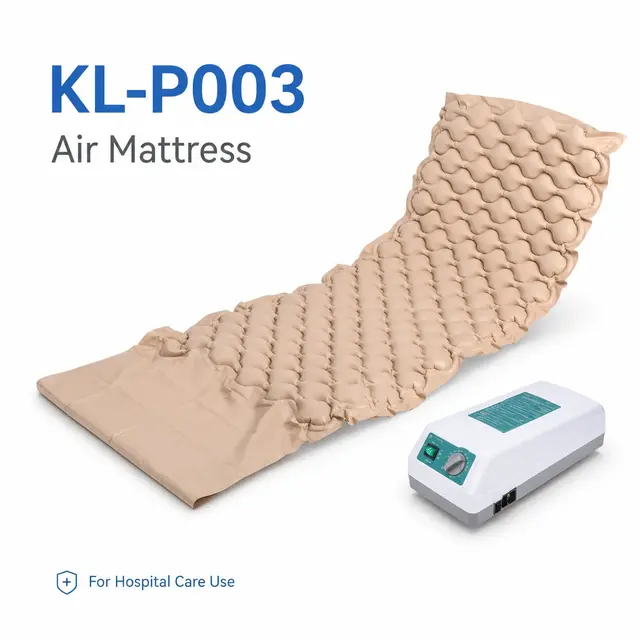
For a long-term nursing-care project, separate initial equipment quantities from spare covers and service components. Request confirmation of the exact configuration, documentation, sample terms, export packing, minimum order quantity and lead time. Treat these as quotation items to agree for your order, rather than assuming one standard commercial arrangement applies to every model or destination.
Frequently asked questions
Can a foam mattress help prevent bedsores?
An appropriate pressure-redistributing foam mattress can form part of prevention care. Selection depends on the patient and documented performance; “foam” alone is not a clinical specification. It should be approved through the facility's clinical assessment process.
Does every air mattress provide low-air-loss therapy?
No. Ask separately about alternating operation and documented microclimate-related performance. A pump and inflatable cells do not establish that a system offers low-air-loss functionality.
How often should hospital mattresses be replaced?
Use the manufacturer's service-life and inspection guidance together with the facility's condition assessments. Do not invent a universal replacement interval. Cover damage, contamination, loss of support or an unresolved malfunction needs assessment even if the purchase date is recent.
What should an importer send with an RFQ?
Send quantities, destination, bed references, mattress dimensions, required patient range, clinical requirements and cleaning products. Include requested documents and spare parts so that the quotation covers the equipment package your facility will actually use.
Next step
Preparing a ward mattress order? Request a Keling quotation with your bed models, quantities and support-surface requirements to confirm the proposed configuration and supporting documents.
About the author
This article was written by the Keling Medical export team, drawing on the engineering data for the 33 bed, cot, mattress and accessory models Keling manufactures at its Yangzhou plant. Keling Medical has been making medical appliances since 1996 and holds CE, ISO 9001 and ISO 13485 certification. More about Keling.