Hospital bed mattress buying guide: foam, air, overlays and replacements
How to choose a hospital bed mattress by care setting and bed, when a topper or overlay makes sense, what the cover must do, and when to replace — with a ready-to-use tender checklist.

Short answer
Choose a hospital bed mattress by patient risk, bed fit and cover. Most beds need a pressure-redistributing foam mattress that matches the platform (for example 1900 × 900 mm) and flexes with its sections; patients at higher risk need access to powered alternating pressure air mattresses. Check thickness against side-rail height, specify a liquid-resistant cover, and replace when covers or foam fail inspection.
A hospital bed mattress is chosen on four things: the patient's pressure-injury risk, the bed it must fit and flex with, the cover that keeps fluids out, and how long it will last in service. Get any one wrong and the result is a mattress that slides off the platform, hides contamination under a cracked cover, or leaves a high-risk patient on a surface designed for a short stay.
This buying guide is the overview: which type of hospital mattress suits which setting, when an overlay or topper makes sense, what to put in a tender, and when to replace. It links to our detailed articles on sizes, foam density, air systems and bariatric mattresses rather than repeating them. Clinical decisions about the surface for an individual patient follow the facility's protocols and the treating clinician.
What is a hospital bed mattress?
A hospital bed mattress is a support surface designed to sit directly on a hospital bed platform, flex with its backrest and knee sections, redistribute pressure, and be cleaned and disinfected between patients. The NPIAP Support Surface Standards Initiative defines a mattress as "a support surface designed to be placed directly on the existing bed frame", and an overlay as a surface placed on top of an existing one.
Compared with a domestic foam mattress or orthopedic mattress, a medical mattress differs in five ways:
- Width. It matches a narrow platform, typically around 900 mm, so it does not overhang into the side-rail gap.
- Flexibility. It bends at the hip and knee without buckling or sliding.
- Cover. A liquid-resistant, wipeable cover with a protected zip replaces quilted fabric.
- Pressure redistribution. Foam grade, cut and construction are chosen for tissue loading rather than feel.
- Height. Thickness is limited by the side rails, which must stay high enough above the mattress surface.
Types of hospital bed mattress: foam, air, overlays and toppers
There are four main families: foam mattresses, powered air mattresses, overlays (including gel and air overlays) and specialist systems such as air-fluidized beds.
| Type | How it works | Typical use | Watch-outs | Keling option |
|---|---|---|---|---|
| Standard / high-density foam mattress | Reactive; foam compresses under load | General wards, short stays, low risk | Foam fatigue; cover wear | KL-P001 |
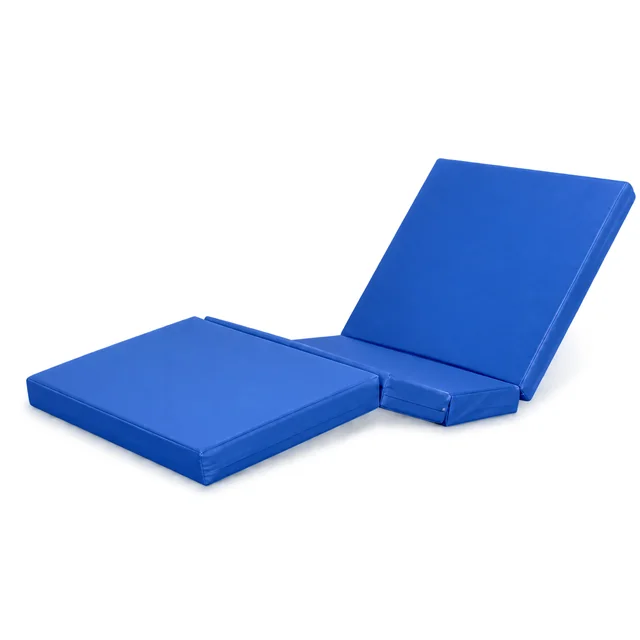
| Segmented foam mattress | Foam in sections that hinge with the bed | Articulating electric and manual beds | Sections must align with the platform | KL-P002 (three-section) |
| Memory foam (viscoelastic) mattress for hospital bed | Reactive; slow-recovery foam moulds to the body | Pressure redistribution for at-risk patients | Warmer; firmer in cold rooms | Not in current range |
| Palm-fibre (firm) mattress | Firm natural-fibre core | Firm support, often called "orthopaedic" | Not a pressure-relief surface | KL-P002 palm-pierce option |
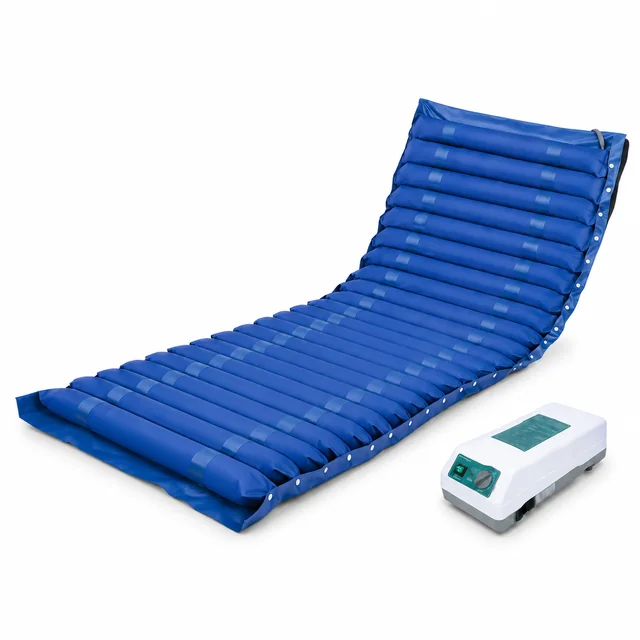
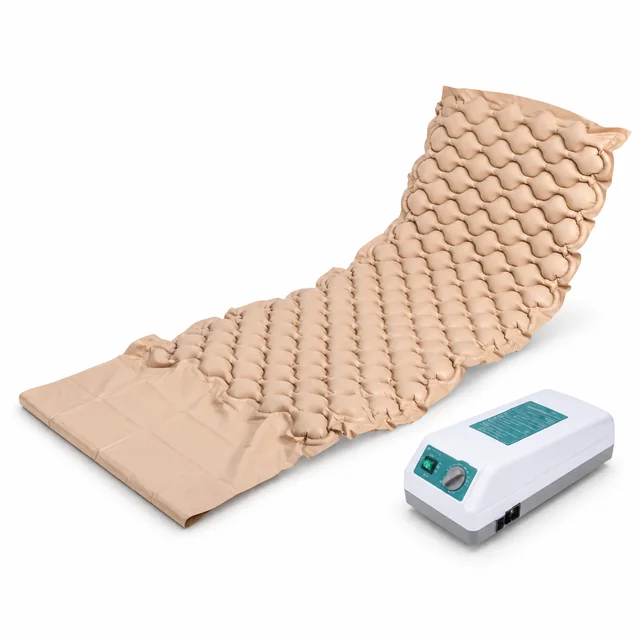
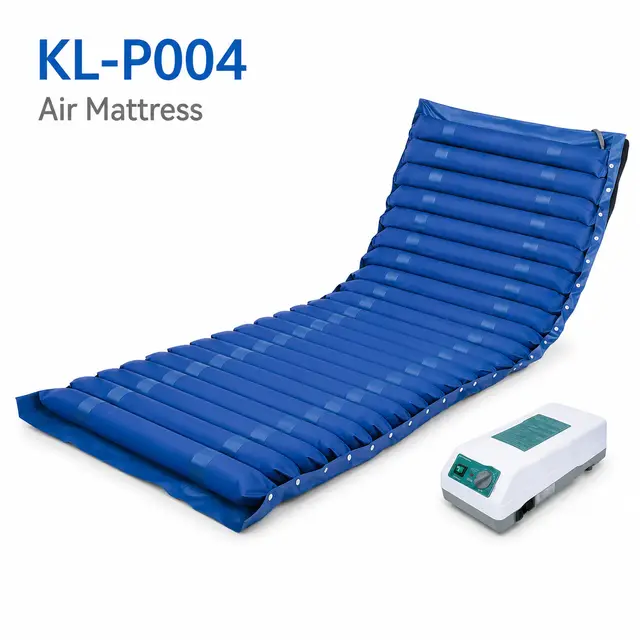
| Alternating pressure air mattress | Active; pump inflates and deflates cells in turn | Moderate to high risk; existing pressure injuries | Needs power, alarms, staff training | KL-P004 (tubular), KL-P003 (bubble-cell) |
| Gel overlay mattress or foam overlay | Layer placed on an existing mattress | Upgrading existing stock | Raises height relative to rails | Not supplied |
| Air fluidized mattress / bed | Warm air moves beads to create a fluid-like surface | Specialist units | Integrated system, very heavy, high cost | Not supplied |
For the detail behind each family, see foam hospital mattress density, layers and covers and alternating pressure vs low-air-loss mattresses.
How to choose the best mattress for a hospital bed by care setting
The best mattress for a hospital bed is the one matched to the patients who will lie on it. Guidelines start from risk: the International Guideline (EPUAP/NPIAP/PPPIA) recommends a pressure-redistribution foam surface for people at risk and lists alternating pressure air as an option at moderate or high risk; NICE recommends high-specification foam for adults in hospital who are at risk. Translated into ward planning:
- General medical and surgical wards — a pressure-redistributing foam mattress on every bed, plus a pool of air mattresses for patients who become high risk.
- ICU and high-dependency units — a higher proportion of powered air mattresses, because patients are immobile for long periods; CPR deflation and alarms become essential.
- Nursing homes and long-term care — durability and cover life matter most; many residents need air mattresses for months, not days.
- Orthopaedic and traction wards — firm, stable foam that does not shift under traction.
- Home care — a mattress for a hospital bed at home must fit the home-care bed exactly and be cleanable; powered systems need reliable mains power.
- Bariatric patients — wider surfaces and documented capacity; see our bariatric hospital mattress guide.
Prevention also depends on how the bed is used, not just the mattress; our guide to preventing bed sores with support surfaces covers repositioning and bed settings.
Do you need a special mattress for an adjustable bed?
Yes. A hospital or adjustable bed needs a mattress that bends where the platform bends without bunching, sliding or creasing under the patient. Not every mattress can go on an adjustable bed: thick innerspring and pocket-spring mattresses resist bending, and solid single-piece foam can buckle at the hip joint.
A good replacement mattress for an adjustable bed is either a flexible single-piece foam mattress of moderate thickness or a segmented mattress whose joins line up with the bed's hinge points. Keling's KL-P002 is a three-section segmented design for beds with backrest and knee-rest; the flat KL-P001 suits one-function and flat beds. Air mattresses fasten to the movable sections with straps so they follow the profile.
Hospital bed mattress size, dimensions and thickness
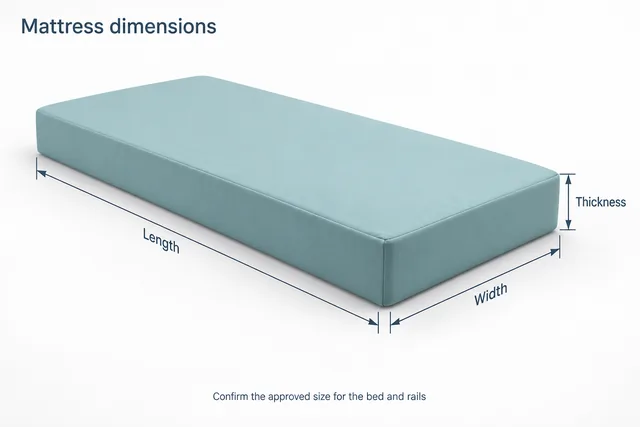
The mattress must match the bed's platform within a few millimetres. Keling mattresses are 1900 × 900 mm, made for beds with platforms such as 1930 × 900 mm (KL-BC104) or 1925 × 900 mm (KL-BC103-A). In the US home-care market, the common hospital bed mattress size is 36 × 80 in (about 914 × 2032 mm).
A twin XL mattress (38 × 80 in) is about 2 in wider than a typical hospital bed mattress, so a "twin XL hospital bed mattress" from the consumer market may overhang the platform and interfere with the side rails. Gaps at the head, foot or sides are an entrapment concern; UK MHRA guidance asks that length, width and height be checked and that bed, mattress and rails be compatible as a combination.
Thickness is a balance. Keling foam mattresses come in 60, 80, 100, 120 and 150 mm. Thicker foam gives more depth for immersion; for reference, the US Medicare definition of a covered foam mattress requires a foam height of 5 in (127 mm) or more — so a 6 inch foam mattress (about 150 mm) meets it. But every extra millimetre reduces the height of the side rail above the mattress, which IEC 60601-2-52 sets at a minimum of 220 mm above the uncompressed mattress. Full measuring guidance is in hospital bed mattress sizes and compatibility.
Is an orthopedic mattress the same as a hospital mattress?
No. "Orthopedic mattress" in consumer retail usually means a firm mattress marketed for back support; it is not a medical classification and does not imply pressure redistribution. In hospitals, a firm mattress is chosen for specific needs, such as stable support under traction or for spinal positioning, while patients at pressure-injury risk need a pressure-redistributing surface instead.
If a tender asks for an "orthopaedic bed" or "orthopedic bed mattress", clarify which is meant: a firm-core mattress, a traction bed such as the KL-BC111, or simply a hospital bed. The palm-fibre option on the KL-P002 provides a firm core where that is the requirement.
Hospital bed mattress toppers and overlays: when do they make sense?
A hospital bed mattress topper or overlay is an extra layer — foam, gel or powered air — placed on top of an existing mattress to improve pressure redistribution without replacing it. It can be a cost-effective upgrade when the base mattress is in good condition.
The US Medicare policy gives useful minimum figures for overlays: a non-convoluted foam overlay at least 3 in (76 mm) high, a convoluted (eggcrate) foam overlay with a 2 in base and 3 in peaks, a gel overlay at least 2 in (51 mm), and a powered air overlay with inflated cells of at least 2.5 in (64 mm). Remember the trade-off: every overlay raises the patient relative to the rails, and the MHRA warns that air and dynamic surfaces reduce the rail's effective height. When the base mattress is worn, replace it rather than topping it.
Covers, protectors and mattress pads
The cover is what keeps a hospital bed mattress hygienic and is usually the first part to fail. A good hospital bed mattress cover is liquid-resistant, vapour-permeable, wipeable with the facility's disinfectants, and has a zip protected by a flap. Keling offers a PU-coated, breathable waterproof cover option on the KL-P001 and KL-P002, and a zipper-closure cover on the KL-P002.
The US FDA advises facilities to create an inspection plan for all mattresses and covers, look regularly for cuts, tears, pinholes, snags and stains, unzip covers to check the inside and the core for fluid ingress, replace damaged covers immediately, and never stick needles into a mattress through its cover.
A hospital bed mattress protector or waterproof mattress pad adds a layer over the cover. It can protect a domestic or home-care mattress, but on a pressure-redistributing surface extra layers reduce immersion and can trap heat. Specify the right cover first, and use pads only as the mattress manufacturer allows.
When should a hospital bed mattress be replaced?
Replace a hospital bed mattress when inspection shows it can no longer protect the patient or be cleaned — not at a fixed birthday. The FDA recommends checking the expected life of each mattress and cover with the manufacturer and building that into the inspection plan.
Replacement triggers include:
- staining, wet spots or odour on the inner foam, showing fluid has passed the cover;
- cuts, tears, cracking or tacky patches on the cover that cleaning cannot fix;
- foam that stays dented, or a hand check under a patient that reaches the platform (bottoming out);
- air cells that leak or pumps that fail repeatedly — see our air mattress pump troubleshooting guide.
Budget hospital bed mattress replacement as a rolling programme, with spare covers stocked so that a damaged cover is changed the same day.
Hospital bed mattress tender checklist
Use this checklist when buying a hospital bed with mattress or mattresses alone:
- Bed models and platform dimensions the mattress must fit, including articulation points.
- Patient mix: share of beds needing foam only versus access to powered air.
- Mattress type, length × width × thickness, with tolerance, checked against side-rail height.
- Foam grade or core (standard, high-density, palm fibre) and segmentation.
- Cover material, closure, cleaning agents it must withstand, and number of spare covers.
- For air systems: pump supplied, alarms, CPR valve, static mode and spare pumps.
- Documentation: CE marking and ISO 13485 manufacturer certification, instructions for use, and test data such as ISO 20342-1 where requested.
Specification line: Hospital bed mattress, 1900 × 900 mm, 100–150 mm thick, high-density foam, three-section segmented to suit backrest and knee-rest beds, PU liquid-resistant vapour-permeable cover with protected zip; plus alternating pressure air mattress 1900 × 900 mm with electric pump for high-risk patients; manufacturer certified to ISO 13485, CE marked.
Browse the full Keling mattress range, and contact Keling's export team or request a quotation for mattresses matched to your beds.
Sources and further reading
- International Guideline (EPUAP/NPIAP/PPPIA): Full body support surfaces — selecting foam and air surfaces by risk.
- NICE CG179: Pressure ulcers – prevention and management — high-specification foam and dynamic surfaces.
- FDA: Covers for hospital bed mattresses — inspection, replacement and cleaning of covers.
- CMS: Pressure Reducing Support Surfaces – Group 1 policy article — minimum heights for foam mattresses and overlays.
- MHRA: Bed rails – management and safe use — mattress dimensions, overlays and rail compatibility.
- ISO 20342-1:2022 — general requirements and test methods for lying support surfaces for tissue integrity.
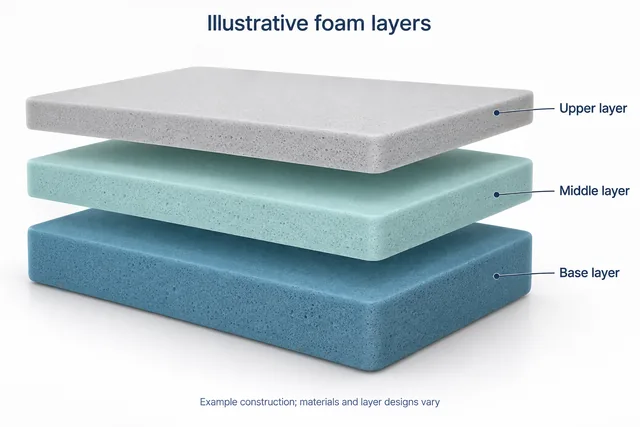
Illustration: AI-generated image for explanation only; it does not show a specific Keling model. See the linked product pages for actual product photos and specifications.
Frequently asked questions
What is the best mattress for a hospital bed?
The best mattress depends on the patient and the bed. For most ward and home-care patients, a pressure-redistributing foam mattress that fits the platform and flexes with the backrest and knee-rest is the baseline. Patients at higher risk of pressure injuries may need a powered alternating pressure air mattress, as decided by the care team.
Do you need a special mattress for an adjustable bed?
Yes. An adjustable or hospital bed needs a mattress that bends at the hip and knee without buckling or sliding. Thick innerspring mattresses resist bending, so flexible foam or a segmented mattress whose sections line up with the bed's hinge points is preferred. It must also match the platform width and length.
What size is a hospital bed mattress?
Sizes vary by bed. Keling mattresses measure 1900 x 900 mm for beds with platforms around 1925 to 1930 by 900 mm. In the US home-care market the common size is 36 x 80 inches. Always match the mattress to the specific bed platform and check side-rail height and gaps.
Can I use a twin XL mattress on a hospital bed?
Usually not without problems. A twin XL mattress is 38 x 80 inches, about 2 inches wider than a typical 36-inch hospital bed mattress, so it may overhang the platform, interfere with side rails and fail to flex properly. Use a mattress made for the bed's platform dimensions.
How often should a hospital bed mattress be replaced?
There is no fixed interval. Replace a hospital mattress when inspection shows fluid has passed the cover, the cover is torn or cracked, the foam stays dented or the patient bottoms out. The FDA advises facilities to check the manufacturer's expected life and build regular cover inspections into a facility-wide plan.
Is a mattress topper enough to prevent bed sores?
A pressure-redistributing overlay or topper can improve an existing mattress in good condition, but it is not a substitute for repositioning, skin inspection and a surface matched to risk. Overlays also raise the patient relative to the side rails, so rail height and entrapment gaps must be rechecked.
About the author
This article was written by the Keling Medical export team, drawing on the engineering data for the 33 bed, cot, mattress and accessory models Keling manufactures at its Yangzhou plant, and checked against the published standards and guidance listed in the sources. Keling Medical has been making medical appliances since 1996 and holds CE, ISO 9001 and ISO 13485 certification. More about Keling.