Alternating Pressure vs Low-Air-Loss Mattresses: What Buyers Should Compare
Compare alternating pressure and low-air-loss mattress features, evidence and operating needs, and prepare a clear hospital purchasing specification.
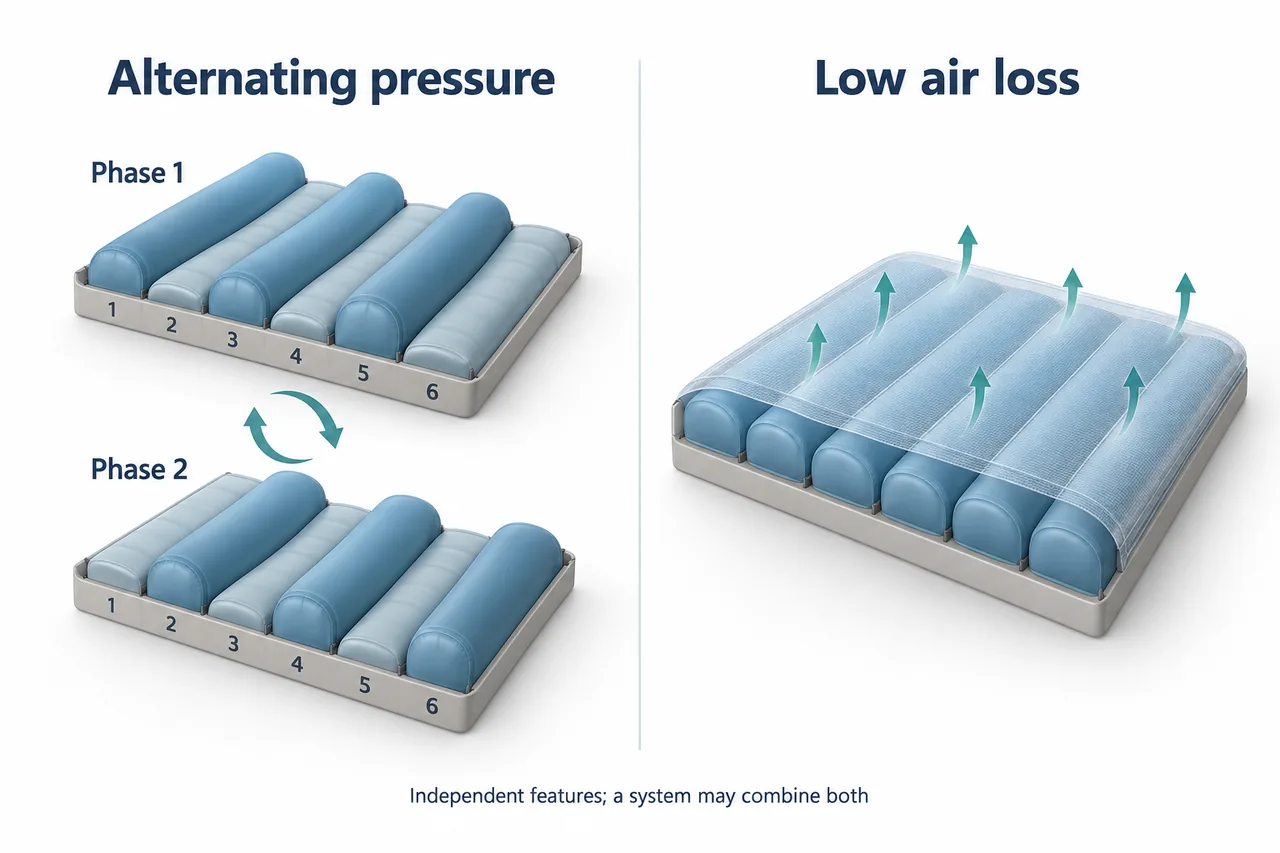
An alternating pressure mattress and a low-air-loss mattress are often presented as competing product categories. That can make a hospital specification unnecessarily confusing. Alternating pressure describes a change in loading over time; low air loss describes an airflow-related design feature. One system may offer both, while another offers only one.
For a hospital buyer or medical-equipment distributor, the useful comparison is therefore between complete systems and their documented performance. Establish what the clinical team needs, then compare the mattress, cover, pump, operating modes and support arrangements as one package. A product photograph or the phrase “air therapy” is not enough to establish equivalence.
The distinction in practical terms
An alternating-pressure surface changes loading through cyclic operation. A low-air-loss design uses airflow to assist pressure redistribution and potentially the temperature and humidity conditions at the body interface. These are different functions, and airflow terminology alone does not quantify microclimate performance. The International Guideline recommends attention to measured performance rather than relying on the design label.
When reading an offer, separate the questions: Does it alternate? What airflow-related feature is present? What evidence describes its microclimate performance? Which functions operate together? If the supplier answers all four with “yes, medical air mattress,” the response needs clarification.
For a broader introduction to selecting support surfaces, read Pressure Relief Hospital Mattresses: A Buyer's Guide to Reducing Risk. The discussion below focuses on purchasing differences rather than prescribing a mattress for an individual patient.
How alternating-pressure systems operate
Many alternating systems use groups of air cells controlled by a pump. The system changes inflation between groups according to its designed sequence. Manufacturers may provide different cycle settings, static operation, pressure adjustment and alarm features; these options are model-specific. For example, Arjo's published Alpha Active 4 information documents separate alternating and static modes, selectable cycles and several alarms. Those specifications describe that product, not all air mattresses or Keling models.
This variation is why the tender should ask for an operating-mode table. Identify the default mode, the available adjustments, any automatic return from temporary modes and whether settings remain after a power interruption. Request a demonstration using the offered pump and mattress together.
“Adjustable pressure” also needs explanation. It could refer to a manual comfort dial, patient-weight categories or a more automated control method. Ask what input users provide, what the display shows and how the instructions guide staff. A more elaborate control panel is useful only if its functions address the ward's requirements and can be managed reliably.
How to evaluate low-air-loss claims
For a low air loss mattress, ask the supplier to explain the airflow path and provide relevant performance evidence. Is airflow directed through or around particular components? Which cover and linen arrangement was evaluated? Does the claimed performance apply to the entire supplied configuration? These questions help separate a defined feature from a loosely used marketing phrase.
Do not substitute a pump airflow number for a complete performance assessment. An output figure measured at the pump does not by itself show the conditions experienced at the patient interface. Where airflow is stated in different units, request a consistent unit and the measurement conditions rather than comparing numbers without context.
Cover changes deserve particular attention. If the clinical or cleaning team wants an alternative cover, ask whether it is an approved option and whether the supporting data remain applicable. The offered cover should have its own part number, instructions and replacement route.
Side-by-side procurement comparison
The table below is a purchasing framework, not a patient-selection algorithm. Ask clinical reviewers to define which requirements are mandatory and which may be assessed during evaluation.
| Question | Alternating-pressure feature | Low-air-loss feature |
|---|---|---|
| What should be described? | Loading sequence and operating modes | Airflow design and microclimate-related performance |
| Which data are useful? | Mode descriptions, adjustment method and relevant surface testing | Relevant performance tests, cover configuration and test conditions |
| Can it identify a wound stage by itself? | No; require individual clinical selection | No; require individual clinical selection |
| Does the label establish noise level? | No; request measured conditions and a sample demonstration | No; request measured conditions and a sample demonstration |
| What needs confirmation? | Pump compatibility, alarms, available settings and interruption behaviour | Approved cover, airflow maintenance needs and combined-mode operation |
| Is there a universal price band? | No; compare the complete quoted package | No; compare the complete quoted package |
Avoid a tender table that assigns all early-stage injuries to one technology and all advanced injuries to another. The Wound Healing Society's 2023 guideline update discusses surface selection in relation to positioning options, existing injuries and whether support is adequate. This supports an individual assessment rather than a purchase rule based only on wound stage.
When a combined system may be considered
A combined configuration may be shortlisted when the clinical team requires both cyclic pressure redistribution and documented microclimate-related performance. Require evidence for each requested function and confirmation that they operate in the proposed mode. Do not assume that a system's combined label means every function is continuously available.
Add a demonstration of transitions between modes to the sample evaluation. Ask whether one mode changes alarm behaviour, pressure adjustment or transfer procedures. The objective is to make staff responsibilities clear before equipment is deployed, especially where several mattress types will share the same ward.
The International Guideline's treatment chapter includes conditional support-surface recommendations and identifies limitations in the certainty of evidence. Procurement language should reflect that uncertainty: request the evidence supporting the offered product's intended use, and avoid promises that one technology guarantees healing or prevents every injury.
A tender checklist that produces useful answers
Use separate response fields for the clinical requirements and the commercial offer. This allows reviewers to assess suitability before interpreting price differences.
- Define the system. State whether a mattress replacement or an overlay is required, including the approved base mattress for an overlay.
- Identify the patient range. Request the minimum and maximum intended patient weight and any limitations related to positioning.
- Describe the functions. List alternating, static, transfer or other modes separately, with confirmation of what is supplied.
- Specify evidence. Ask for relevant performance reports identifying the tested model and configuration.
- Review the pump. Confirm supply requirements, controls, noise information, maintenance access and replaceable components.
- Review safety features. Ask what alarms and emergency-deflation arrangements are present, and how staff should respond under the instructions.
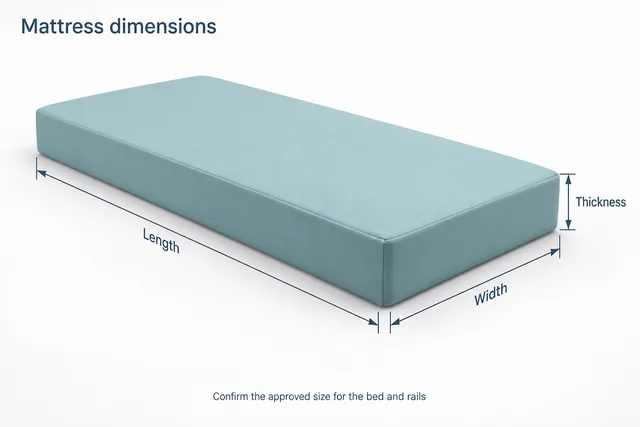
- Confirm compatibility. Name the bed and rail system, dimensions and acceptable mattress height.
- Plan lifecycle support. Obtain cover, hose, filter and pump replacement prices where relevant, with availability and warranty terms.
Do not insert an arbitrary CFM value, cell height or cycle interval simply because another supplier's brochure lists it. Where the hospital has a justified technical requirement, state its purpose and acceptance method. Otherwise, ask the supplier for the offered value and supporting rationale.
Compare operating cost and service access
The purchase price is one part of the decision. Request prices for the configuration delivered to the destination, including accessories, documentation and any spare items selected by the buyer. Then compare the parts that the local team expects to maintain over the planned service period.
A distributor can make this comparison more useful by preparing a simple parts schedule. For each component, record the order reference, whether local staff may replace it, the required training and the quoted supply arrangement. Keep those answers linked to the exact system version; similar-looking pumps or covers should not be treated as interchangeable without written confirmation.
Clinical teams should also comment on controls and practical use during a sample review. Record whether labels are readable, staff can distinguish modes, and cleaning access is manageable. These observations do not prove clinical effectiveness, but they can identify deployment problems before a bulk purchase.
Discussing Keling air-mattress options
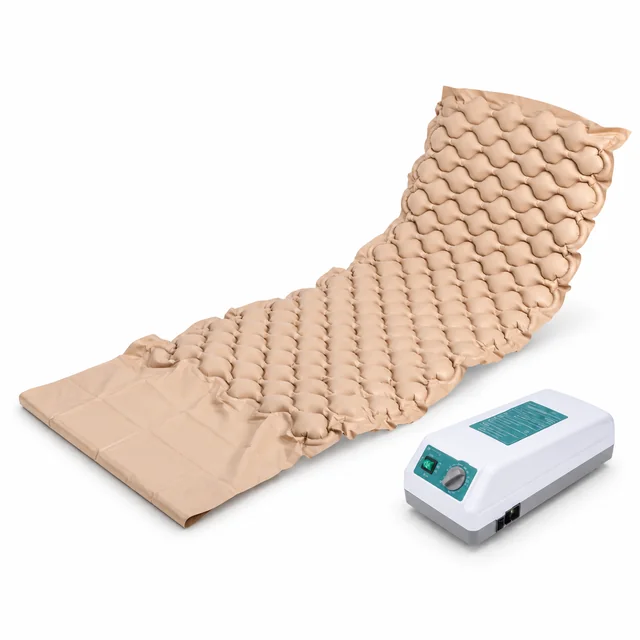
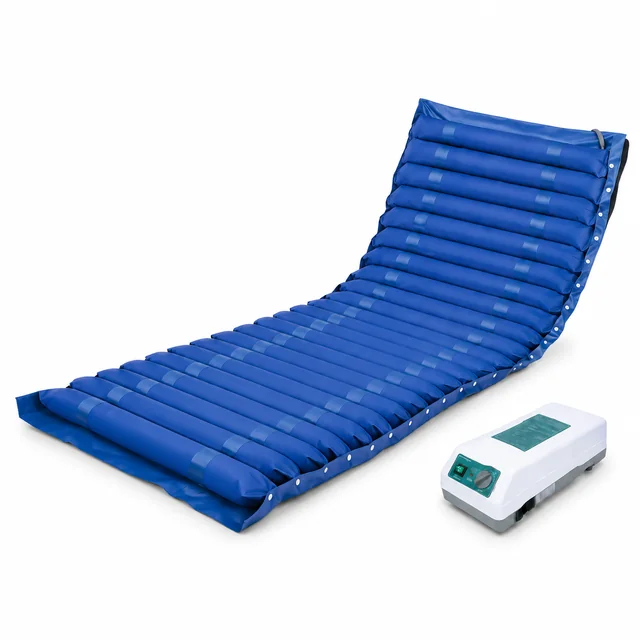
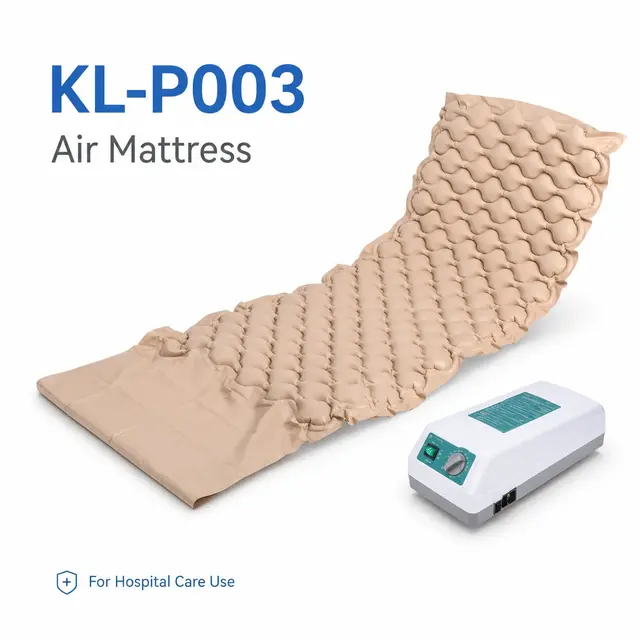
Keling lists KL-P003 with a bubble-cell construction and KL-P004 as a tubular alternating-pressure model with a digital pump controller. Use the model reference when requesting a current specification, and check the mattress category for the relevant product information. A request for KL-P004 should still state which functions your tender requires.
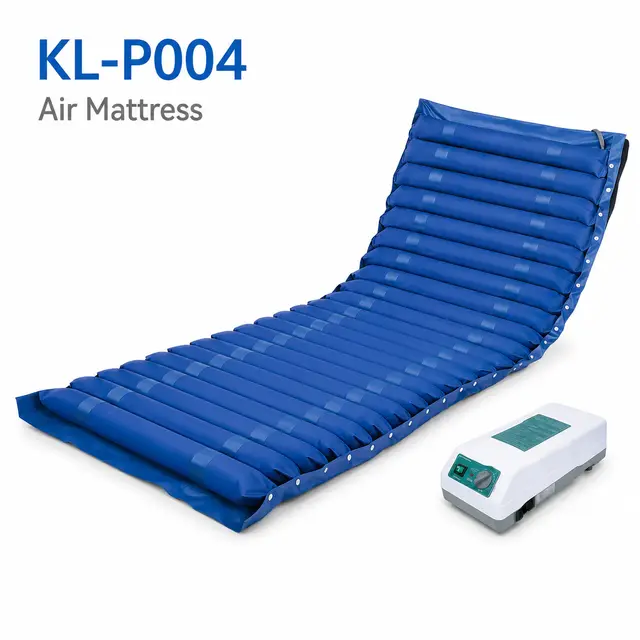
Do not assume low-air-loss functionality, a particular pump output, cell construction or alarm set from an alternating-pressure description. Ask for written confirmation of the offered configuration. If the tender requires performance that is not documented on the product page, include it as a requirement for review rather than treating it as an established feature.
Frequently asked questions
Is low air loss the same as alternating pressure?
No. They describe different features. A system can have either feature or combine them, so suppliers should identify each separately.
Is one technology always better?
No single label establishes suitability for all patients. Clinical requirements, evidence, bed compatibility and operating support should guide the comparison.
Can a larger pump replace missing performance evidence?
No. Ask for the manufacturer's intended use and relevant system data. Pump capacity is a technical characteristic, not proof of clinical benefit.
What should be included in a sample request?
Request the proposed mattress, matching pump, correct cover, instructions and all required connections. Specify the evaluation bed, destination power requirements and the tender features that reviewers need to demonstrate.
Next step
Comparing systems for a hospital tender? Send Keling your mattress requirements and request a configuration-specific quotation, available documentation and sample terms.
About the author
This article was written by the Keling Medical export team, drawing on the engineering data for the 33 bed, cot, mattress and accessory models Keling manufactures at its Yangzhou plant. Keling Medical has been making medical appliances since 1996 and holds CE, ISO 9001 and ISO 13485 certification. More about Keling.