Foam Hospital Mattresses: Density, Layers and Covers Explained
Learn how to compare foam hospital mattress density, firmness, layers, folding designs and covers, and prepare a specification for a bulk ward order.
A foam hospital mattress can look straightforward in a catalogue: a rectangular core, a protective cover and a few thickness options. For procurement teams, however, those details represent separate decisions. Density is not the same as firmness, a layered core does not automatically provide better clinical performance, and a waterproof cover still needs a defined cleaning procedure.
The aim is to specify a mattress that suits the intended patients and bed systems while remaining practical to clean, inspect and replace. This guide explains the information buyers should request, including how to compare a flat construction with a 3 section mattress without assuming one design is universally superior.
Where foam mattresses fit in hospital procurement
Foam options can simplify deployment where a facility wants support surfaces without a powered pump. They may be considered for general wards, rehabilitation and other settings, subject to the intended use and clinical review. Their procurement advantage is operational simplicity, not automatic suitability for every patient.
Foam is not a “low-risk only” category: NICE recommends high-specification foam for some high-risk adults. NICE CG179. For procurement, define the required performance rather than treating every foam pad as equivalent.
Request the evidence and product description behind terms such as “medical,” “high density” and “orthopedic mattress.” Those words are not a substitute for measurable specifications or a statement of intended use. For the wider selection process, see Pressure Relief Hospital Mattresses: A Buyer's Guide to Reducing Risk.
Density and firmness answer different questions
Density describes mass per unit volume, commonly expressed in kg/m³. Firmness describes resistance to indentation under a stated test method. A dense foam can be soft, while a lower-density foam can feel firm. Polymer density can affect durability, but additives and test conditions matter when interpreting figures. The Polyurethane Foam Association's performance guide explains these distinctions.
For a tender, request density and firmness separately for each specified foam layer. Ask for the test method and units alongside the value. If one supplier provides an indentation-force result and another supplies only a marketing grade such as “extra firm,” they have not yet supplied directly comparable answers.
Avoid selecting a mattress by squeezing a corner during a sample visit. That can help staff describe feel, but it cannot establish the core's durability or pressure-redistribution performance. A sample review should complement the technical documentation rather than replace it.
Single-layer and multi-layer construction
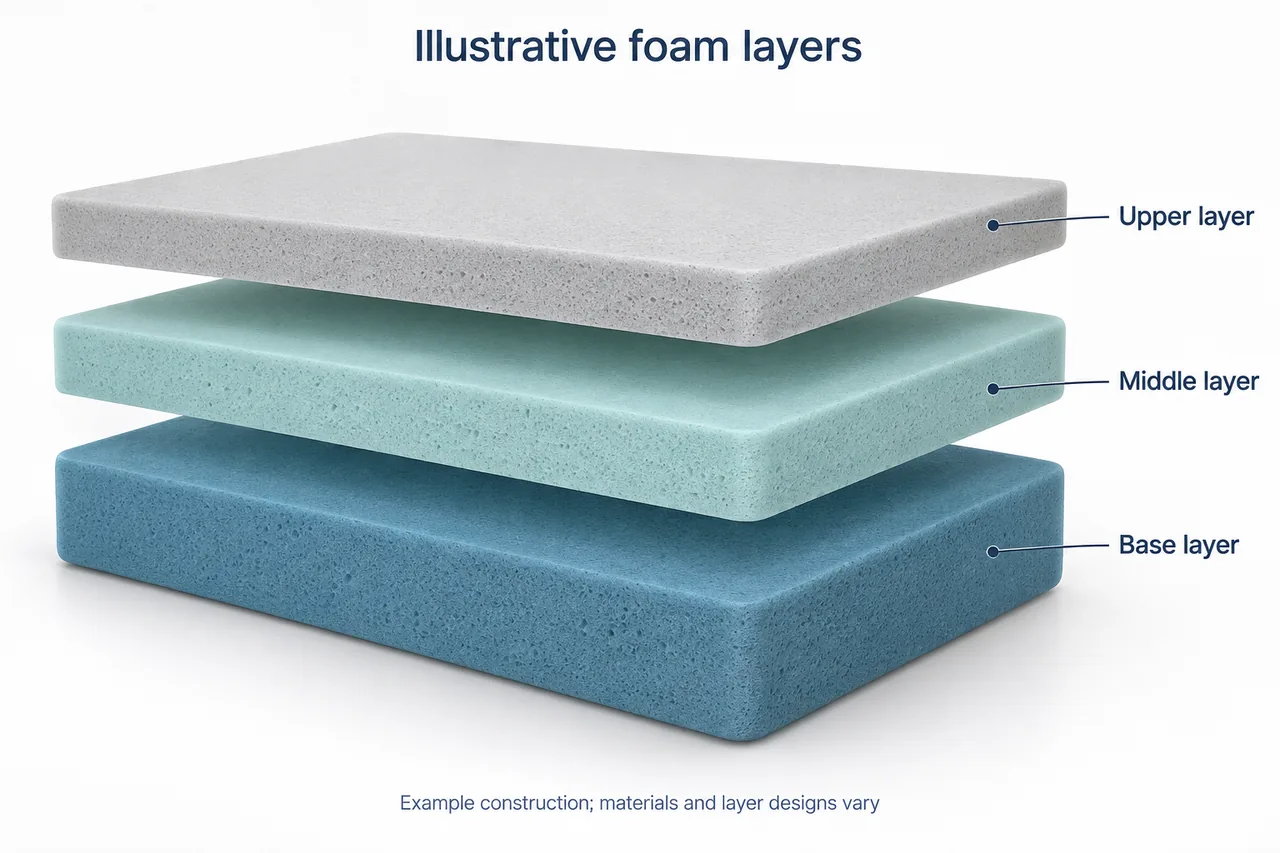
A single-layer core can offer a relatively simple construction and straightforward material identification. A multi-layer design may use different materials in different parts of the mattress. Request a drawing that shows each layer's material, thickness and purpose, together with the finished mattress dimensions.
For example, a supplier may propose one layer for surface feel and another for structural support. The buyer should ask what evidence supports the complete combination, not assume that adding layers improves outcomes. Colours in a cutaway image help identify components but do not quantify quality.
Also ask whether the design is directional or reversible. If a mattress has a designated top surface, this should be clear on the label and in the instructions. Procurement should include replacement-cover identification so that staff can preserve the intended orientation after cleaning or maintenance.
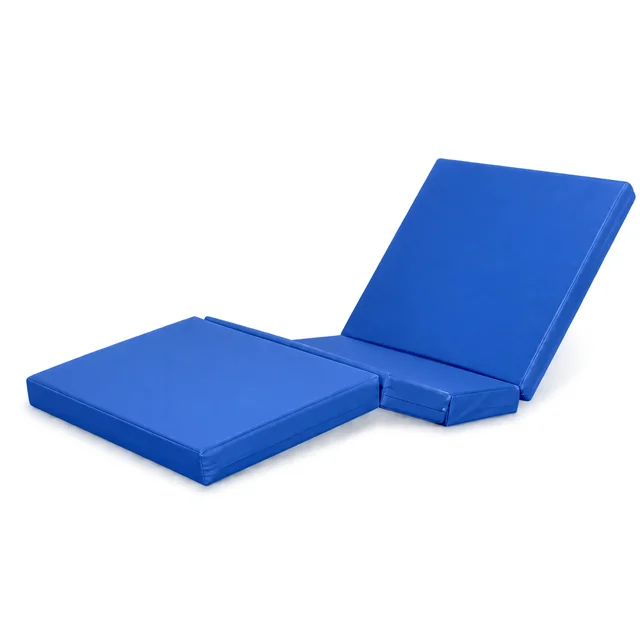
Three-section designs and articulating beds
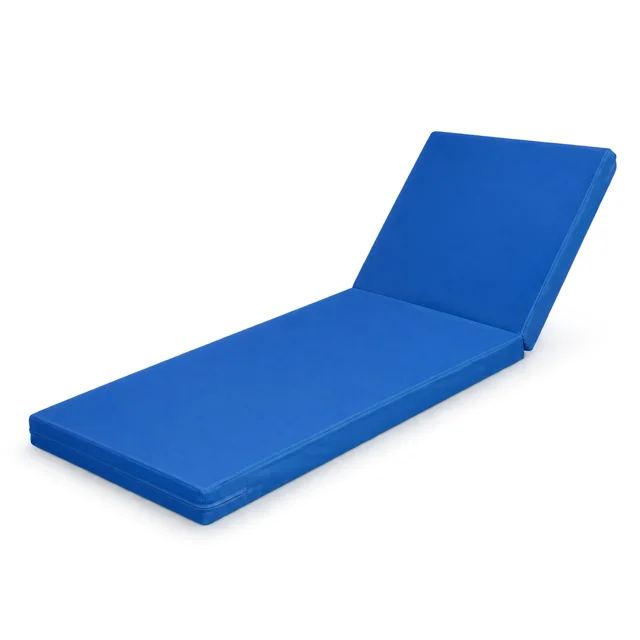
A segmented mattress has defined sections that can fold. This can be useful when its dimensions and fold locations suit the intended bed. However, a continuous foam mattress may also be designed to flex on a profiling platform. For example, Invacare's Softform Premier Original documentation describes a foam construction intended to conform on electric bed frames. This does not establish compatibility for another model, but it disproves the assumption that every non-segmented construction must fail during articulation.
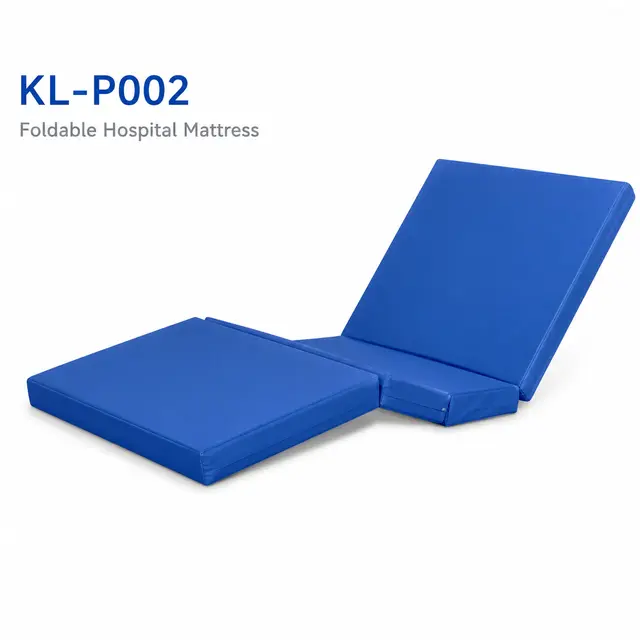
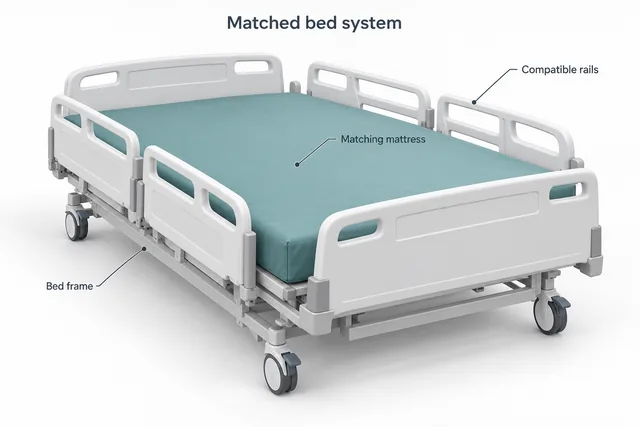
Ask for compatibility confirmation for the specific mattress and bed combination. A three-section mattress is not automatically suitable for every three- or four-section deck; the locations of folds and platform hinges still need review. The relevant issue is how the complete mattress behaves through the bed's intended positions.
During a sample evaluation, record the bed model, mattress thickness and cover configuration. Have the supplier demonstrate the approved positioning range and attachment arrangement. Check that staff can identify the head end and orientation without relying on informal instructions. Use Hospital Bed Mattress Sizes and Compatibility: Getting the Fit Right when preparing dimensions for an existing bed fleet.
Covers: specify each property separately
A waterproof hospital mattress description usually refers to its cover, but the term should be made precise. Ask which liquid-resistance test or material specification supports the claim. Separately request information on stretch, water-vapour transmission, closure design and the cleaning products permitted by the manufacturer.
Cover condition matters throughout use. MHRA reports that damaged covers can permit fluid contamination of the mattress interior. MHRA's mattress safety alert. Plan inspection and replacement access rather than treating the cover as a permanent sealed barrier.
For fire-related requirements, identify the applicable destination or tender requirement and request evidence for the supplied construction. “Fire-retardant cover” does not by itself identify the test, result or complete mattress configuration evaluated. The procurement file should connect the evidence to the exact order.
If the manufacturer offers multiple cover materials, have the cleaning team review them using the facility's actual workflow. A removable cover is useful only if staff know how it may be cleaned, dried, inspected and refitted. Obtain spare-cover prices and part numbers at the same time as the mattress quotation.
A specification checklist for bulk orders
| Item | What to include in the RFQ |
|---|---|
| Intended use | Ward type, patient requirements and clinical approval criteria |
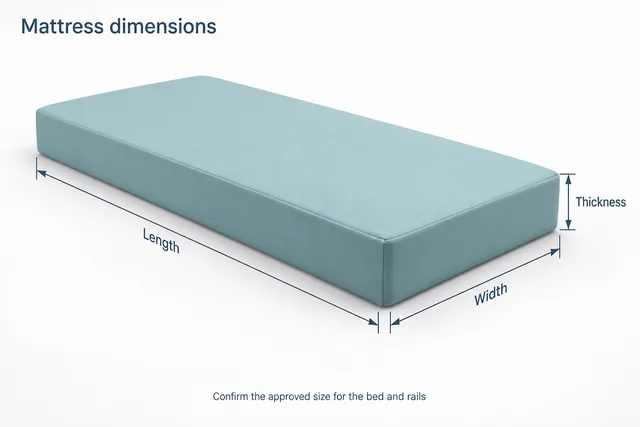
| Size | Finished length, width, height and agreed tolerances |
| Core | Material and layer drawing; density and firmness information |
| Articulation | Named bed models, orientation and permitted installation |
| Cover | Exact material, closure, cleaning instructions and replacement reference |
| Patient range | Manufacturer's intended limits and supporting documentation |
| Performance evidence | Relevant reports identifying the tested construction |
| Packing | Permitted compression or folding, carton details and storage instructions |
| Support | Warranty terms, inspection guidance and replacement availability |
Keep core and cover options on separate lines in the quotation. Otherwise, two offers with the same mattress model number may include different materials. The accepted sample, specification and purchase order should identify the same combination.
When comparing prices, include the number of spare covers the customer selects and any special packing requirements. Do not assume compression packing is permitted simply because it reduces shipping volume. Request the manufacturer's approved method and any recovery or storage conditions.
Keling foam mattress options
Keling's published pages list KL-P001 as a mattress with several fill and cover options, and KL-P002 as a three-section design. Both list a 1900 × 900 mm footprint and thickness choices of 60, 80, 100, 120 and 150 mm.
Use those figures to start the enquiry, then confirm the permitted thickness for the intended bed and rails. Request a signed specification that separates core materials from cover materials and states the selected density or firmness where relevant. The public options should not be interpreted as proof that every configuration meets a particular pressure-care requirement.
If a tender includes a named fabric, specialist coating or particular foam grade, include its precise requirement in the enquiry and request supporting documentation. Obtain written confirmation of the actual supplied material before using that claim in a downstream catalogue or hospital submission.
Frequently asked questions
Does higher density always mean a firmer mattress?
No. Density and firmness are different properties. Request both, with units and test methods, to make a meaningful comparison.
Is a thicker foam mattress always better?
No. Thickness must fit the bed system and the intended use. It does not independently establish clinical suitability or durability.
Must a mattress have separate sections to fit an adjustable bed?
No. Some continuous constructions are designed to articulate. Obtain approval for the exact bed and mattress combination instead of relying on the number of visible sections.
Can the same model be ordered with different covers?
Ask the supplier to identify available configurations and their part references. Confirm cleaning requirements and evidence for the selected cover before placing the order.
Next step
Preparing a foam mattress order? Send Keling your dimensions, bed models and material requirements to confirm the configuration, available documentation and bulk-order terms.
About the author
This article was written by the Keling Medical export team, drawing on the engineering data for the 33 bed, cot, mattress and accessory models Keling manufactures at its Yangzhou plant. Keling Medical has been making medical appliances since 1996 and holds CE, ISO 9001 and ISO 13485 certification. More about Keling.