Orthopaedic and Traction Hospital Beds: Frames, Attachments and Uses
Compare dedicated orthopaedic traction beds and add-on frames, including mounting compatibility, pulleys, load ratings, mattress fit and ward access.
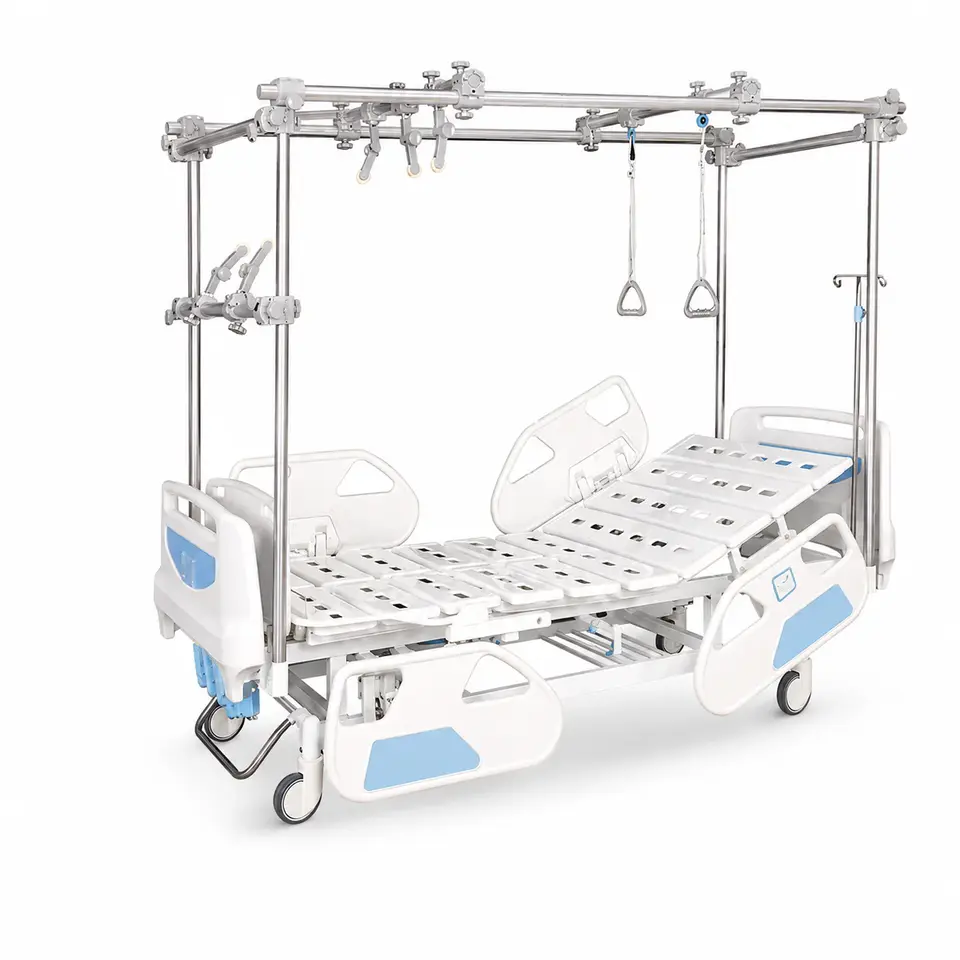
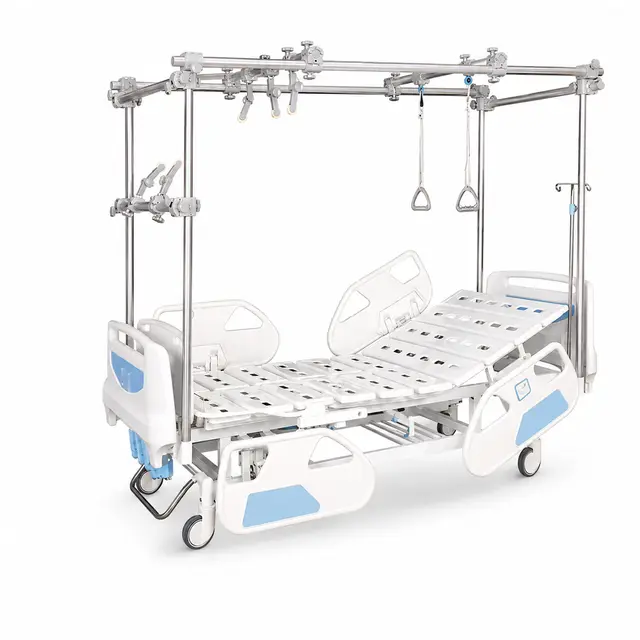
An orthopedic traction bed provides a patient-support platform and a structure for the traction equipment prescribed by the clinical team. A dedicated bed may incorporate an overhead frame, while an accessory system can be fitted to a compatible existing bed. Choosing between those approaches depends on the intended treatment, the existing fleet and the documentation available for the combined assembly.
For procurement teams, the main challenge is defining what “traction bed” includes. The frame, pulleys, cords, weight carriers, patient-assist handle and mattress may be quoted separately. A photograph of a complete setup does not prove that every visible component is supplied or approved for the same load.
The order should identify each component and its role. Clinical staff determine the traction method and settings; the purchasing specification establishes that the required equipment is available, compatible and maintainable.
Where traction fits in orthopaedic care
Traction applies a controlled pulling force as part of a clinician-directed plan. Its use depends on the injury and available treatment options. AO Surgery Reference describes skeletal traction as a temporary stabilisation option in selected circumstances and discusses complications associated with prolonged immobilisation. It should not be advertised as the default treatment for all fractures. AO Surgery Reference: Traction.
This matters for purchasing because a frame intended for one setup may not support another. Ask the orthopaedic team which configurations the ward needs and whether the expected use is occasional or routine. Do not convert a general requirement for “orthopaedic beds” into an assumption that every bed needs the same traction assembly.
A supplier's brochure also should not become a treatment protocol. Traction force, line of pull, monitoring and patient-assist activity require clinical decisions. The manufacturer's instructions should address equipment operation and limitations, while the hospital maintains the relevant care procedures.
Dedicated traction bed or an add-on frame?
A dedicated traction bed can simplify procurement when the bed and overhead structure are designed and documented together. The buyer still needs to confirm which accessories are included and how the frame behaves when the bed height or sections change. “Integrated frame” does not answer every compatibility question.
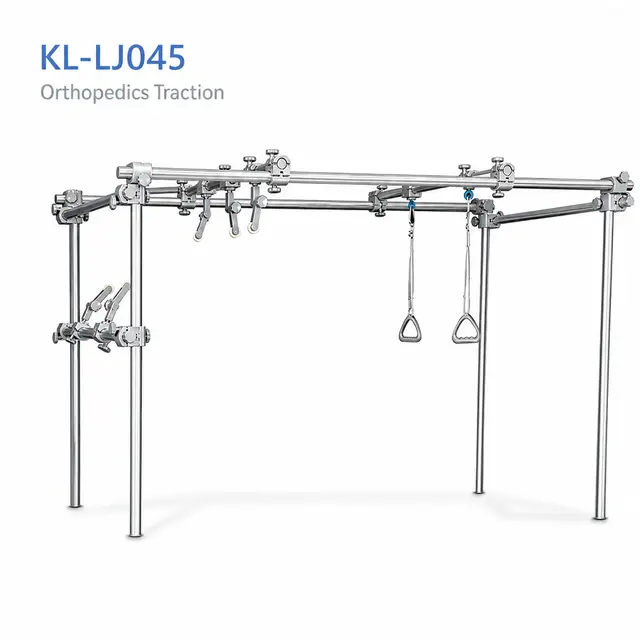
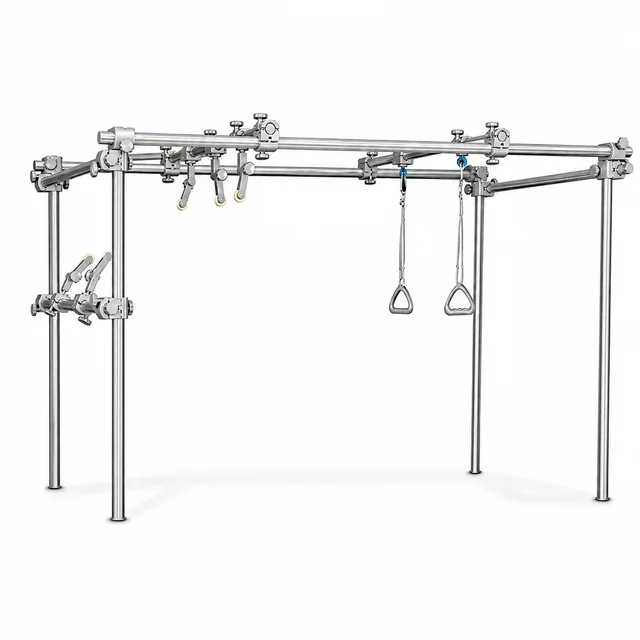
An add-on frame may make sense when the hospital already owns appropriate beds. Its apparent flexibility needs careful verification: clamp dimensions, attachment points and load paths must match the existing models. Do not assume that two beds with the same mattress size have the same mounting structure.
For an existing fleet, provide the supplier with bed model references, manufacturer drawings and photographs of the proposed mounting locations. Obtain written compatibility confirmation. If modification is required, the hospital should resolve the design and approval responsibilities before ordering; local drilling or improvised adapters should not be treated as routine installation.
Components to include in the quotation
The overhead structure, sometimes described as a Balkan frame, provides mounting positions above or beside the bed. Adjustable cross members can help place accessories where the prescribed setup requires them. Their locking method, adjustment range and permitted loads need to be documented.
Pulleys guide the traction cord. Procurement should specify the compatible cord type, retention arrangement and replacement-part reference rather than buying pulleys by appearance. Weight carriers and individual weights need clear identification and secure storage when not in use. Do not assume that the price of the frame includes a complete weight set.
A trapeze or patient-assist handle has a different purpose from a traction weight suspension point. Ask for its separate rating and approved use. A rail, IV pole or unlabelled overhead crossbar should not be used as a patient-support attachment simply because it is within reach.
| Assembly | Information to request |
|---|---|
| Overhead frame | Compatible beds, dimensions and mounting instructions |
| Cross members and clamps | Adjustment range, locking method and load limits |
| Pulleys and cords | Compatible parts and replacement guidance |
| Weight carriers | Included quantities, markings and attachment method |
| Patient-assist handle | Separate load rating and intended use |
| Mattress and rails | Approved bed-system combination and access |
Check what happens when the bed moves
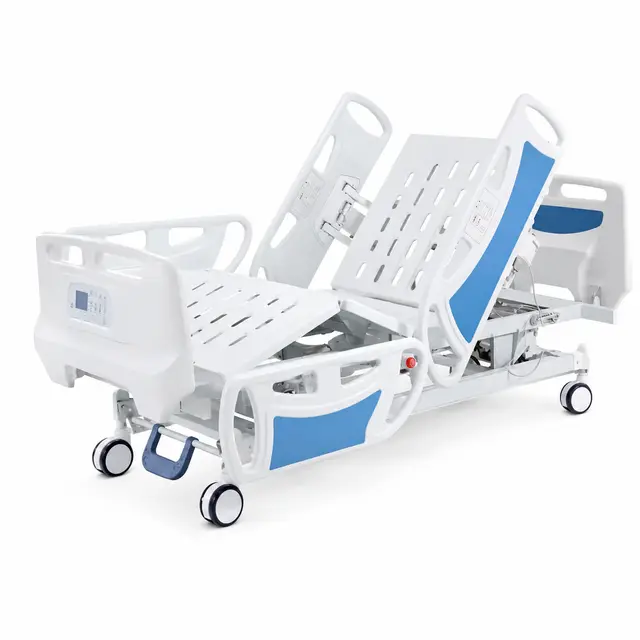
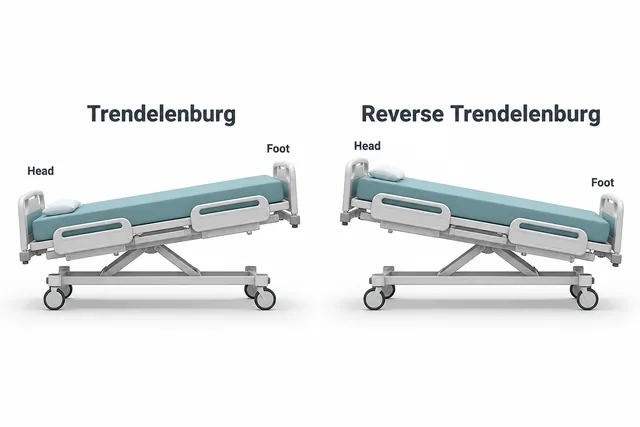
Height adjustment and articulation can change the relationship between the patient, bed and overhead accessories. A purchaser should ask the supplier and clinical team to review each intended configuration, including which bed movements must be restricted while traction is in place. A five-function bed does not imply that all five functions can be used during every traction setup.
Also examine clearance at the foot end and sides. Hanging equipment, drainage devices and stored items should not compete for the same space. The accepted setup needs enough room for cleaning and staff access without displacing the equipment.
AO's traction reference explains that pulley position affects the direction of pull. That is why mounting geometry belongs in the equipment review, while adjustment of the treatment remains a clinical responsibility. AO Surgery Reference.
Mattress, patient access and maintenance
Select the support surface with the clinical team and verify that it fits the bed's approved dimensions and articulation. A patient who remains in bed for an extended period still needs an individual skin-care and repositioning plan. The frame itself is not a pressure-injury prevention system; review the pressure-care mattress guide alongside the bed specification.
Ask nursing staff to assess access for hygiene, observation and routine care. A densely equipped overhead frame may obstruct work or make it difficult to move other equipment into position. Use a representative layout rather than approving the frame solely from a product photograph.
Maintenance requirements should cover clamps, fasteners, pulleys, cords, handles and the bed itself. Obtain cleaning instructions that distinguish reusable components from items with replacement limits. Keep component references on the hospital's asset record so worn parts can be replaced with the documented equivalents.
Keling traction options to review
The published KL-BC111 manual orthopaedic traction bed has an integrated overhead frame, a listed 200 kg safe working load and a 1925 × 900 mm bed surface. Its published height adjustment is 460–720 mm. Ask for separate frame and attachment ratings; the bed's SWL should not be assumed to be the rating of each overhead point.
Keling also lists the KL-LJ045 orthopaedic traction frame as a hospital-bed accessory. Its page makes compatibility dependent on the bed frame's dimensions and profile. Send the exact existing bed details before requesting an accessory-only order.
The orthopaedic traction ward project page can support the room and equipment discussion. Ask the quotation to distinguish the bed, overhead frame, pulleys, cords, weight set and patient-assist components, including any items that need separate sourcing.
Frequently asked questions
Can any hospital bed accept a traction frame?
No. Mounting compatibility, structural suitability and permitted operation must be confirmed for the specific bed-and-frame combination. Matching mattress dimensions alone is insufficient.
Are weights included with a traction bed?
They may be, but inclusion must be confirmed in the itemised quotation. Request quantities, identification and the compatible carriers rather than assuming the pictured setup is the supplied package.
Is a trapeze handle a patient lift?
Do not treat it as one unless its intended-use documentation explicitly permits that role. A patient-assist handle and a hoist are different devices with different operating limits and training requirements.
Can staff reposition the bed during traction?
That depends on the prescribed setup and equipment instructions. The clinical team should define permitted movements and precautions for the actual bed-and-frame configuration.
Request a complete orthopaedic equipment schedule
Send the intended traction configurations, bed quantity and existing bed references through Keling's quotation form. Request an itemised proposal with mounting drawings, individual load ratings and confirmed included accessories so the ward can review the complete assembly before purchasing.
About the author
This article was written by the Keling Medical export team, drawing on the engineering data for the 33 bed, cot, mattress and accessory models Keling manufactures at its Yangzhou plant. Keling Medical has been making medical appliances since 1996 and holds CE, ISO 9001 and ISO 13485 certification. More about Keling.