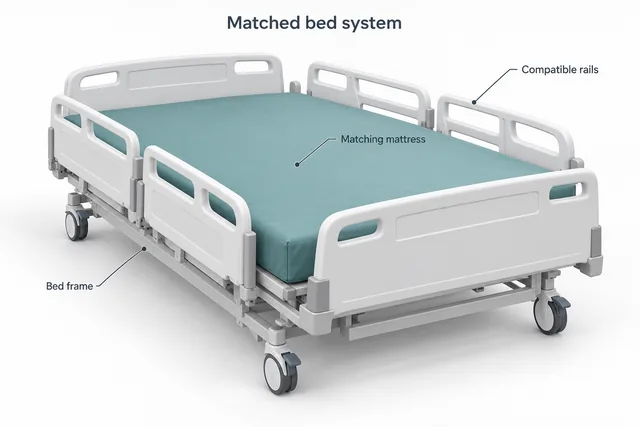
Air Mattresses for Hospital Beds: Bubble-Cell vs Tubular Systems
Compare bubble-cell and tubular hospital air mattresses, pump functions, bed fit, cleaning and export packing before selecting a system for your ward.
Choosing an air mattress for a hospital bed starts with the intended medical use and the complete equipment configuration. An inflatable surface designed for occasional sleeping does not supply the information a hospital needs about support performance, bed compatibility, cleaning, operating limits and service arrangements.
Within medical catalogues, bubble-cell and tubular designs describe two visibly different constructions. That distinction helps buyers understand what they are ordering, but cell shape alone does not establish clinical suitability. The pump, controls, cover, base requirements and documented performance also need review. This guide turns those differences into questions that importers and hospital procurement teams can use in a practical RFQ.
Start with medical use, not the word “inflatable”
A hospital bed inflatable mattress should have an identifiable model, intended use, manufacturer instructions and an appropriate patient range. If a quotation simply says “air bed with pump,” request the missing information before comparing price. The documentation should describe the supplied system, not a similar model from a wider catalogue.
Also establish who will select and manage the mattress after delivery. A distributor may supply several facilities with different clinical protocols. It is better to document each facility's requirements than to assume a single air-mattress configuration is appropriate for every ward.
Pressure-care equipment belongs within an individual care plan. The NHS Ayrshire and Arran pressure-ulcer guideline considers mobility, existing damage and care needs when selecting equipment. A commercial description should therefore avoid guaranteeing prevention or assigning treatment purely by cell shape.
Bubble-cell and tubular construction
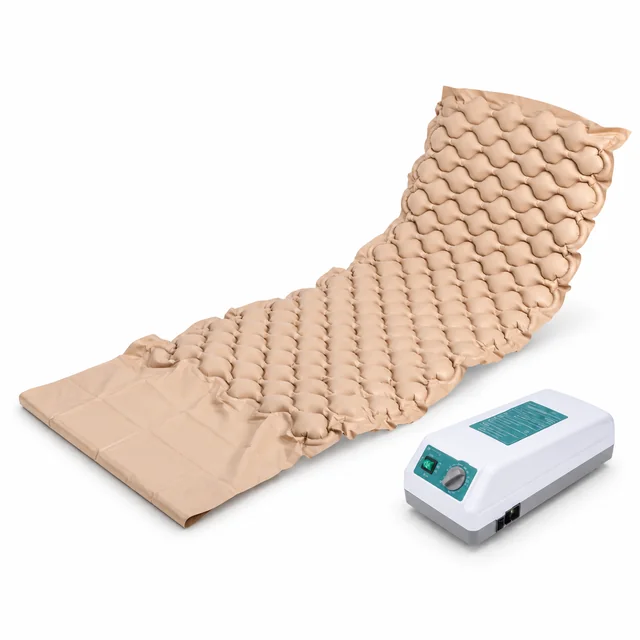
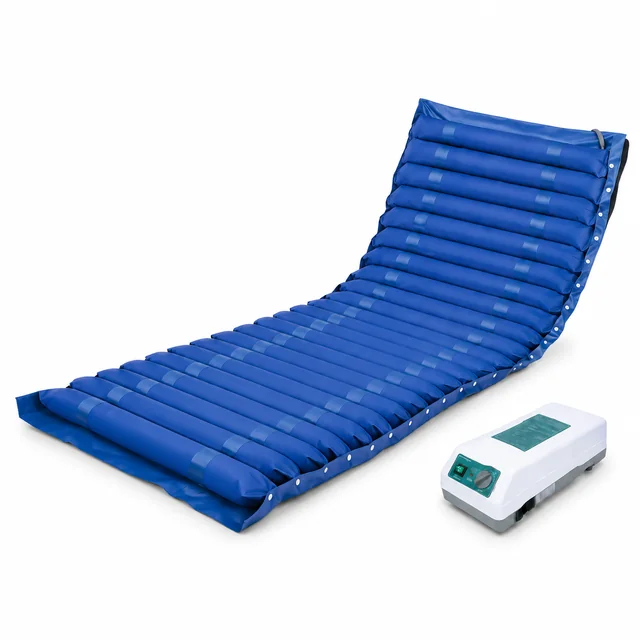
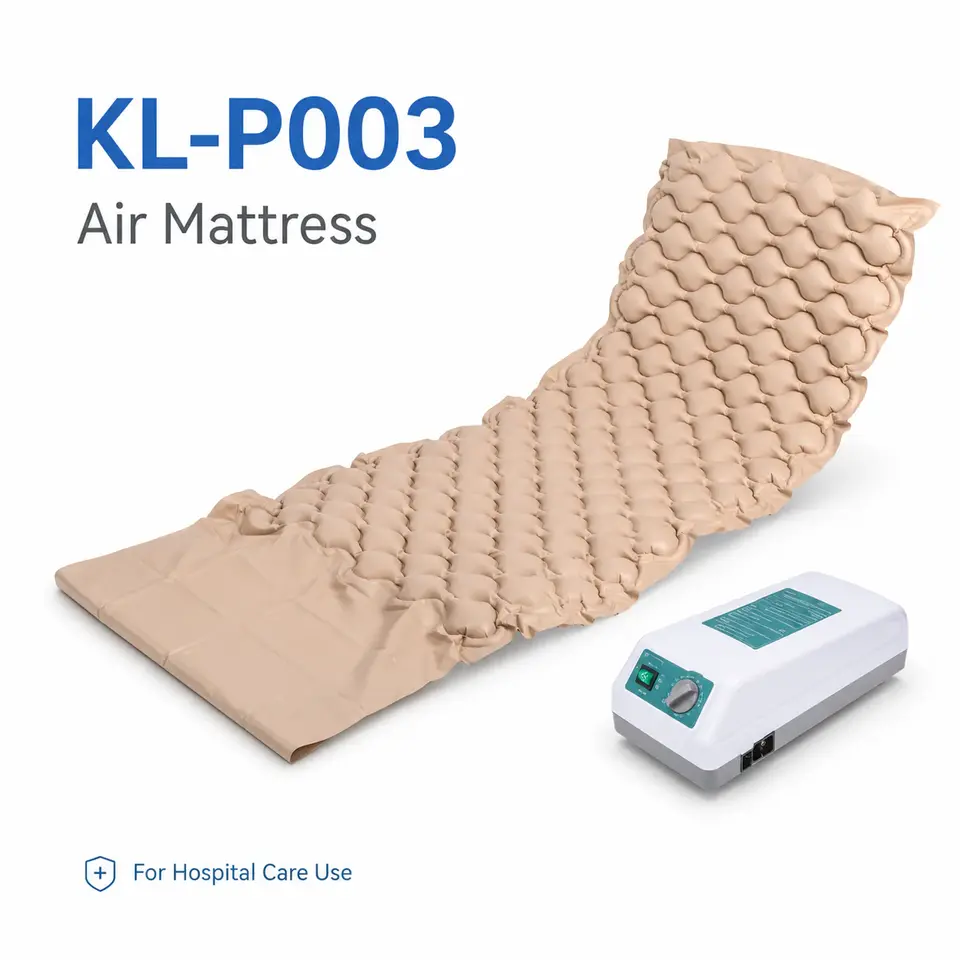
A bubble air mattress has a surface formed from many small, rounded air pockets. A tubular design uses elongated air cells, usually arranged across the mattress. These descriptions identify construction; they do not prove whether every cell alternates, whether individual cells can be replaced, or whether an overlay base is required.
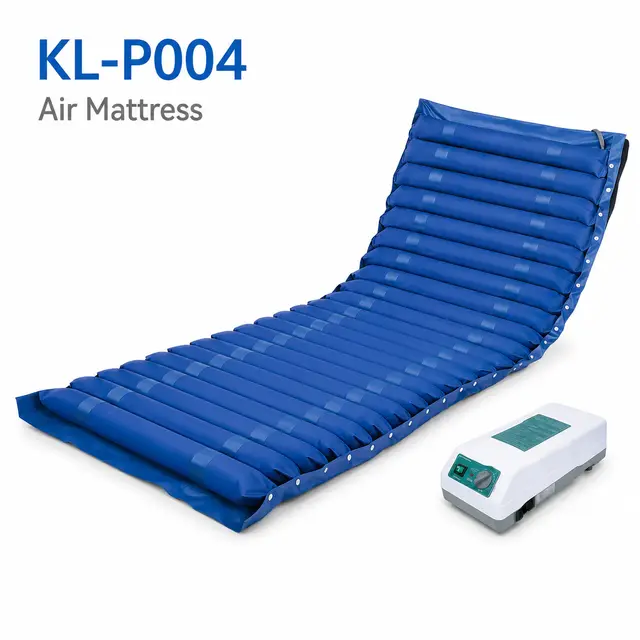
Keling's published information identifies KL-P003 as a bubble-cell air mattress and KL-P004 as a tubular alternating-pressure model. Both list a 1900 × 900 mm footprint and a supplied electric pump; KL-P004 specifies a digital controller. Request the current signed specification for the order configuration.
| Buying question | Bubble-cell system | Tubular system |
|---|---|---|
| What does the shape tell you? | It uses small rounded air pockets | It uses elongated air cells |
| Is it an overlay or replacement? | Confirm from the instructions | Confirm from the instructions |
| Can a damaged cell be replaced? | Request the construction and repair policy | Request the construction and repair policy |
| Are modes and alarms included? | Check the exact pump specification | Check the exact pump specification |
| Does geometry establish clinical performance? | No; request relevant evidence | No; request relevant evidence |
| What matters for an existing bed? | Total installed height and approved fit | Total installed height and approved fit |
For a distributor, a replaceable component can affect spare-parts planning, while a sealed construction may imply a different replacement policy. Ask for those details explicitly. Do not assume serviceability from a photograph showing individual-looking sections.
Understand the complete system
Treat the mattress and pump as matched components. Record their individual model references, together with the cover, hose assembly and any supplied attachments. A future replacement order should not depend on someone remembering that the original unit was “the blue pump.”
Overlay or mattress replacement
An overlay is intended for use with an underlying support surface, while a replacement system takes the place of the original mattress. NPIAP distinguishes these terms in its support-surface definitions. Obtain installation instructions so that the correct base arrangement is agreed before purchase.
This matters commercially because an overlay quotation may omit a base mattress that the project still needs. Ask the supplier to identify what is included and what the hospital must provide. Where existing mattresses will be retained, their suitability should be checked before assuming that only an overlay purchase is necessary.
Connections, covers and emergency features
Ask how hoses connect, where the pump can be mounted and which straps or retention components are approved. Request the total installation arrangement on the actual bed model. If emergency deflation is required, confirm its presence and obtain the relevant manufacturer procedure; a feature should not be assumed from the category name.
The supplied cover also belongs in the specification. A cover shown in a catalogue image may be optional, and a replacement material may have different properties. Agree the cover reference, fastening method and cleaning instructions as part of sample approval.
Pump specifications that matter
Start with the functions staff will use. Request a mode list, adjustment method, operating instructions and description of indicators. If the supplier states a cycle time or pressure range, ask whether it is fixed or adjustable and how the value relates to the offered configuration. Staff should not have to infer an operating procedure from a number on an invoice.
Alarm information needs similar detail. Ask whether the system detects low pressure, interrupted power or pump faults, and require the supplier to distinguish between audible and visual indicators. Confirm what the user is instructed to check after an alarm. These are requirements to verify, not features present on every medical air mattress.
For a practical example of configuration-specific documentation, Arjo's Alpha Active 4 instructions identify inspection points, cover access, electrical checks and service arrangements for that system. The procurement lesson is to request equivalent clarity for the model being offered, rather than borrowing another manufacturer's instructions.
For export projects, confirm voltage, frequency, plug format and the exact supplied power arrangement. Ask how the system responds when power returns after an interruption. If the facility requires transport operation or a backup arrangement, make that a separate acceptance requirement.
Patient capacity and bed compatibility
The mattress's patient-weight range and the bed's load rating answer different questions. Obtain both and ask for written confirmation that the combination is appropriate for the intended users. Neither a larger pump nor a wider mattress can establish a higher bed capacity.
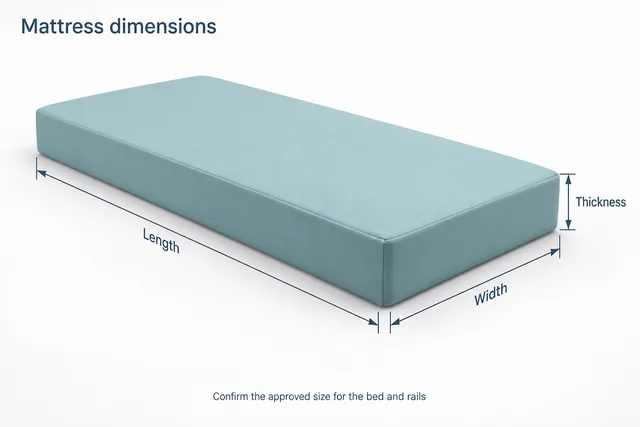
Check the installed length, width and height, including any underlying mattress. The FDA's bed-system compatibility guidance identifies mattress characteristics and accessories as part of entrapment assessment. A mattress that fits on the deck is not automatically an approved combination with the rails.
Use Hospital Bed Mattress Sizes and Compatibility: Getting the Fit Right to prepare the bed measurements, and read Bariatric Hospital Mattresses: Width, Weight Capacity and Pressure Care when a project includes heavier or larger patients. Where the clinical team requests low-air-loss performance, refer to Alternating Pressure vs Low-Air-Loss Mattresses: What Buyers Should Compare: an alternating-pressure air mattress is not automatically a low-air-loss system.
Cleaning and controlling replacement parts
Ask the cleaning team to review the proposed instructions before accepting a sample. List the surfaces they will need to access, the permitted agents and the parts that must remain dry. Agree how equipment will be identified as awaiting cleaning, under inspection or ready to return to the ward.
An inspection record should identify the mattress and pump separately. If a pump moves between mattresses, staff need a reliable way to check that the pairing remains approved. For multi-site distributors, include illustrated part references in service documentation and agree which faults require a replacement unit rather than local repair.
Do not promise that a cover is compatible with all disinfectants. Request written compatibility for the actual products used by the customer. Record any restrictions in the handover information so that cleaning staff receive the same requirements agreed by procurement.
Keling enquiries and export packing
For Keling, reference KL-P003 or KL-P004 and state the number of complete systems required. Ask for confirmation of installed height, patient range, operating modes, alarm functions, cover specification and approved bed combinations. Keep any unanswered feature as an open requirement in the quotation comparison.
Packing details can materially change a landed-cost comparison. Request carton dimensions, gross weight, units per carton, pump protection and the manufacturer's permitted packing method. Do not assume every mattress may be compressed or stored folded for the same period. Confirm the packing condition and unpacking instructions for the selected model.
Ask for spare-component options separately and agree the documentation included with each shipment. This produces a clearer offer than asking only for a unit price and adding support requirements after the order is placed.
Frequently asked questions
Is a tubular mattress always better than a bubble-cell mattress?
No. Geometry alone does not establish suitability or comparative clinical performance. Compare documented capabilities against the clinical team's requirements.
Does “APP mattress” identify a complete specification?
No. The abbreviation is sometimes used for alternating-pressure equipment, but the tender should spell out the intended function and identify the complete system.
Can an air mattress be placed directly on the bed deck?
Only when the manufacturer's instructions approve that installation. An overlay may require a suitable underlying mattress.
Can buyers order the mattress without a pump?
Ask the supplier what configurations are available. If existing pumps will be reused, provide their exact references and obtain compatibility confirmation before ordering mattresses separately.
Next step
Planning a medical air-mattress purchase? Request a Keling quote with the model, quantity, destination and bed information so the complete system and export packing can be confirmed.
About the author
This article was written by the Keling Medical export team, drawing on the engineering data for the 33 bed, cot, mattress and accessory models Keling manufactures at its Yangzhou plant. Keling Medical has been making medical appliances since 1996 and holds CE, ISO 9001 and ISO 13485 certification. More about Keling.