Hospice bed and nursing home bed guide: specifying beds for long-term and palliative care
What long-term and palliative care residents need from a bed, how a hospice bed differs from an acute hospital bed, and how to buy beds for a whole care home or hospice.
Short answer
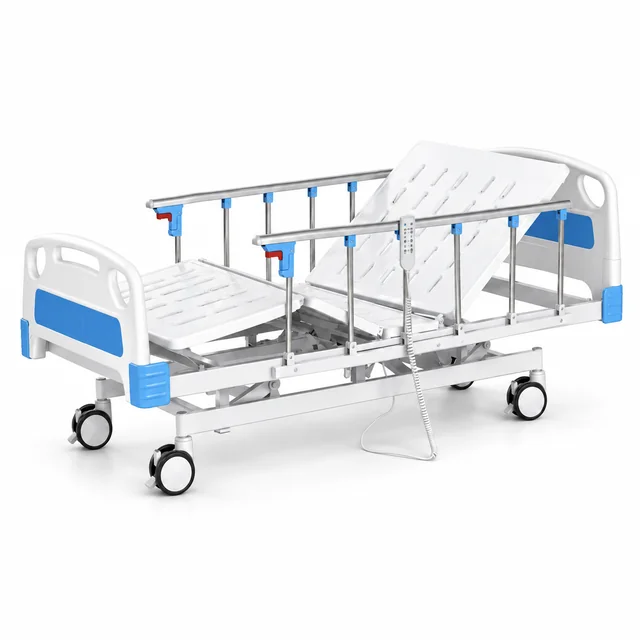
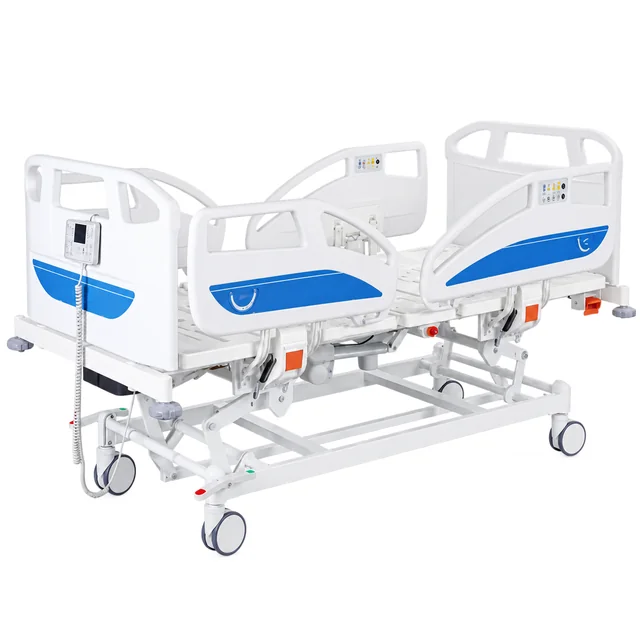
A hospice bed is a medical bed configured for palliative and long-term care: electric backrest, knee-rest and height (for example 450–760 mm), a quiet and smooth actuator system, a simple handset with nurse lock, rails tested with the mattress, a pressure-redistributing foam or air mattress and homely head and foot boards. It uses the same 900 mm-wide platform as a hospital bed.
A hospice bed or nursing home bed is often where a person spends most of their remaining months or years — sleeping, eating, receiving visitors and being cared for. The specification therefore weighs comfort, quiet, dignity and durability more heavily than an acute ward does, while keeping every safety feature that lets staff care for a highly dependent person.
This guide is for care-home operators, hospice estates and procurement teams, and the distributors who supply them. It explains how a hospice hospital bed differs from an acute bed, what long-term care residents need, how to set up a hospice room and how to buy beds for a whole facility.
What is a hospice bed?
A hospice bed is a medical bed used for palliative and end-of-life care, in a hospice, a care home or the patient's own home. It is not a separate class of device: it is a hospital or homecare bed chosen and configured for comfort, easy repositioning, quiet operation and a homely appearance.
The medical bed standard IEC 60601-2-52 recognises the setting. Of its application environments, environment 3 is long-term care in a medical area — including nursing homes, rehabilitation and geriatric facilities — and environment 4 is care in a domestic area, where many people receive hospice care. The 2026 successor, IEC 80601-2-52, keeps this approach. Check that the instructions for use of any bed you shortlist cover the environments where it will be used.
Hospice bed vs hospital bed: what changes?
The mechanics are the same; the priorities are different. An acute bed is optimised for rapid turnover, clinical access and emergencies; a long-term care bed for many months of continuous use by one person.
| Priority | Acute hospital ward bed | Hospice / nursing home bed |
|---|---|---|
| Length of use per occupant | Days | Months to years |
| Most used functions | Backrest, height, tilt for procedures | Backrest, knee-rest and height for comfort, care and transfers |
| Height | Working height for clinical tasks | Low position for safe transfers and falls; high for care |
| Noise | Secondary | Important — beds move at night beside a sleeping person |
| Controls | Staff-operated | Simple handset the resident can use, with lockout for confusion |
| Mattress | Standard foam; specialist on request | Pressure-redistributing foam or air as routine for high-risk residents |
| Appearance | Clinical | Homely head and foot boards, rails that look less institutional |
| Durability | High cycle count | High cycle count plus years of daily use and cleaning |
Emergency features still matter. Residents in long-term care can deteriorate suddenly, so a CPR release and reverse Trendelenburg remain useful on beds for higher-dependency rooms.
What do long-term care residents need from a bed?
Long-term care beds need four things above all: height adjustment with a low position, electric positioning, quiet and simple controls, and the durability to run for years.
Low height and transfers
A low position lets residents sit on the edge with feet on the floor and reduces the height of a fall; a high position protects staff backs during personal care. Keling's electric beds range from 450 mm to 760 mm. For residents at very high fall risk, an ultra-low bed may be more appropriate — see low hospital beds and fall-risk planning.
Electric positioning
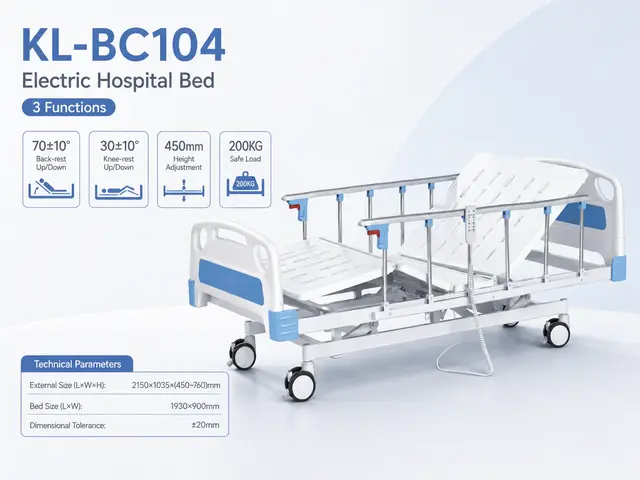
Electric backrest and knee-rest let residents sit up to eat, breathe more easily and see visitors, and let staff reposition people without manual effort. A three-function bed such as the KL-BC104 covers most care-home needs; five-function beds suit higher-dependency and hospice rooms.
Quiet, smooth movement
Beds are adjusted at night next to sleeping residents and in shared rooms. Ask suppliers for the actuator system's noise level and listen to a sample in a quiet room. Smooth movement matters too: the KL-BC102 has a dual return mechanism that damps the backrest's return to flat, reducing disturbance and noise.
Durability
A care-home bed may be adjusted many times a day for years. Ask for test evidence of cyclic fatigue and safe working load, and confirm spare actuators, handsets and castors will be available for the bed's working life. Our guide to hospital bed repair and spare parts lists what to order with the beds.
Hospice hospital bed dimensions and size
A standard hospice hospital bed has a single platform about 900 mm wide and 1900–1930 mm long; overall it occupies roughly 2.0–2.25 m by 1.0 m. That is the same footprint as an acute ward bed, so room planning, not the bed, usually sets the limits.
| Keling model | Type | External size (L × W) | Platform | Height | Safe working load |
|---|---|---|---|---|---|
| KL-BC104 / KL-BC104-A | 3-function electric | 2150 × 1035 mm | 1930 × 900 mm | 450–760 mm | 200 kg |
| KL-BC102 | 5-function electric, dual return, nurse lock | 2240 × 1030 mm | 1930 × 900 mm | 450–760 mm | 240 kg |
| KL-BC103 / KL-BC103-A | 5-function electric, compact | 2150 × 960 mm | 1925 × 900 mm | 450–760 mm | 240 kg |
| KL-BC108 | 3-function manual | 2150 × 1035 mm | 1930 × 900 mm | 450–760 mm | 200 kg |
Heavier residents need a bed whose safe working load covers resident, mattress and accessories together; a 900 mm platform also limits how much a larger person can turn. Check both before assuming a standard bed will do.
Pressure-care mattresses for hospice and nursing home beds
People receiving palliative and long-term care often spend most of the day in bed and may move very little, so the mattress is as important as the bed. The international pressure injury guideline from EPUAP, NPIAP and PPPIA covers how support surfaces are selected as part of a prevention plan.
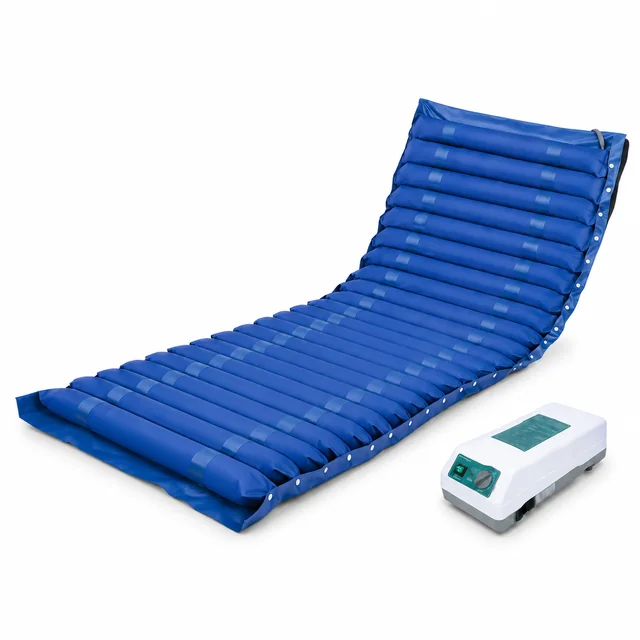
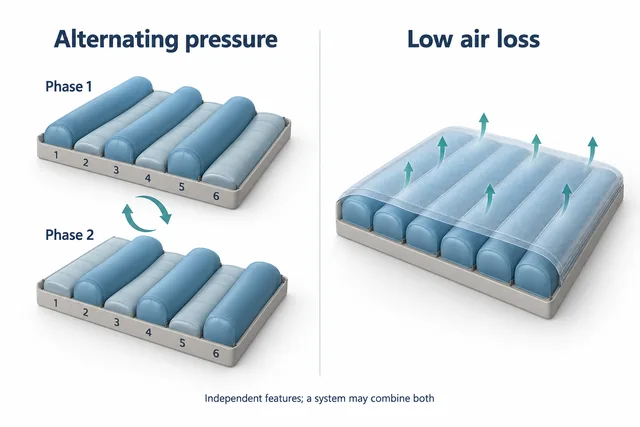
In practice, facilities stock a mix: segmented foam mattresses such as the KL-P002 for lower-risk residents, and alternating-pressure air mattresses such as the tubular KL-P004 or bubble-cell KL-P003 for those at higher risk. Which surface each resident needs, and how often they are repositioned, are clinical decisions that follow the facility's protocols and the treating clinician. For background, see how to prevent bed sores with support surfaces.
Remember that an air mattress is usually thicker than foam, which reduces the effective height of side rails. Re-check rail height and gaps whenever the mattress type changes.
Making the bed feel less clinical: headboards and rails
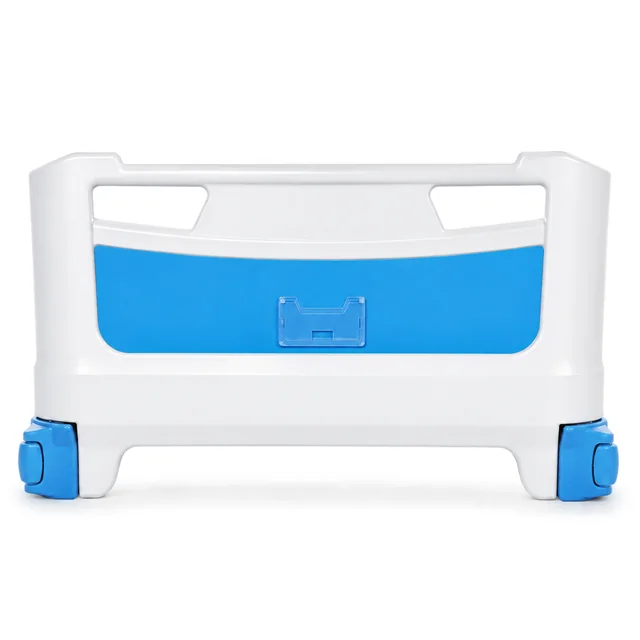
A bed that looks institutional makes a room feel like a ward. Head and foot boards and side rails are the parts residents and families see most, and they can be chosen for appearance as well as function.
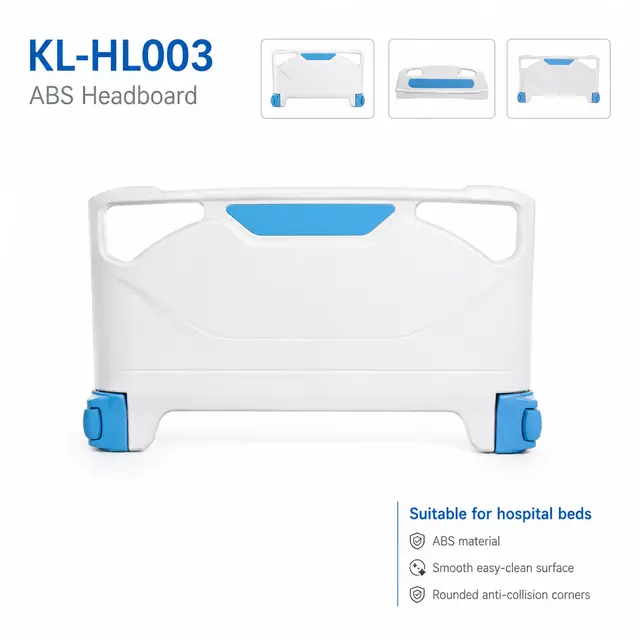
- Headboards. Keling's KL-HL003 and KL-HL004 ABS headboards are wipe-clean and fit all kinds of hospital bed; the KL-HL004 has a low, panoramic profile with a central panel. Both carry anti-collision wheels so the wall and panel are not damaged when the bed is moved.
- Customised designs. The KL-BC129 and KL-BC130 flat beds can be ordered with customised headboards, and under Keling's OEM programme projects can specify headboard designs and colours across a facility.
- Rails. Solid ABS panel rails (KL-HL002) look softer than metal bar rails (KL-HL001); either must be checked for gaps with the mattress in use.
Whether a resident uses rails at all should follow an individual risk assessment; UK MHRA guidance highlights higher entrapment risk for people who are confused or have dementia.
How to set up a hospice room
A hospice room is set up around the bed: it needs access on both sides, space for family, and services within reach. Planning points:
- Position the bed so staff can reach both sides and the head end, and the resident can see the window and door.
- Provide a socket for the bed and one for the mattress pump, without cables across walkways.
- Fit nurse call, lighting controls and power at the bedhead; in facilities, a bed head unit such as the KL-CA012 consolidates these.
- Leave space for a recliner or chair for visitors overnight, a bedside cabinet and an overbed table (Keling does not make these; specify them separately).
- Store spare linen, continence products and the mattress pump's instructions close by.
Our illustrative palliative care suite project shows how electric beds, visitor space and serviceable furniture fit together. For home hospice set-up, see hospital beds for home use.
Does hospice provide hospital beds?
In the US, yes — under the Medicare hospice benefit, medical appliances including covered durable medical equipment are part of hospice services, and equipment is provided by the hospice for use in the patient's home while they are under hospice care (42 CFR 418.202). In practice, the hospice arranges delivery of the bed, mattress and other equipment through its suppliers.
Elsewhere, arrangements vary by country and provider: hospices may own a fleet of beds, borrow from community equipment services or rent. For hospices and the distributors that serve them, that means beds must be easy to clean, transport and re-issue between patients.
Procurement for care homes and hospices
Buying beds for a whole facility is a long-term decision: the beds will be in service for years, so standardisation and serviceability matter as much as unit price.
- Standardise. One or two models across the facility simplify training, spare parts and mattress stock.
- Phase replacement. Replace beds in planned batches rather than all at once, as in our illustrative long-term nursing care project.
- Buy the system. Order beds, mattresses, rails and headboards together so their compatibility is documented.
- Plan service. Agree preventive maintenance, a spare-parts kit and a response time before purchase.
- Check documents. CE marking or local registration, test reports to the medical bed standard covering environment 3 or 4, ISO 13485 certification and instructions for use in your language.
Specification line: Long-term care / hospice bed, 3- or 5-function electric; height 450–760 mm; backrest 0–70° and knee-rest 0–30°; quiet actuator system with damped backrest return; patient handset with nurse lock; lockable castors; ABS head and foot boards with wall-protection wheels; integrated side rails tested with the supplied foam and alternating-pressure mattresses; safe working load at least 200 kg; IEC 60601-2-52 / IEC 80601-2-52 for application environments 3 and 4; CE marked; ISO 13485.
Keling supplies beds, mattresses and accessories for care homes and hospices in mixed containers. Contact our export team with your room count and dependency mix for a project quotation.
Sources and further reading
- 42 CFR 418.202 — Covered services (eCFR) — Medicare hospice benefit, including durable medical equipment provided for home use.
- Let's get it clear: medical beds (THIIS) — application environments in the medical bed standard, including long-term care and domestic care.
- International Pressure Injury Guideline (EPUAP/NPIAP/PPPIA) — clinical practice guideline on prevention and treatment of pressure injuries.
- Bed rails: management and safe use (MHRA) — risk assessment, gap limits and mattress compatibility.
- A Guide to Bed Safety: Bed Rails in Hospitals, Nursing Homes and Home Health Care (US FDA) — risks of rails and alternatives in nursing homes.
- Managing medical devices (MHRA) — acquisition, maintenance and re-issue of reusable medical devices.
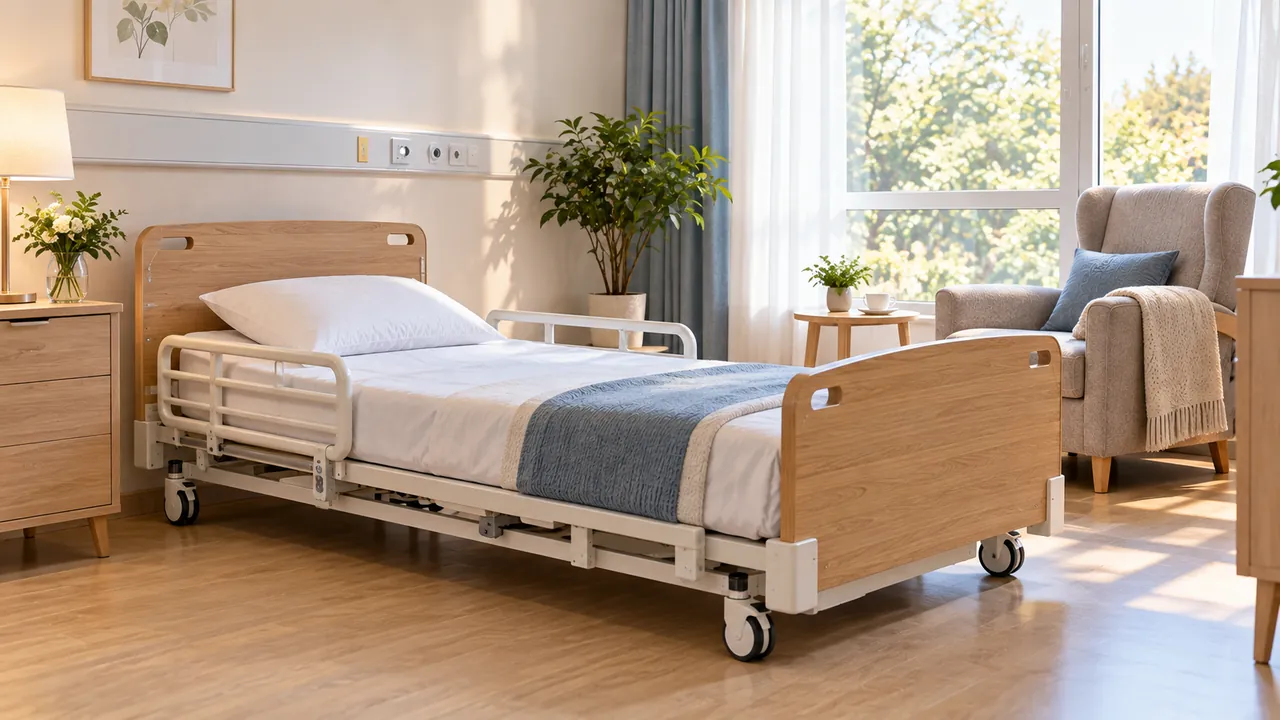
Illustration: AI-generated image for explanation only; it does not show a specific Keling model. See the linked product pages for actual product photos and specifications.
Frequently asked questions
What is the difference between a hospice bed and a hospital bed?
Mechanically they are the same kind of medical bed. A hospice bed is configured for months of use by one person: quiet, smooth electric positioning, a low position for safe transfers, a simple handset, a pressure-redistributing mattress and a homely appearance. An acute hospital bed prioritises rapid turnover, clinical access and procedures such as Trendelenburg tilt.
Does hospice provide hospital beds?
In the US, yes. Under the Medicare hospice benefit, covered durable medical equipment is part of hospice services and is provided by the hospice for use in the patient's home while they receive hospice care. The hospice arranges the bed, mattress and other equipment. In other countries, arrangements depend on the health system and the hospice provider.
What size is a hospice hospital bed?
Most hospice hospital beds have a single platform about 900 mm wide and 1900 to 1930 mm long, with an overall footprint of roughly 2.0 to 2.25 m by 1.0 m. Keling's KL-BC104, for example, measures 2150 × 1035 mm overall with a 1930 × 900 mm platform and a height range of 450 to 760 mm.
What type of bed is best for a nursing home?
A three-function electric bed with backrest, knee-rest and height adjustment suits most nursing home residents, with five-function beds for higher-dependency rooms. Look for a low position for transfers, quiet actuators, a handset with nurse lock, rails tested with the mattress, pressure-care mattress options and spare parts available for the bed's working life.
How do you set up a hospice room?
Place the bed so staff can reach both sides and the head end and the patient can see the window and door. Provide sockets for the bed and mattress pump, nurse call and lighting within reach, space for a visitor's chair, a bedside cabinet and an overbed table, and storage for linen and supplies nearby.
Which mattress should a hospice bed have?
It depends on the person's assessed pressure-injury risk. Segmented foam mattresses suit lower-risk residents who can still move, while alternating-pressure air mattresses are often used for people at higher risk who spend most of the day in bed. The choice is a clinical decision, and rail height and gaps must be rechecked whenever the mattress changes.
About the author
This article was written by the Keling Medical export team, drawing on the engineering data for the 33 bed, cot, mattress and accessory models Keling manufactures at its Yangzhou plant, and checked against the published standards and guidance listed in the sources. Keling Medical has been making medical appliances since 1996 and holds CE, ISO 9001 and ISO 13485 certification. More about Keling.