Pressure sore stages explained: what each stage means for the bed and mattress
The NPIAP staging system in plain words — Stage 1 to Stage 4, unstageable, deep tissue, device-related and mucosal injuries — and the support-surface question each one raises.

Short answer
Pressure sore stages describe how deep a pressure injury goes. Under the 2016 NPIAP system, Stage 1 is intact skin with non-blanchable redness, Stage 2 is partial-thickness skin loss, Stage 3 is full-thickness skin loss with fat visible, and Stage 4 exposes muscle, tendon or bone. Unstageable, deep tissue, medical-device-related and mucosal membrane injuries are recorded separately. Clinicians assess stages, and staging is never reversed.
Pressure sore stages are the shared language that nurses, wound specialists and equipment buyers use to describe how deep a pressure injury has gone. The current system, published by the US National Pressure Ulcer Advisory Panel (NPUAP, now the National Pressure Injury Advisory Panel, NPIAP) in 2016, has four numbered stages plus four further categories: unstageable, deep tissue pressure injury, medical-device-related and mucosal membrane pressure injury.
This guide explains each stage in plain words and then asks a question most clinical references skip: what does each stage mean for the bed and mattress the patient is lying on? It is written for procurement teams, distributors and nurses who influence equipment decisions. It is not a wound-care guide — clinical decisions always follow the facility's protocols and the treating clinician.
What is a pressure injury (bed sore)?
A pressure injury is localised damage to the skin and underlying soft tissue, usually over a bony prominence or related to a medical or other device, caused by intense or prolonged pressure, or pressure combined with shear. That is the NPIAP definition, and it is the one most hospital policies now quote.
The same condition goes by several names, which matters when you are reading tenders, guidelines and product literature from different countries:
- Pressure injury — the NPIAP term since 2016, chosen because Stage 1 and deep tissue injuries can occur with the skin still intact.
- Pressure ulcer — used by NICE, the NHS, the ICD-10 coding system and the joint EPUAP/NPIAP/PPPIA International Guideline (as "pressure ulcer/injury").
- Decubitus ulcer — the older medical term, from the Latin for "lying down". "Bedsore decubitus ulcer" and "decubitus ulcer bed" searches mean the same thing.
- Bed sore or pressure sore — the everyday terms. "Sore" as a medical term simply means a painful lesion; it carries no staging information by itself.
European services often say category rather than stage; the depth descriptions are essentially the same. NPIAP moved from Roman numerals (Stage IV) to Arabic numerals (Stage 4) in 2016, so you will still see both forms on older documents.
Pressure sore stages at a glance: how does staging work?
Staging of pressure injury means classifying the wound by the deepest layer of tissue that is visibly damaged. It is a description of depth at the time of assessment, not a measure of healing, and it is carried out by a trained clinician.
Three rules explain most of the confusion around the decubitus ulcer scale:
- Staging is not reversed. A Stage 4 wound that is filling in is documented as a healing Stage 4, not as Stage 3 or Stage 2.
- Stages do not have to happen in order. A deep tissue injury can appear as discoloured intact skin and then open into a full-thickness wound within days. Stage 1 is not always a warning that comes first.
- If you cannot see the base, you cannot stage it. A wound covered by slough or eschar is recorded as unstageable until the base is visible.
The right-hand column of this summary is the equipment view; the descriptions follow NPIAP wording.
| Stage / category | What is seen (NPIAP description) | Depth | Typical support-surface question |
|---|---|---|---|
| Stage 1 | Intact skin with non-blanchable redness; may look different on darkly pigmented skin | Skin intact | Is the current mattress adequate for the patient's risk level, and is the area being offloaded? |
| Stage 2 | Partial-thickness skin loss with exposed dermis; pink or red moist wound bed, or an intact or ruptured serum-filled blister | Epidermis and dermis | Are moisture and shear being controlled, and is the cover intact? |
| Stage 3 | Full-thickness skin loss; fat visible; no exposed fascia, muscle, tendon, ligament, cartilage or bone | Into subcutaneous fat | Should the patient move to a powered (active) surface? |
| Stage 4 | Full-thickness skin and tissue loss with exposed or palpable fascia, muscle, tendon, ligament, cartilage or bone | To muscle or bone | Can the surface keep load off the wound and protect every other turning surface? |
| Unstageable | Full-thickness loss obscured by slough or eschar | Unknown (full thickness) | Choose the surface as for a full-thickness wound |
| Deep tissue pressure injury | Persistent non-blanchable deep red, maroon or purple discoloration, intact or non-intact skin | Deep tissue at bone-muscle interface | Offload the area; review surface and positioning |
| Medical-device-related | Injury that conforms to the shape of a device; staged with the same system | Any | Are tubes, hoses and accessories kept off the skin? |
| Mucosal membrane | Injury on a mucous membrane where a device was in use; cannot be staged | Not staged | Device management rather than mattress choice |
Stage 1 pressure injury: intact skin, non-blanchable redness
A Stage 1 pressure injury is intact skin with a localised area of redness that does not blanch (fade) when pressed.
What do bed sores look like at this point? The NHS describes discoloured patches that do not change colour when pressed, and skin that may feel warm, spongy or hard, sometimes with pain or itching. On white skin the patch is usually red; on black or brown skin it is more often purple or blue, which is one reason Stage 1 bedsores are under-recognised in darker skin. NPIAP notes that purple or maroon discoloration is not Stage 1 — it may indicate a deep tissue injury.
Stage 1 vs Stage 2 pressure injury: the dividing line is skin integrity. Stage 1 is intact; Stage 2 has lost the top layer and exposed the dermis.
Bed and mattress implications. A Stage 1 finding is a clear signal that the current combination of surface and repositioning is not enough for that patient. Typical questions: is the patient on a pressure-redistributing foam mattress at all, is the backrest spending long periods above 30°, and does the bed have a knee-rest to stop sliding? Our guide to preventing bed sores with repositioning and support surfaces covers these steps in detail.
Stage 2 pressure ulcer: partial-thickness skin loss
A Stage 2 pressure ulcer is partial-thickness loss of skin with exposed dermis. The wound bed is viable, pink or red and moist, and it can also present as an intact or ruptured serum-filled blister. Fat is not visible and there is no slough or eschar.
Stage 2 is often confused with other skin damage. NPIAP specifically excludes moisture-associated skin damage (such as incontinence-associated dermatitis), skin tears, burns and adhesive-related injury from this stage — they look similar but have different causes and are recorded differently.
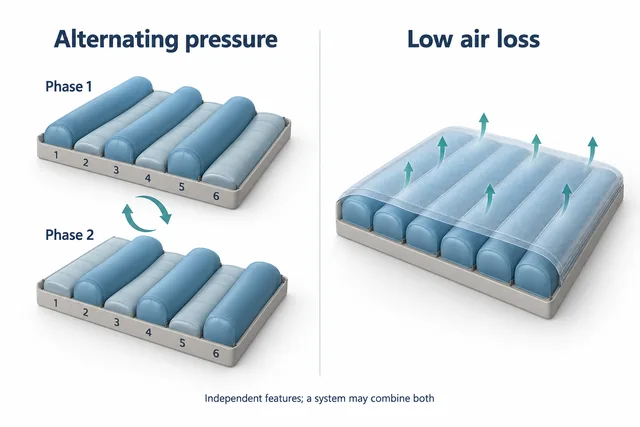
Bed and mattress implications. Stage 2 pressure ulcer treatments are a clinical decision, but the surface underneath affects two contributing factors: moisture and shear. Buyers should check that mattress covers are intact, liquid-resistant and vapour-permeable, and that the facility holds enough spare covers to swap a damaged one immediately. Where incontinence is a factor, microclimate (heat and humidity at the skin) becomes part of the surface discussion — see alternating pressure vs low-air-loss mattresses for how the two technologies differ.
Stage 3 pressure sores: full-thickness skin loss
A Stage 3 pressure sore is full-thickness skin loss in which fat (adipose tissue) is visible in the ulcer. Granulation tissue and rolled wound edges are often present, and undermining or tunnelling may occur, but fascia, muscle, tendon, ligament, cartilage and bone are not exposed.
Depth varies by location: over the ear or nose, where there is little fat, a Stage 3 wound can be shallow; over the buttocks it can be deep.
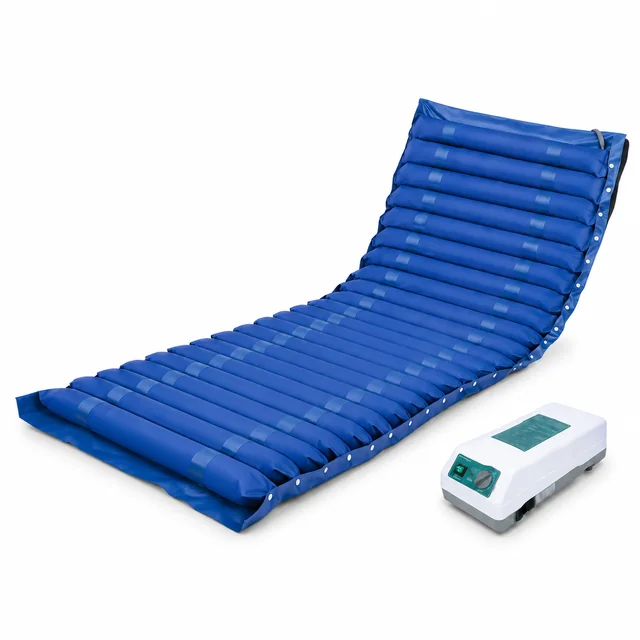
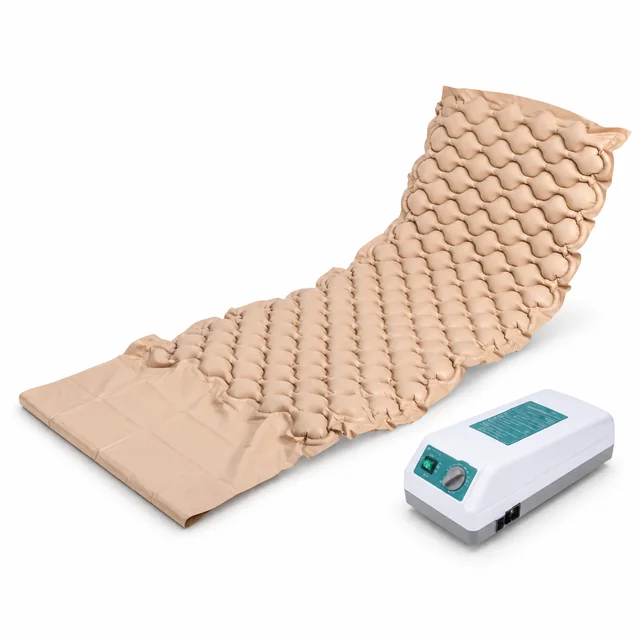
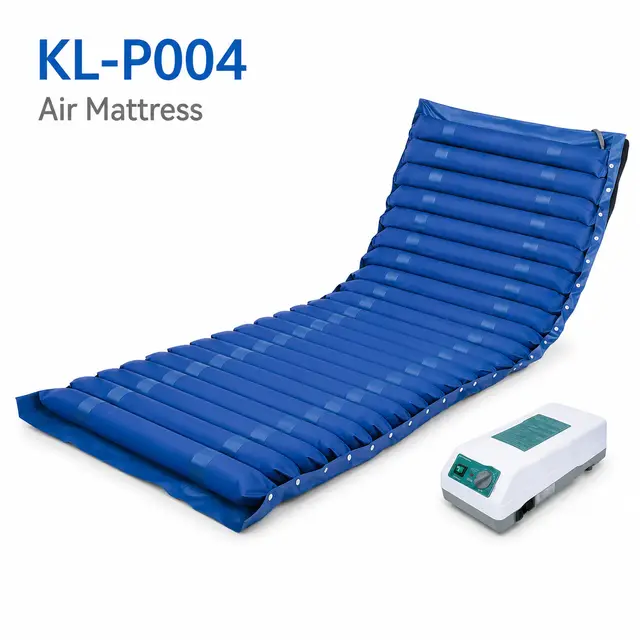
Bed and mattress implications. Stage 3 bedsores are where many facilities' protocols move the patient onto a powered surface. NICE guidance for adults with a pressure ulcer is to use a high-specification foam mattress and to consider a dynamic support surface; the International Guideline (EPUAP/NPIAP/PPPIA) lists alternating pressure air as an option where risk is moderate or high or where a pressure injury has developed on a foam surface. From a procurement view, that means the ward needs access to air mattresses such as the tubular-cell KL-P004 alternating pressure air mattress or the bubble-cell KL-P003 air mattress at short notice, not after a requisition cycle.
Stage 4 bed sores: exposed muscle, tendon or bone
A Stage 4 pressure injury is full-thickness skin and tissue loss with exposed or directly palpable fascia, muscle, tendon, ligament, cartilage or bone in the ulcer. Slough or eschar may be visible, rolled edges, undermining and tunnelling often occur, and depth varies by anatomical location.
A stage 4 bed wound is the most serious stage, and it occurs most often over the sacrum and coccyx. Can a stage 4 bedsore be healed? Many can, but healing is slow, is not achievable for every patient with serious illness, and the healed area remains vulnerable — one reason staging is never reversed. Prognosis is for the treating team to discuss.
Bed and mattress implications. With a Stage 4 wound the support surface has to protect the wound and every other turning surface at the same time, because the patient should not lie on the injured area. Practical equipment checks include whether the air mattress can be set to the patient's weight without bottoming out (a hand check under the lowest bony point), whether the pump has a low-pressure alarm, and whether the bed's knee-rest and height functions make frequent repositioning practical for staff. Our alternating pressure mattress pump settings guide explains those controls.
Unstageable, deep tissue and device-related pressure injuries
An unstageable pressure injury is full-thickness skin and tissue loss in which the extent of damage cannot be confirmed because the base is obscured by slough (yellow, tan, grey, green or brown) or eschar (tan, brown or black). Once the base can be seen, it will be classed as Stage 3 or Stage 4.
A deep tissue pressure injury (DTPI) is intact or non-intact skin with a localised area of persistent non-blanchable deep red, maroon or purple discoloration, or epidermal separation revealing a dark wound bed or blood-filled blister. NPIAP explains that it results from intense or prolonged pressure and shear at the bone-muscle interface.
Bed and mattress implications. Because both categories may conceal full-thickness damage, equipment decisions are usually made as if the wound were full thickness. A DTPI on a heel, for example, points to heel offloading rather than simply a softer mattress.
Medical-device-related and mucosal membrane pressure injuries
A medical-device-related pressure injury results from a device used for diagnosis or treatment, and the injury usually takes the shape of the device. It is staged with the same Stage 1–4 system. A mucosal membrane pressure injury occurs on a mucous membrane (inside the nose, mouth or airway, for example) where a device was in use; mucosal injuries cannot be staged because the tissue is different.
Common culprits are oxygen tubing, masks, catheters, splints and drains. The bed environment adds its own: tubing or cables trapped under the patient, an air mattress hose routed beneath the body, or a hard object left on the mattress. A good bed set-up procedure routes pump hoses away from the patient and keeps the top surface clear.
Where do bed sores form? Sacrum, coccyx, heels and hips
Bed sores form where body weight concentrates over bone. StatPearls identifies the sacrum as the most common site, followed by the heels, the trochanters (hips) and the ischium, with the hip and buttock region accounting for about two-thirds of pressure ulcers.
- Sacrum pressure sores and sacral ulceration. The sacrum takes much of the load when the patient lies on their back with the backrest raised, and sliding down the bed adds shear here.
- Sacral wound vs coccyx wound. The sacrum is the broad triangular bone at the base of the spine; the coccyx (tailbone) is the small bone below it. Coccyx injuries are more associated with slumped sitting, sacral ones with lying semi-recumbent — but both depend on posture.
- Heels pressure sores. The heel has little soft tissue and a small contact area, so even a good mattress cannot fully protect it. Heels need to be offloaded so they are not resting on the surface.
- Hips and ischium. Side-lying at 90° loads the trochanter; sitting loads the ischial tuberosities. Patients who sit out need wheelchair cushions for pressure relief as well as a bed surface — a separate seating specification that Keling does not supply.
How long does it take to get bed sores?
Bed sores usually develop gradually, but the NHS notes they can sometimes appear within a few hours. The time depends on how much pressure is applied, for how long, and on the patient's tissue tolerance — age, nutrition, circulation, sensation and moisture all play a part.
That is why guidelines set repositioning intervals by risk rather than giving one number: NICE advises encouraging adults at risk to change position at least every 6 hours, and those at high risk at least every 4 hours, with individual schedules set by the care team.
What each stage means for bed and mattress procurement
Decubitus ulcer treatments are clinical and outside the scope of this article. The equipment role is to make repositioning practical and provide an appropriate surface as risk rises. For a ward specification that means:
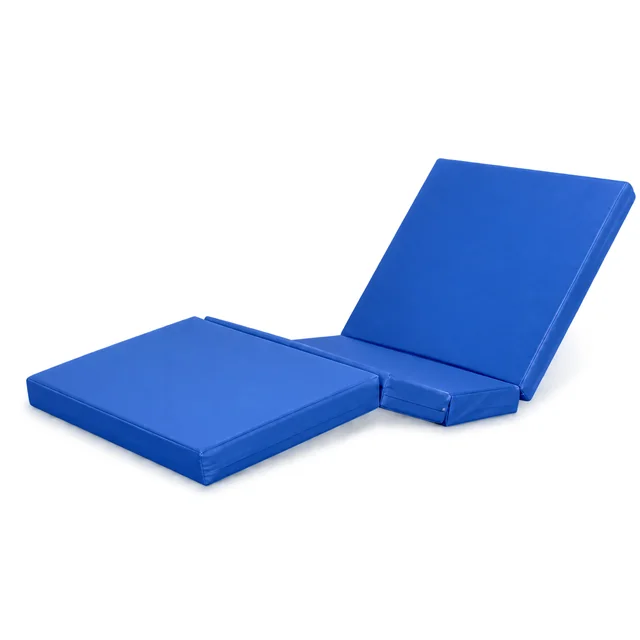
- A baseline pressure-redistributing foam mattress for every bed, in a thickness that suits the side rails — for example the three-section KL-P002 segmented foam mattress on beds with a knee-rest.
- A pool of powered air mattresses sized to the ward's typical number of high-risk and Stage 3/4 patients, with spare pumps and covers.
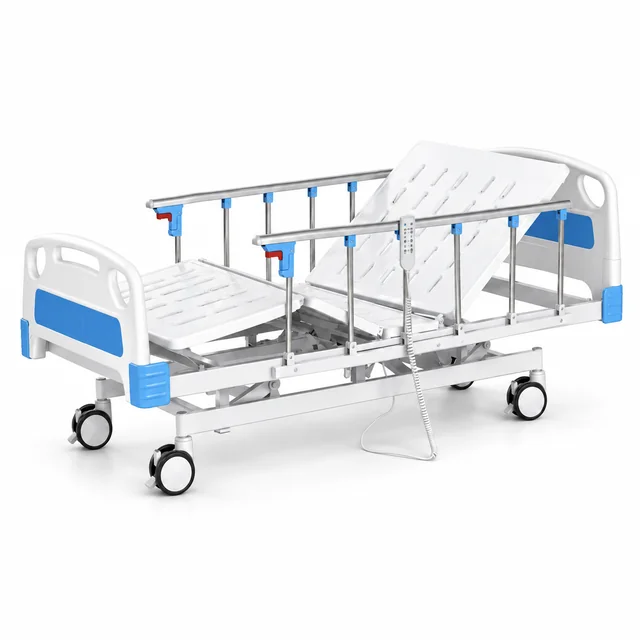
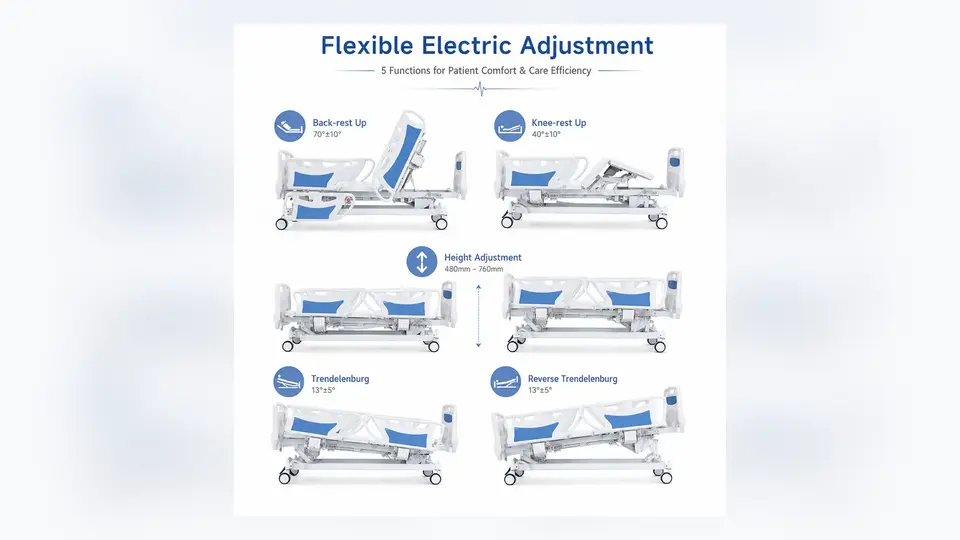
- Beds with a knee-rest (two-function or above), such as the three-function KL-BC104 electric bed, so the backrest can be raised without the patient sliding; see hospital bed functions explained.
- A cover inspection and replacement routine, because a damaged cover undermines both infection control and moisture management.
Specification line: Hospital bed mattress, 1900 × 900 mm, pressure-redistributing foam, three-section segmented for articulating beds, liquid-resistant cover; plus alternating pressure air mattress, 1900 × 900 mm, with electric pump and digital controller, for patients assessed as high risk or with Stage 3, Stage 4, unstageable or deep tissue pressure injuries per facility protocol.
For the wider buying picture, read our pressure relief hospital mattresses buyer's guide. To specify mattresses and beds for a ward or tender, contact Keling's export team or request a quotation.
Sources and further reading
- NPIAP Pressure Injury Stages (2016 staging poster) — official stage definitions and illustrations.
- NHS: Pressure ulcers (pressure sores) — symptoms, sites, appearance on different skin tones and risk factors.
- StatPearls: Wound Pressure Injury Management — common anatomical sites and risk factors.
- NICE CG179: Pressure ulcers – prevention and management — repositioning intervals and mattress recommendations.
- International Guideline (EPUAP/NPIAP/PPPIA): Full body support surfaces — reactive vs active surfaces and selection.
Illustration: AI-generated image for explanation only; it does not show a specific Keling model. See the linked product pages for actual product photos and specifications.
Frequently asked questions
What are the 4 stages of bed sores?
Under the NPIAP system, Stage 1 is intact skin with redness that does not blanch when pressed; Stage 2 is partial-thickness skin loss or a serum-filled blister; Stage 3 is full-thickness skin loss with fat visible; Stage 4 is full-thickness loss exposing fascia, muscle, tendon, ligament, cartilage or bone. Unstageable and deep tissue pressure injuries are recorded as separate categories.
What is the difference between a stage 1 and stage 2 pressure injury?
The difference is whether the skin is broken. A Stage 1 pressure injury is intact skin with non-blanchable redness or discoloration. A Stage 2 injury has lost the top layer of skin and exposed the dermis, appearing as a shallow pink or red moist wound or as an intact or ruptured serum-filled blister.
Can a stage 4 bedsore be healed?
Many Stage 4 pressure injuries can heal, but healing is slow, depends on the person's overall health, and is not achievable for everyone. A healing wound is still recorded as a healing Stage 4, because staging is never reversed. Prognosis and care plans are for the treating clinician and the facility's protocols to determine.
How long does it take to get bed sores?
Bed sores usually develop gradually, but the NHS notes they can sometimes form within a few hours in vulnerable people. The time depends on the intensity and duration of pressure and shear and on the person's tissue tolerance, which is why repositioning schedules are set individually according to assessed risk.
What is the difference between a sacral wound and a coccyx wound?
The sacrum is the broad triangular bone at the base of the spine; the coccyx, or tailbone, sits just below it. Sacral pressure injuries are typically linked to lying on the back with the backrest raised, while coccyx injuries are more often associated with slumped sitting. Both are affected by shear when a patient slides down the bed or chair.
Is an air mattress good for decubitus ulcers?
Powered air mattresses are one of the support surfaces guidelines mention for people at high risk or with existing pressure injuries. NICE advises considering a dynamic surface for adults with a pressure ulcer, and the International Guideline lists alternating pressure air as an option. The choice for an individual patient follows the facility's protocol and clinical assessment.
About the author
This article was written by the Keling Medical export team, drawing on the engineering data for the 33 bed, cot, mattress and accessory models Keling manufactures at its Yangzhou plant, and checked against the published standards and guidance listed in the sources. Keling Medical has been making medical appliances since 1996 and holds CE, ISO 9001 and ISO 13485 certification. More about Keling.