Gynaecological Examination Beds & Chairs: Specs for Clinics
Choose a gynaecological examination bed or chair by transfer access, positioning, leg supports, cleaning and service needs. A practical clinic buying guide.
A gynaecological examination table should help patients transfer, support the clinician's working position and fit the clinic's turnover process. A wider adjustment range can be useful, but it should follow a defined need. An outpatient examination room, a procedure room and an obstetric delivery suite may need different equipment even when suppliers describe their products with similar names.
For purchasing teams, the first task is to define the examination workflow and patient population. The next is to compare access, positioning and cleaning on the complete offered configuration. This approach makes it easier to evaluate a medical exam table without paying for features the clinic will rarely use or overlooking a feature it needs every day.
Examination bed or chair: start with access
An examination bed generally provides a table-like support surface. An examination chair may offer a seated entry position before reclining. Product labels are inconsistent, so confirm the actual entry arrangement and the movements shown in the instructions for use.
Fixed-height equipment can be practical in some settings, but a step does not solve every transfer problem. Consider people who use wheelchairs, walking aids or assistance, alongside patients who find high steps difficult. An adjustable platform should be checked at its lowest usable transfer position, with the supplied mattress or upholstery in place.
Accessibility involves more than height. The U.S. Access Board's medical diagnostic equipment criteria address transfer surfaces, supports and space for lift access. These provide useful design questions; the applicable legal requirements must be checked for the destination and facility. U.S. Access Board technical requirements.
Request a plan drawing showing the base, pedals and any side supports. Compare it with the wheelchair or lift normally used by the clinic. If the equipment cannot be approached as intended, a suitable height range alone will not resolve the problem.
Turn the examination sequence into a specification
Before requesting quotations, describe how a patient enters the room, transfers, changes position, completes the examination and leaves. Include preparation and cleaning between patients. This creates a short list of requirements that suppliers can demonstrate.
| Clinical or operational need | Specification to request | What to check on the sample |
|---|---|---|
| Assisted transfer | Entry position, surface height and transfer supports | Access with the clinic's mobility equipment |
| Seated discussion and examination | Backrest adjustment and usable surface dimensions | Comfortable support without obstructing the clinician |
| Gynaecological positioning | Approved leg or knee supports and adjustment ranges | Secure attachment and accessible release mechanisms |
| Fluid management | Compatible removable tray, where required | Removal path and access for cleaning |
| Repeated daily adjustment | Drive type, controls and duty limits | Clear operation by intended users |
| Room turnover | Upholstery specification and cleaning instructions | Access to seams, joints and underside surfaces |
Give mandatory requirements their own column in the tender. Keep preferences, such as colour or an accessory storage shelf, separate so they do not obscure access and safety decisions.
Backrest, leg supports and tilt
Backrest adjustment should allow the working positions the clinic actually uses. Ask whether the backrest can move while occupied, how motion is controlled and whether the operator must support the section during release. The answer can differ between manual, gas-assisted and powered designs.
Leg and knee supports should be compared as accessories with their own adjustment, padding and loading requirements. Check left and right identification, attachment security, replacement pad availability and the space needed to move the clinician's stool. A broad tabletop does not compensate for supports that cannot be positioned for the intended patients.
Whole-platform Trendelenburg tilt is distinct from backrest recline. Specify it only where the clinical service requires it and can approve its use. An equipment feature should not be presented as routine treatment for fainting or as a requirement for every gynaecological examination. Request the approved range and operating limits if tilt is part of the order.
Upholstery, cleaning and paper-roll holders
Compare upholstery using the clinic's real cleaning products and contact times. Request the manufacturer's compatible disinfectant instructions, cover material and replacement process. Inspect areas where upholstery turns around an edge or meets a hinge. A smooth upper surface may still conceal joints that are difficult to reach.
A paper-roll holder can simplify the use of examination paper, but the paper is not a substitute for cleaning. Confirm roll dimensions, how the roll is loaded and whether the holder interferes with the wall or access at the head end. Include the cost and local availability of consumables in purchasing discussions.
Ask staff to remove and reinstall the tray and detachable pads on a demonstration unit. Record whether tools are required and where cleaned parts can dry. For a busy clinic, these details determine whether the recommended cleaning process can be followed consistently between appointments.
Electric, hydraulic or manual adjustment
Electric equipment can make frequent adjustments easier, especially where one clinician operates the table. Compare the location of hand and foot controls, unintended-operation protection, cable routing and the procedure for a power failure. If battery operation is offered, obtain its specific capability and maintenance requirements.
Hydraulic height adjustment may suit clinics seeking a foot-operated lifting mechanism. Verify smooth descent, pump access and local servicing capability. Other functions may still use separate manual mechanisms, so avoid assuming that every section has the same drive system.
Manual equipment can be appropriate when adjustment frequency is low and the access arrangements are suitable. Ask clinicians to operate the actual mechanism before approving a bulk order. A low purchase price has limited value if changing position is awkward in the intended room or requires assistance that is not routinely available.
Choosing for an OB/GYN clinic
For a new room, mark the equipment footprint on the floor and include the operator's stool, trolley, privacy screen and transfer route. Check the full movement envelope, including extended supports and pedals. A specification that fits only when the table is flat is incomplete.
For replacement equipment, document what currently delays appointments or complicates access. Perhaps staff need a lower transfer position, improved support storage or a simpler cleaning routine. Use those observations to rank the new specification. Avoid adding a long list of premium functions without a corresponding task.
When the room also supports births, review Obstetric Delivery & Birthing Beds: Positions, Supports and Features and the obstetric delivery-room application. Combining uses is a clinical and workflow decision; it should be demonstrated with the complete accessory package.
Reviewing Keling's available configuration
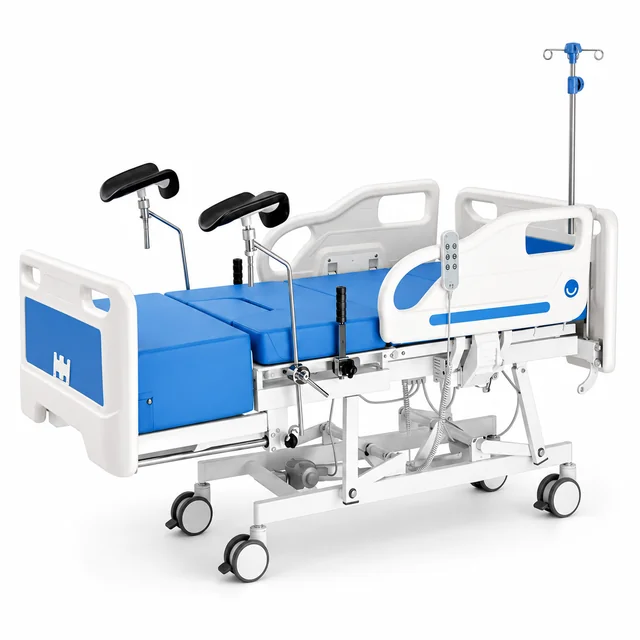
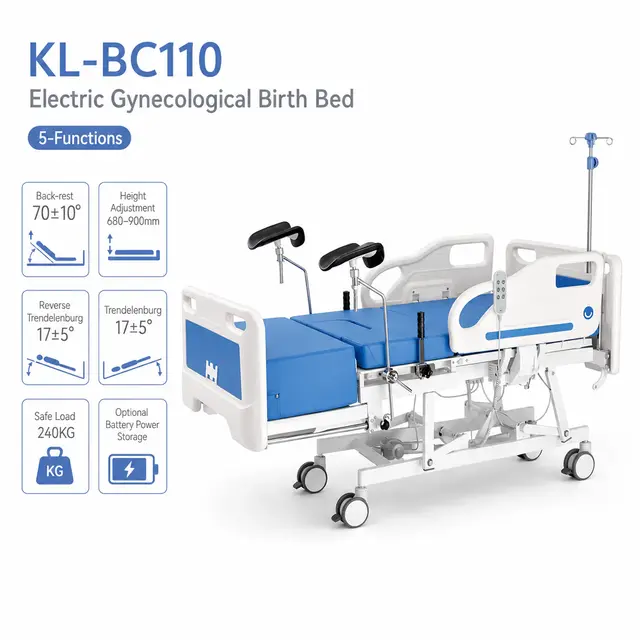
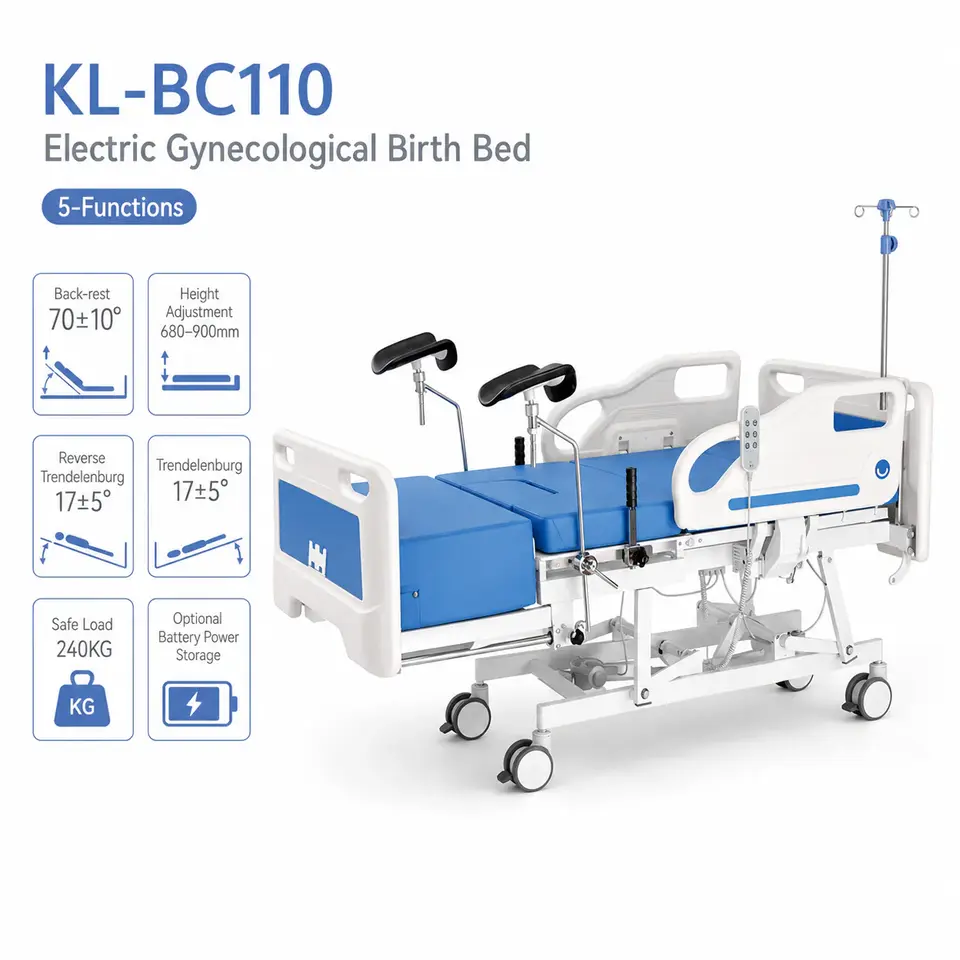
The KL-BC110 electric gynecological birth bed is the relevant Keling model for an obstetric or gynaecological equipment enquiry. Its published height range is 680–900 mm. That range should be assessed against the clinic's transfer requirements before it is selected for an outpatient room.
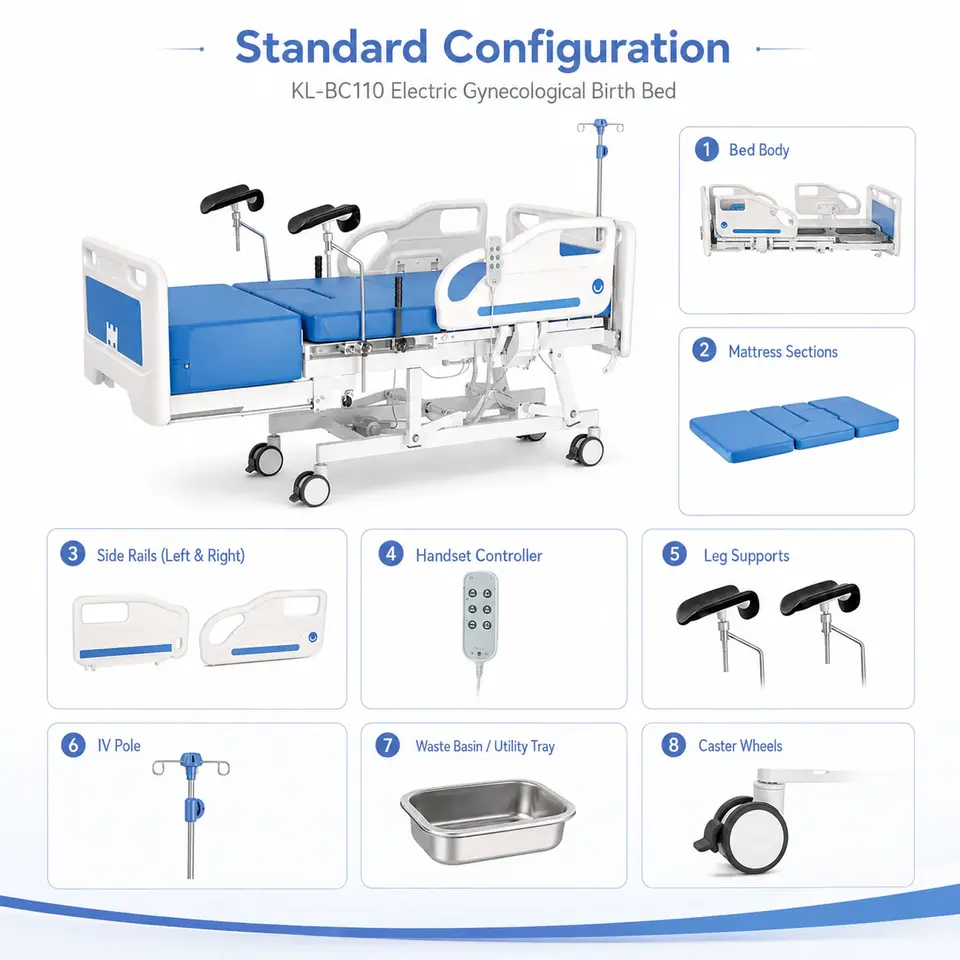
Request the signed datasheet, intended-use documentation and a list of supplied supports, mattress sections and optional accessories. If the project specifically needs a low-entry examination chair, state that requirement directly and ask whether an appropriate documented configuration is available. Do not assume that a dedicated chair is part of the catalogue because a birth bed can be used for some examinations.
Frequently asked questions
Is an electric examination table always the better choice?
No. It depends on transfer access, frequency of movement, available power and service arrangements. Compare the work performed during a normal clinic session and the complete cost of keeping the equipment operational.
Can a delivery bed serve as a gynaecological examination bed?
It may be suitable where the documented intended use, access height and accessories match the clinic's requirements. Check whether its footprint and entry arrangement are practical for outpatient care. A shared product name is insufficient evidence.
What should a quotation include?
Ask for the equipment model, upholstery, supports, tray, controls, electrical configuration, manuals, warranty terms and replacement-part references. List installation, training and spare items separately so competing offers can be compared consistently.
How should a clinic approve a sample?
Have clinical users, cleaning staff and maintenance personnel review transfer access, adjustment, cleaning and routine inspection. Record any deviations from the agreed specification and resolve them before the production order.
Next step
To discuss equipment for your clinic, send Keling a quotation request with the planned procedures, transfer needs, room dimensions and quantity. Request a documented configuration that your clinical team can assess before purchase.
About the author
This article was written by the Keling Medical export team, drawing on the engineering data for the 33 bed, cot, mattress and accessory models Keling manufactures at its Yangzhou plant. Keling Medical has been making medical appliances since 1996 and holds CE, ISO 9001 and ISO 13485 certification. More about Keling.