Paediatric Hospital Beds & Cots: Safety Heights, Enclosures and Sizing
Specify paediatric hospital beds by patient fit, side access, mattress compatibility and safety evidence. Compare practical cot options for children's wards.
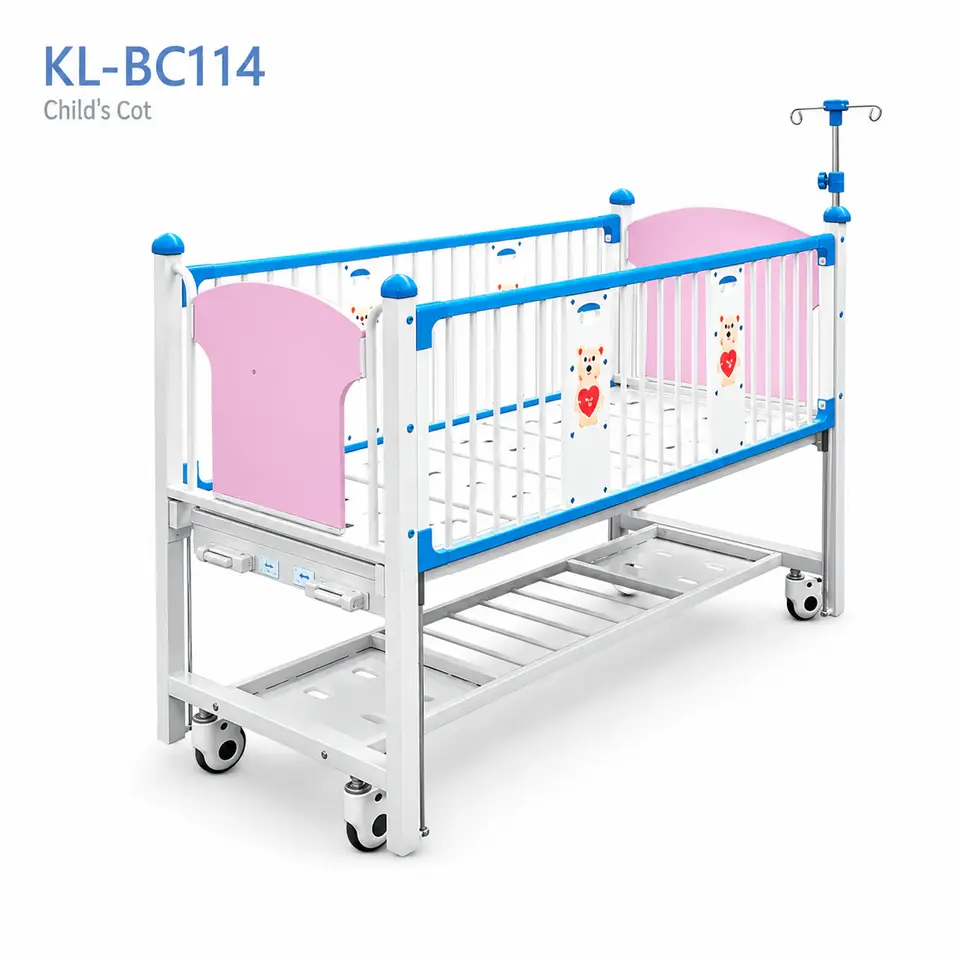
A paediatric hospital bed should be selected for the children who will use it and the care the ward provides. A smaller frame or colourful panel does not establish suitability. Patient size, mobility, behaviour, clinical needs and the complete mattress-and-side arrangement all affect the decision.
For procurement teams, the central task is to turn those needs into a documented patient range and a tested configuration. Avoid ordering a single cot type for every child simply because the ward is labelled paediatric. This guide develops the sizing and enclosure decisions behind Keling's broader paediatric cots and infant cribs overview.
Purpose-built beds require a defined patient range
Adult-bed safety assumptions should not be transferred automatically to children. The relevant geometry, access and foreseeable behaviour can differ. Ask the manufacturer to state the intended patient population, dimensional limits, loading limits and any restrictions in the instructions for use.
Age is useful for service planning, but it is not a sufficient equipment allocation rule. Children of similar age may differ substantially in size and ability to climb, sit or move independently. A tender should therefore describe the intended group without inventing universal age bands for each product category.
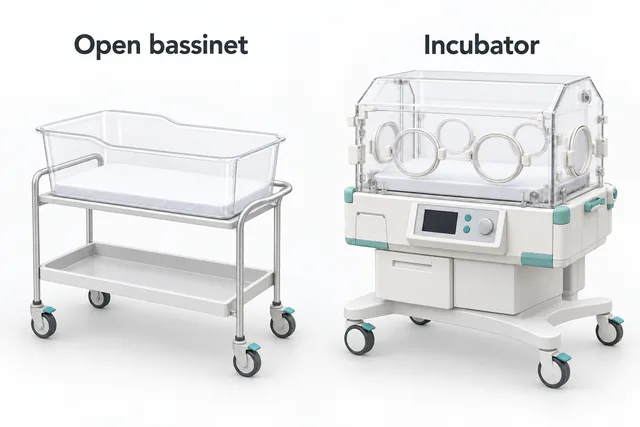
For newborn equipment, compare Neonatal Cribs, Isolettes & Hospital Bassinets: Specifying for Maternity & NICU. A neonatal bassinet, a compact medical cot and a larger profiling paediatric bed should be separate lines in the equipment schedule. A compact product's external length is not proof that it can accommodate every patient described as an infant or young child.
Measure the patient space and the operational footprint
Request both internal usable dimensions and external dimensions. The internal space informs patient and mattress fit; the external footprint informs room planning, cleaning access and movement through doorways. Ask whether measurements include bumpers, accessory sockets or projecting controls.
Document the mattress thickness and the effective side height with the approved mattress installed. A replacement that fits the platform length and width can still change the enclosure if it is thicker or compresses differently. Do not calculate the protective height from the cot's overall height alone.
| Procurement decision | Information needed | Why it matters |
|---|---|---|
| Patient allocation | Manufacturer's intended population and limits | Supports a defensible ward allocation policy |
| Mattress selection | Exact model, dimensions, thickness and construction | Preserves the evaluated bed system |
| Enclosure | Side geometry, latch details and applicable test evidence | Enables assessment of gaps and access |
| Staff access | Mattress-surface height and side-opening arrangement | Shows how care can be delivered |
| Ward movement | Full external size and permitted transport configuration | Identifies route and doorway constraints |
| Long-term support | Replacement sides, latches, castors and mattress references | Helps keep future repairs consistent |
High sides, enclosed tops and drop-side mechanisms
High sides can form part of a protective enclosure, but they do not eliminate falls or remove the need for patient assessment and observation. Consider the child's ability to climb and the intended use of each opening. Do not add an enclosed top or improvised cover unless it is an approved part of the device and the clinical service has assessed its use.
For movable sides, inspect the latch, release action and indication that the side is secure. Staff should be able to inspect the mechanism after cleaning and identify wear or misalignment. Confirm how the manufacturer expects staff to maintain access while protecting the patient.
Medical and consumer crib rules are not interchangeable. FDA describes a specific framework under which paediatric medical cribs retain movable sides for medical access. That is not a blanket approval of any drop-side design or home use. FDA medical crib information.
Avoid copying a single bar-spacing number from an adult-bed guide or consumer cot website. Ask for the applicable standard, edition and complete test assessment for the offered system, including the specified mattress and accessories. A ruler check during delivery cannot replace that evidence.
Check the current standards framework
As of September 2026, IEC publishes IEC 80601-2-89:2025 for medical beds for children. Its scope includes electrical and manual beds, subject to the standard's definitions and exclusions. Adult-only beds have a separate standard, IEC 80601-2-52:2026. IEC children's medical-bed standard, IEC adult medical-bed standard.
The publication of a new international standard does not establish which edition a particular market or tender accepts. The buyer's regulatory reviewer should confirm local adoption and any transition provisions. Ask the supplier to identify the edition used in its report and the models and configuration covered.
Do not infer compliance from a general certification logo on a catalogue page. A useful submission ties the report, model label, instructions and mattress specification together. Where an older report is provided, request the documented basis for its acceptability in the destination market rather than assuming it is automatically sufficient or automatically invalid.
Caregiver access and height adjustment
Height adjustment can help accommodate different working positions, but it is not included on every paediatric cot. Confirm whether the quoted height is fixed, adjustable, or the total height of the raised sides. These are different measurements.
Ask nurses to demonstrate routine care, side operation and access for the planned transfer method. Include the parent or carer area in room planning without assuming that a parent will operate clinical mechanisms. Controls, emergency access and storage should remain usable when chairs and trolleys are in their normal positions.
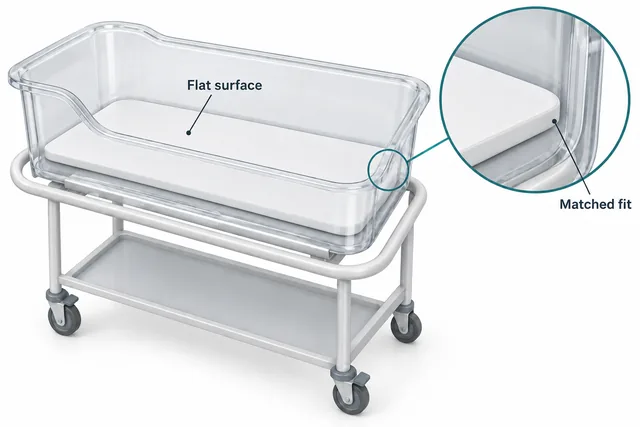
If a profiling surface is required, confirm the permitted patient group and mattress articulation. A backrest feature should not be promoted as routine inclined sleep for infants. Newborn sleep requirements need a separate review, including the firm, flat, noninclined surface discussed in Hospital Crib Mattresses & Infant Bed Safety: Firmness, Covers and Standards.
Materials, finish and maintenance
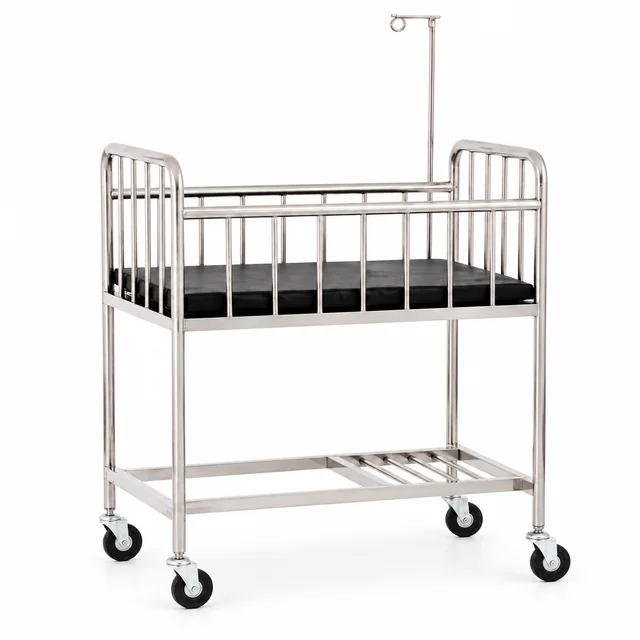
Stainless steel and coated frames can both appear in medical cot designs. Compare the specified material, weld finish, corrosion protection and cleaning compatibility. A material name alone does not prove resistance to every chemical used in the ward.
Inspect joints, latch recesses and areas exposed when a side is lowered. Request a maintenance schedule and replacement criteria for moving parts. For a bulk order, photograph and identify the approved components so future service purchases do not rely on appearance alone.
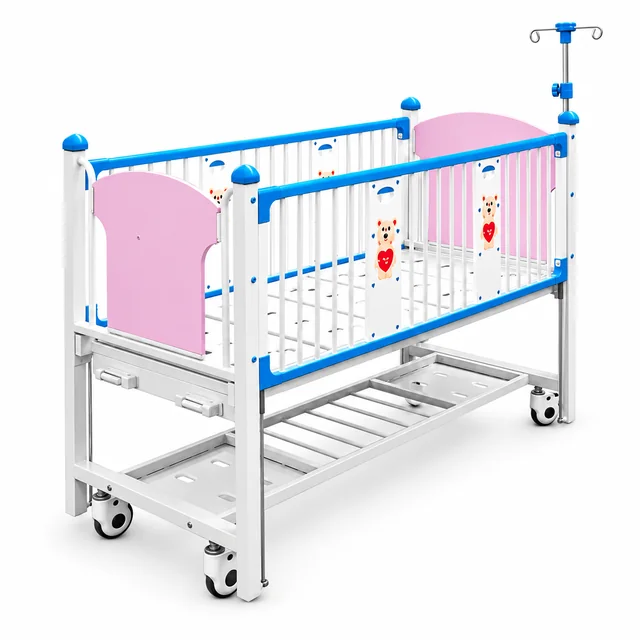
Also consider removable decoration and labels. They should not create loose parts or make a safety label difficult to read. A restrained colour scheme may help the room feel less institutional, but clinical suitability and cleanability should drive the technical assessment.
Comparing Keling's cot listings
The KL-BC114 child's cot lists a 1770 × 720 mm mattress platform and a fixed bed height of 585 mm, with backrest and knee-rest adjustment. The KL-BC115 child cot lists a stainless steel frame and an external size of 800 × 500 × 800 mm. These are substantially different configurations.
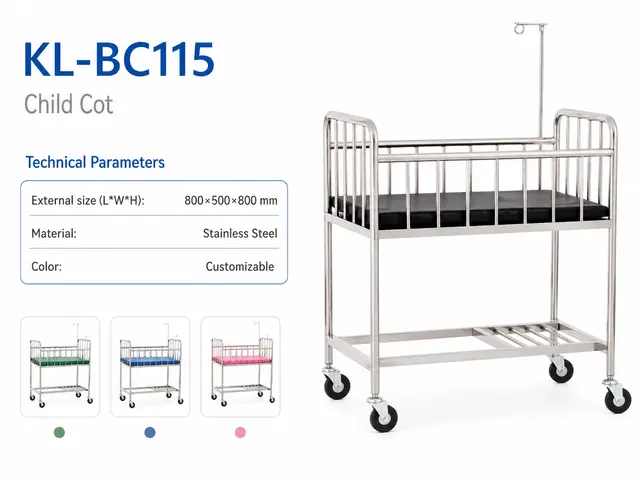
Ask Keling to provide the intended patient limits, mattress details, side geometry and model-specific documentation for each proposed use. Do not assign either model to an age group solely from these catalogue dimensions. A paediatric inpatient-ward enquiry should include the hospital's equipment allocation requirements and clinical review process.
Frequently asked questions
Can an adult hospital bed be used for a child?
Only where its documented intended use and the clinical assessment support that patient and configuration. Age alone does not establish compatibility. Ask the responsible clinical and equipment teams to assess the complete system before allocation.
Are high sides enough to prevent falls?
No. Side design, secure latching, mattress fit, patient behaviour and observation all matter. Avoid claims that an enclosure eliminates risk, and do not use additional improvised barriers as a substitute for an appropriate device.
Can the hospital use a locally sourced replacement mattress?
Only after verifying compatibility with the particular cot and the required performance. Retain the approved dimensions and construction in the purchasing record, and review the implications for side height and gaps before substitution.
What belongs in the acceptance record?
Record model and serial details, the supplied mattress, side operation, visible condition, accessories, instructions and any unresolved discrepancies. Keep the manufacturer's test documentation with the procurement file; routine acceptance inspection is a separate activity.
Next step
For a children's ward purchase, send Keling your patient-range and equipment requirements and request a model-by-model proposal with matched mattresses and supporting documentation.
About the author
This article was written by the Keling Medical export team, drawing on the engineering data for the 33 bed, cot, mattress and accessory models Keling manufactures at its Yangzhou plant. Keling Medical has been making medical appliances since 1996 and holds CE, ISO 9001 and ISO 13485 certification. More about Keling.